Tree Roots in the Sewer Line: Sarasota Oaks and Clay Joints
Sarasota's live oaks and ficus are relentless foragers, and a sewer joint breathing out a little moisture reads to them like an invitation. Once roots accept, they grow into a net inside the pipe that catches everything you flush, one wipe and coffee ground at a time.
Roots enter sewer lines at joints, above all in clay tile and aging cast iron, then thicken from hairs into blockages. Cutting or jetting restores flow but does not seal the entry point, so the roots come back on the tree's schedule. Lasting fixes seal the pipe itself: lining or replacing the run so no open joint remains. A camera shows which one your line needs. Call (941) 344-0088.
What Causes Tree Roots to Invade a Sewer Line
Roots are not vandals; they are shoppers. A tree's fine root hairs grow toward moisture and nutrients, and a sewer lateral offers both in concentrations the surrounding soil cannot match. The hairs cannot force their way into a sound pipe. They do not have to. They need one opening: a clay joint that has shifted a fraction, a corroded seam in cast iron, a crack from decades of soil movement. In through the opening, the root finds a warm, wet, nutrient-rich tunnel, and it does what roots do in good conditions. It thickens.
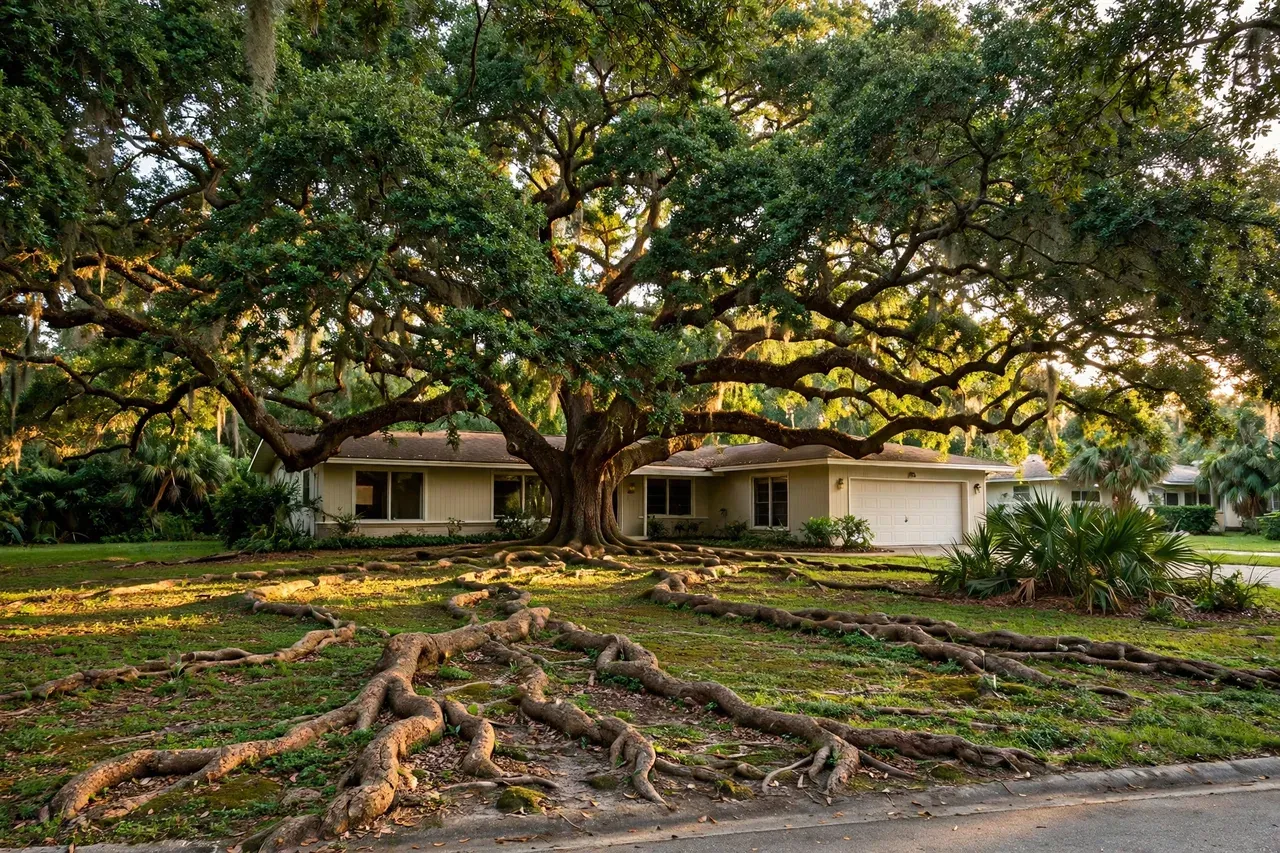
Sarasota stacks the deck. The beloved canopy, live oaks, laurel oaks, ficus, and mature palms along older streets, stands over some of the oldest private sewer pipe in Florida. Clay laterals present a joint every few feet, each one a door. Cast iron presents corrosion gaps along its whole length. Meanwhile the trees keep Florida hours: roots here grow most of the year, not just in a spring flush, which is why a clearing that would last years up north can be a one-season truce in Sarasota.
Why Roots Return After Every Clearing
Cutting roots out of a pipe is mowing, not weeding. The entry joint stays open, the root system outside stays alive and now better pruned, and regrowth through the same opening is faster than the original invasion. Every clearing without a sealing step starts a countdown, and the countdown shortens each cycle as the root mass outside the joint grows more established.
Species matter here. Ficus is the aggressive name on the list, with root systems that travel far and press hard, and banyans behave like the ficus they are. Live oaks and laurel oaks work slower but cover enormous ground over a long life, and an eighty-year-old oak has had eighty years to find every joint in the street. Palms sit at the gentle end: their fibrous root balls stay compact and rarely travel to a lateral. When a client tells us the species above the line, the odds change before the camera ever rolls, and a ficus planted over a clay lateral is close to a scheduled appointment.
When Roots Become an Emergency
Roots become an emergency when the net closes completely: several drains down, sewage rising in low fixtures, or water standing in the tub that will not leave. At that point the line needs clearing and a camera the same day. Call (941) 344-0088 and stop all non-essential water use until we have flow back.
What You Can Check Without Digging
Recognition is the homeowner's part. Root trouble has a rhythm: drains that slow gradually over weeks, a tub that gurgles after the washer runs, clogs that clear and then return on a seasonal beat. Map your trees against your line: the lateral usually runs the shortest path from the house to the street, and any mature tree whose canopy crosses that path is a suspect whose roots have had years to arrive.
If your cleanout cap comes off easily and shows root hairs at the opening, that is evidence enough; do not reach in, do not run a rented snake after them, and do not start pouring root-killing chemicals down the line. Chemical treatments are hard on the tree you presumably like, illegal to discharge carelessly in some situations, and useless at the one thing that matters: they cannot seal the joint the roots are using. Repeated blind snaking has its own downside, since a cable can catch in a root mass and turn a cleaning into a retrieval job.
The honest homeowner move is the phone, plus a note of the history: when the line was last cleared, how long flow lasted, which fixtures complain first. That history, read alongside a camera run, tells us whether you are maintaining a sound pipe with a root habit or postponing a pipe that is done.
Learn to separate root slowdowns from grease slowdowns, because they ask for different responses. Root trouble builds over weeks, breathes with the growing season, and tends to catch solids in the same stretch of pipe, so clogs repeat at a stubborn rhythm. Grease trouble follows the kitchen calendar: holiday cooking, big gatherings, a new habit of pouring pan drippings at the sink. Grease also narrows from the walls inward along the whole run, while roots enter at points. Describe the rhythm honestly on the call and you have already done half the differential diagnosis.
How We Diagnose and Fix Root Intrusion
Diagnosis is a camera inspection that treats the line like a map: every root entry gets logged by distance and clock position, and the pipe between entries gets graded. The map matters because root mass is the symptom; joint condition is the diagnosis. A pipe with two open joints and sound walls is a lining candidate. A pipe with roots entering along its whole length and walls crumbling behind them is a replacement candidate, and no amount of clearing turns it into the first kind.
Flow comes back first. Our tree root removal work cuts or jets the mass out, with hydro jetting scouring the grease and sediment the roots were farming. Then the sealing decision: CIPP lining forms one continuous new pipe within the old run, closing every door the roots used, while pipe bursting replaces the run entirely where the host pipe has collapsed or deformed. Cut alone and the roots return. Seal, and the tree goes back to drinking from the soil like every other tree on the street.
Living With Big Trees and a Sound Line
Nobody plants a live oak planning to fight it, and with the pipe sealed, you do not have to. After a lining or replacement, the canopy keeps its shade and the line keeps its integrity, and the relationship goes back to peaceful coexistence. For lines still in the clearing cycle, a scheduled camera recheck, timed to the fast end of your historical regrowth, keeps the truce honest and the backups theoretical.
Planting decisions help the next owner, too. New trees deserve distance from the lateral's path, and knowing where your line runs is the whole trick. If you are unsure of the route, a locate visit maps it once and settles every future planting, digging, and fence post question on the property.
One Sarasota wrinkle deserves a mention: shared and association lines. In many condo and villa communities around the keys and Palmer Ranch, the lateral outside your walls belongs to the association, not to you, and root work on it is their project or a shared one. If your home sits in such a community, the camera footage doubles as documentation for the association, and we are glad to mark entry points and distances in the report so the conversation with the board starts from evidence instead of adjectives.
Tree Roots in the Sewer Line: Related Guides and Services
Keep reading on the problems that travel together, and the services that solve them.
Wet Spots in the Yard
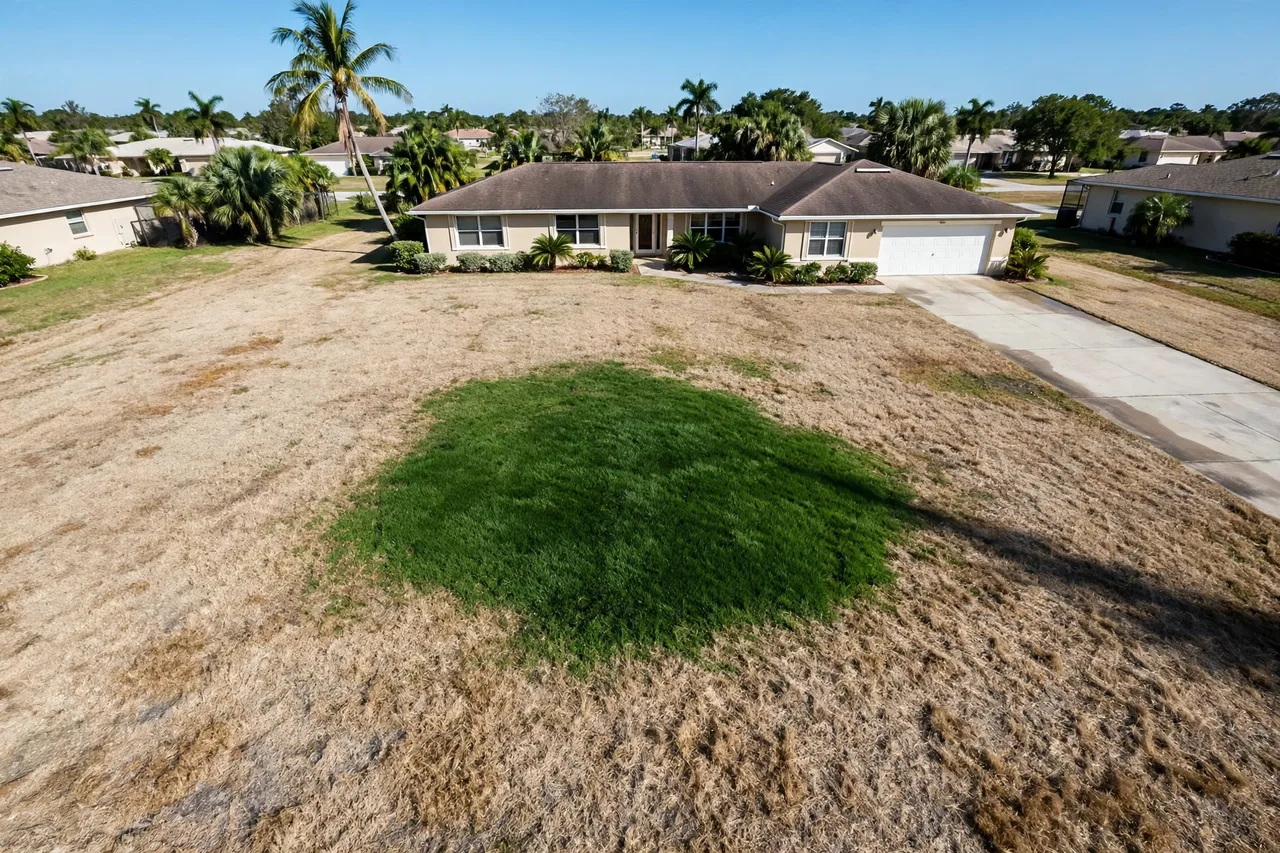
A yard patch in Sarasota that stays wet in dry weather often sits over a leaking sewer lateral. We locate and …
Learn more →
Gurgling Toilets and Drains
Gurgling toilets in Sarasota mean air is trapped by a partly blocked line or vent. A camera inspection settles…
Learn more →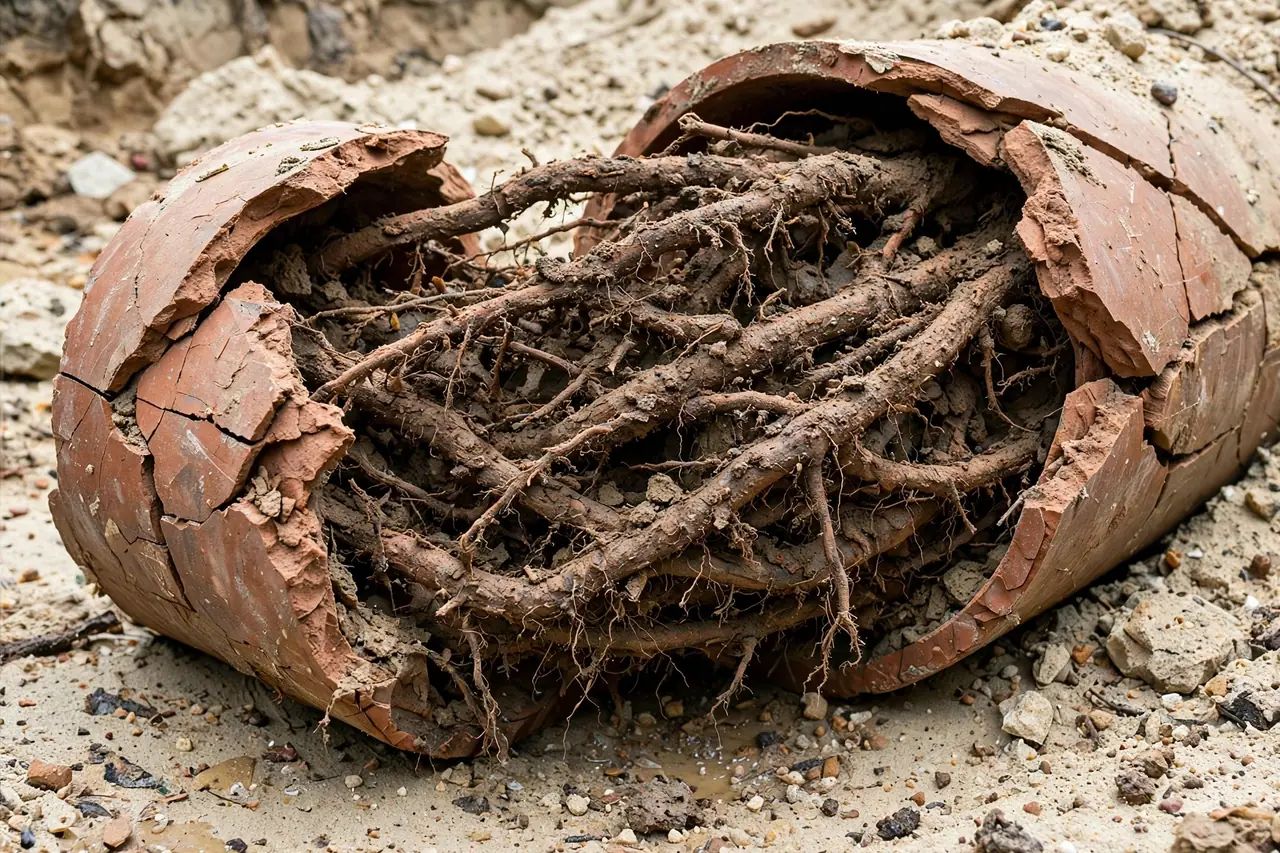
Tree Root Removal
Tree root removal for Sarasota sewer lines: cutting, jetting, and camera verification for live oak and ficus r…
Learn more →
Emergency Sewer Repair
Emergency sewer repair in Sarasota, FL for backups and burst lines. Fast response, camera diagnosis. Call (941…
Learn more →Frequently Asked Questions
How fast do roots grow back after they are cut?
In Sarasota's climate, count on a season or two, not years. Roots regrow through the same open joint, the tree is established, and the growing season here is nearly year-round. If your line was cleared and drains slow again within a year, the cycle is not bad luck; it is the joint announcing that clearing has become a subscription. That is the moment to plan the seal instead of the next clearing.
Can roots break a PVC pipe the way they break clay?
Sound PVC is a much harder target: its joints are glued or gasketed tight, the sections are long, and roots rarely find an opening. Roots exploit defects rather than defeating materials, so a PVC line with root trouble usually has one bad joint, a poorly glued fitting, or damage from another cause that opened the door. The camera finds the specific opening, which is why PVC root jobs are often spot repairs instead of full relines.
Will killing the roots with chemicals hurt my oak?
It can, and the risk gains you little. Root-killing products act on the root tissue they touch, including, in heavy or repeated doses, the tree's own system, and they do nothing to the open joint that invited the roots. The tree is not the problem; the doorway is. Sealing the pipe protects both assets at once, which no chemical program can claim.
How do I know if roots are my problem before a camera goes in?
You cannot know, but you can suspect with evidence: a mature tree near the line's path, drains that slow gradually rather than stopping suddenly, gurgling, and a history of clogs that return on a seasonal rhythm. Sudden single-fixture clogs argue for something else. Suspicion is enough to justify the camera; let the footage do the knowing.
Can lining really keep roots out for good?
Yes, because lining removes the opportunity rather than fighting the tree. A cured liner is one continuous pipe with no joints along the run, so there is no opening for a root hair to find. Roots press against the outside of lines all over Sarasota without incident; they only move in when a door is left open. Close every door in the run and the problem is structurally over.