Orangeburg Pipe in Sarasota: The Bitumen Line Under Older Homes
If your Sarasota home was built between 1945 and 1972, the sewer line under your yard may be Orangeburg pipe, a bitumen-soaked fiber line common after World War II. It was designed for about fifty years, and Florida soil has not been kind to it. Here is how to tell if your home has it, how it fails, and how we replace it.
Orangeburg pipe is a bitumen-soaked fiber sewer line used in Florida homes built 1945 to 1972. It softens and flattens underground until it collapses. If your Sarasota home is from that era and drains are slowing, get a camera inspection. Pipe bursting replaces it without a full trench.
What Orangeburg Pipe Actually Is
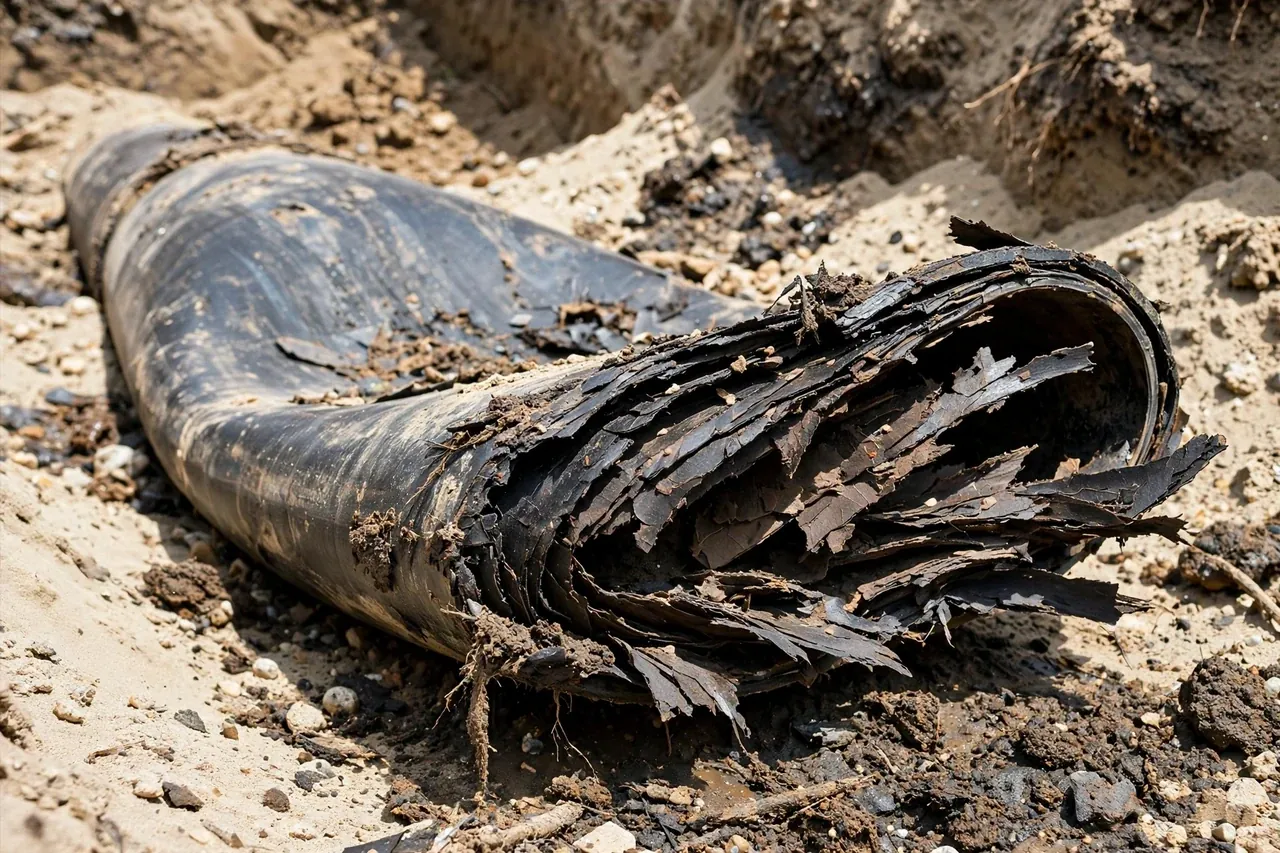
Orangeburg pipe is bituminized fiber pipe, named for the Fiber Conduit Company of Orangeburg, New York, which made most of it. It is a thick-walled tube of layered wood pulp and fiber, saturated and bonded with hot coal tar pitch, also called bitumen. Builders called it tar paper pipe, and one brand, No-Corrode, promised it would never rust.
It became a federal standard in 1944, and the postwar housing boom did the rest. From 1945 to 1972, Orangeburg was the lightweight answer to a national pipe shortage: easy to cut, easy to join, and far easier to handle than cast iron or clay. Plumbers laid miles of it under new subdivisions, usually as the yard lateral to the street or septic tank.
The catch was built into the material. Wood fiber absorbs moisture, and the tar binder holding the layers together softens when it stays wet. Orangeburg was designed for roughly fifty years of service, but much of it started failing around thirty. Today that pipe is fifty to eighty years old, sitting in ground it was never suited for.
Which Sarasota Homes Still Have It
Orangeburg went under the homes of Sarasota's postwar growth, and those neighborhoods are easy to name. Southgate and the Pinecraft area carry fifties to seventies homes. Gulf Gate was developed through the 1960s and 1970s. The North Tamiami Trail corridor in North Sarasota holds postwar tract homes from the same era, and Bee Ridge's older subdivisions overlap the window too. If your home sits in one of these areas and dates from 1945 to 1972, Orangeburg is a real possibility.
One quick field test: ask the neighbors. Builders bought pipe by the truckload, so a street of same-era homes usually shares the same lateral material. If the house next door just had its Orangeburg line burst or dug up, yours is very likely the same pipe at the same age.
How to Tell What Your Home Has
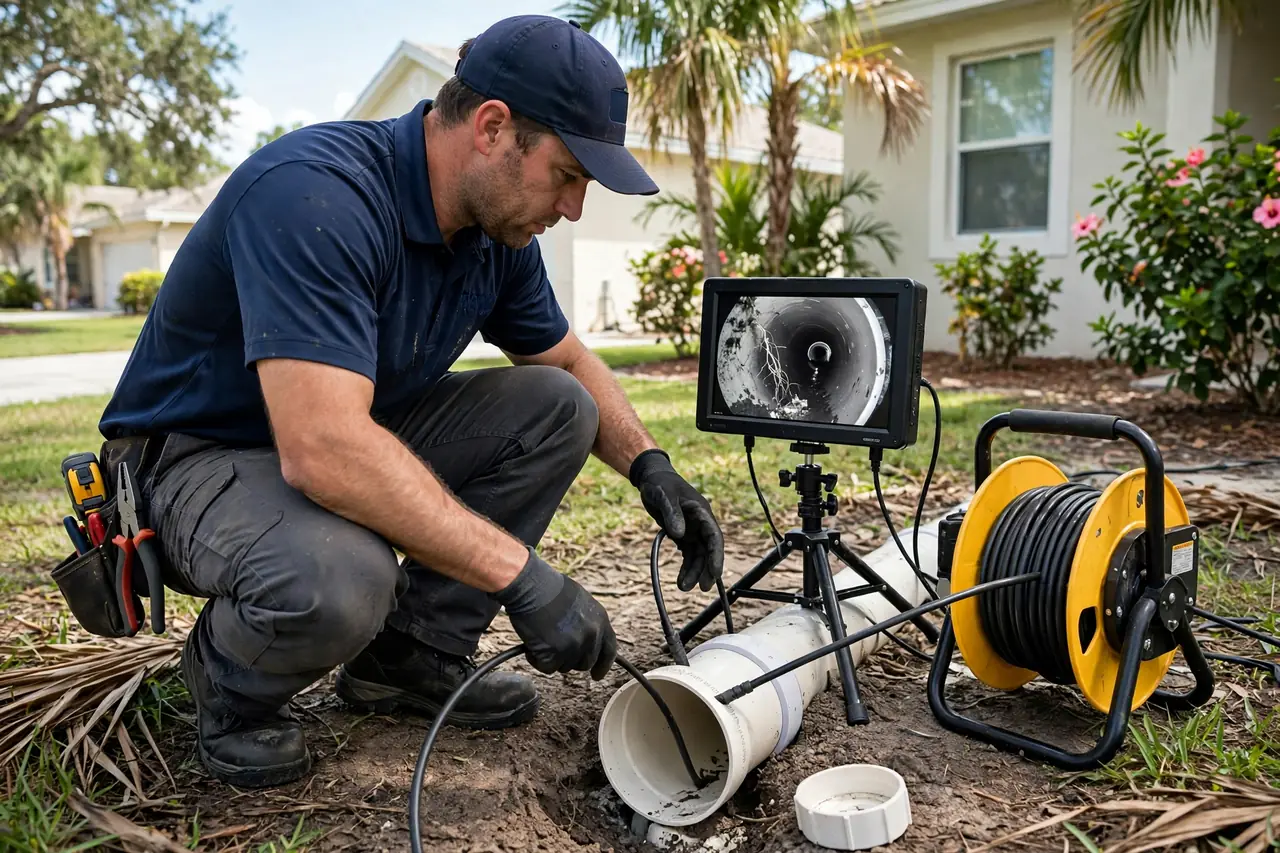
Your home's build year is the first clue; a sewer camera inspection is the proof. The camera goes through a cleanout and shows the material, the joints, and every foot of condition. On Orangeburg, the picture is unmistakable: a dull black or dark brown tube instead of orange clay, gray cast iron, or white PVC. If a snake has ever run through the line, the technician may also pull back flakes of layered tar paper, which is about as close to a signature as this pipe gets. And Orangeburg is not the only aging pipe in these neighborhoods. Many 1960s to 80s slab homes carry cast iron under the floor instead; our cast-iron guide for Sarasota slab homes covers that pipe's story.
How Does Orangeburg Pipe Fail in Florida Soil?
Orangeburg fails from softness, not rust. The wood fiber in the wall drinks in moisture from sewage effluent and the surrounding soil, and the coal tar binder softens as it stays wet. The layers blister, flake, and separate, a process called delamination. Once that starts, the pipe has no real rigidity left, and the weight of the earth above flattens it into an oval, or in bad cases nearly flat.
Sarasota's ground makes this worse. Much of the county sits on Myakka fine sand with a seasonally high water table just 0 to 3.5 feet below grade. A buried Orangeburg lateral often spends the rainy season sitting in saturated sand: constant moisture against an already soft pipe plus heavier soil pressing down. Wet sand also shifts and settles unevenly, and a soft pipe settles with it.
Two more failure modes ride along. The flattened interior catches solids, so clogs form in the same spots again and again. The blistered layers split at the seams, which is where roots get in. Live oaks and ficus trees, the backbone of Sarasota landscaping, find those seams fast, and a root mass can finish what the moisture started.
Warning Signs Your Orangeburg Line Is Collapsing
The first sign is usually a backup that keeps coming back. A snaking clears the line, it works for a few months, and then the same toilet or tub backs up again. That pattern means the stoppage is not a one-time clog; it is a deformed section catching solids over and over, and no clearing changes the pipe's shape.
Watch for slow drainage across several fixtures at once: the shower rising a little when the toilet flushes, or the kitchen sink gurgling when the washer drains. Several slow drains together point at the main line, and in a home from the Orangeburg era that is a strong hint.
Outside, the ground tells on the pipe. Patches of grass growing lusher than the rest of the lawn can mark where wastewater is leaking into the soil. Dips or soft spots above the line's path suggest soil settling into a void left by a partially collapsed section. In advanced cases, a sinkhole can open near the foundation.
Any one of these deserves a sewer camera inspection. The camera shows whether the pipe is round, oval, or gone, and that picture decides everything that comes next.
Can Orangeburg Pipe Be Lined, or Must It Be Replaced?
Every Orangeburg owner asks this, because lining sounds easier than replacement. It builds a new pipe inside the old one, and it works well on clay and cast iron, provided the host pipe is still roughly round and solid enough to press against.
Deformed Orangeburg rarely qualifies. A liner pushed through an ovalized, delaminating pipe can wrinkle or cure unevenly, leaving low spots where solids catch and restart the clog cycle. Worse, the old pipe keeps shedding its tar-soaked layers around the new liner. Some contractors will line Orangeburg still early in its decline, with minimal deformation, and in that narrow case it can work.
But once the camera shows real flattening, blistering, or any collapse, lining is a gamble with bad odds. That is why the camera inspection comes first and the method decision second. If the pipe is still mostly round with isolated damage, lining may be on the table. If it looks like a flattened black ribbon with the layers peeling apart, sewer line replacement is the honest recommendation. Our guide to pipe bursting vs. pipe lining walks through how the two trenchless methods compare.
Why Pipe Bursting Is the Usual Fix
Pipe bursting was practically made for Orangeburg. A steel bursting head is pulled through the old line, fracturing the brittle fiber pipe outward while towing a new continuous HDPE pipe into the same bore path behind it, with no joints for roots to find. Entry and exit pits replace the full-length trench, so the driveway, the landscaping, and the slab stay put.
For Sarasota homes this matters. These are established neighborhoods with mature trees, paved driveways, and patios owners do not want torn up, and bursting threads the new line under all of it. The crew still needs room for the pits and a clear pull path, which the camera footage confirms.
Excavation still has its place. If a section has collapsed so completely that nothing can pass, or the line runs too close to other utilities to burst safely, the honest fix is to dig that section and lay new pipe by hand. Many jobs combine both: bursting for the long run, excavation for the problem spots, for a modern line with decades of service instead of a tar paper tube living on borrowed time.
If your home is from the Orangeburg era and the drains are telling you something, start with the camera. Call (941) 344-0088 and we will put one in the line, show you exactly what is down there, and lay out the fix that fits.
Published 2026-11-01 · Sarasota Sewer Specialists
Related Sewer Services
Sewer Camera Inspection
Sewer camera inspection in Sarasota, FL finds roots, scale, bellies & breaks before you dig. HD video diagnosi…
Learn more →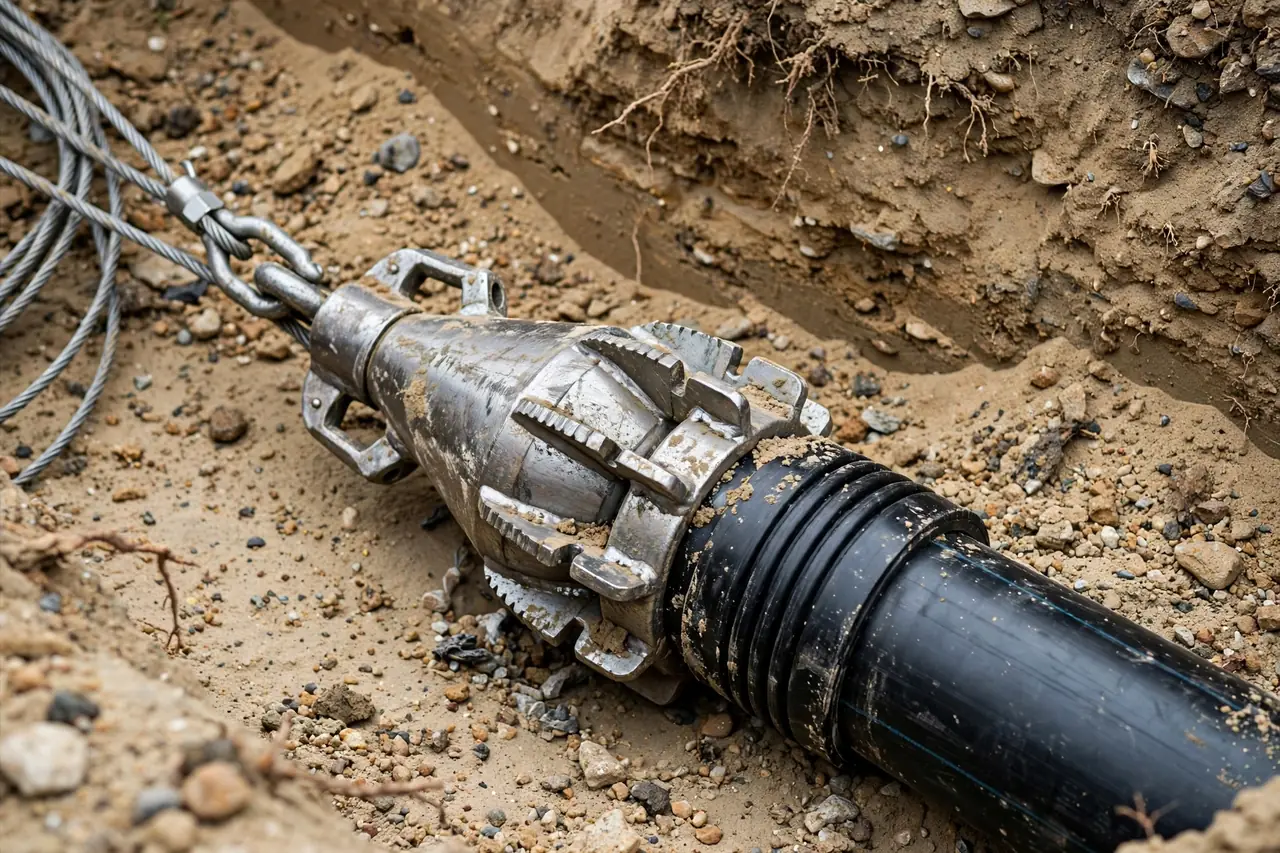
Pipe Bursting
Pipe bursting in Sarasota, FL replaces collapsed sewer lines with minimal digging: new pipe pulled through the…
Learn more →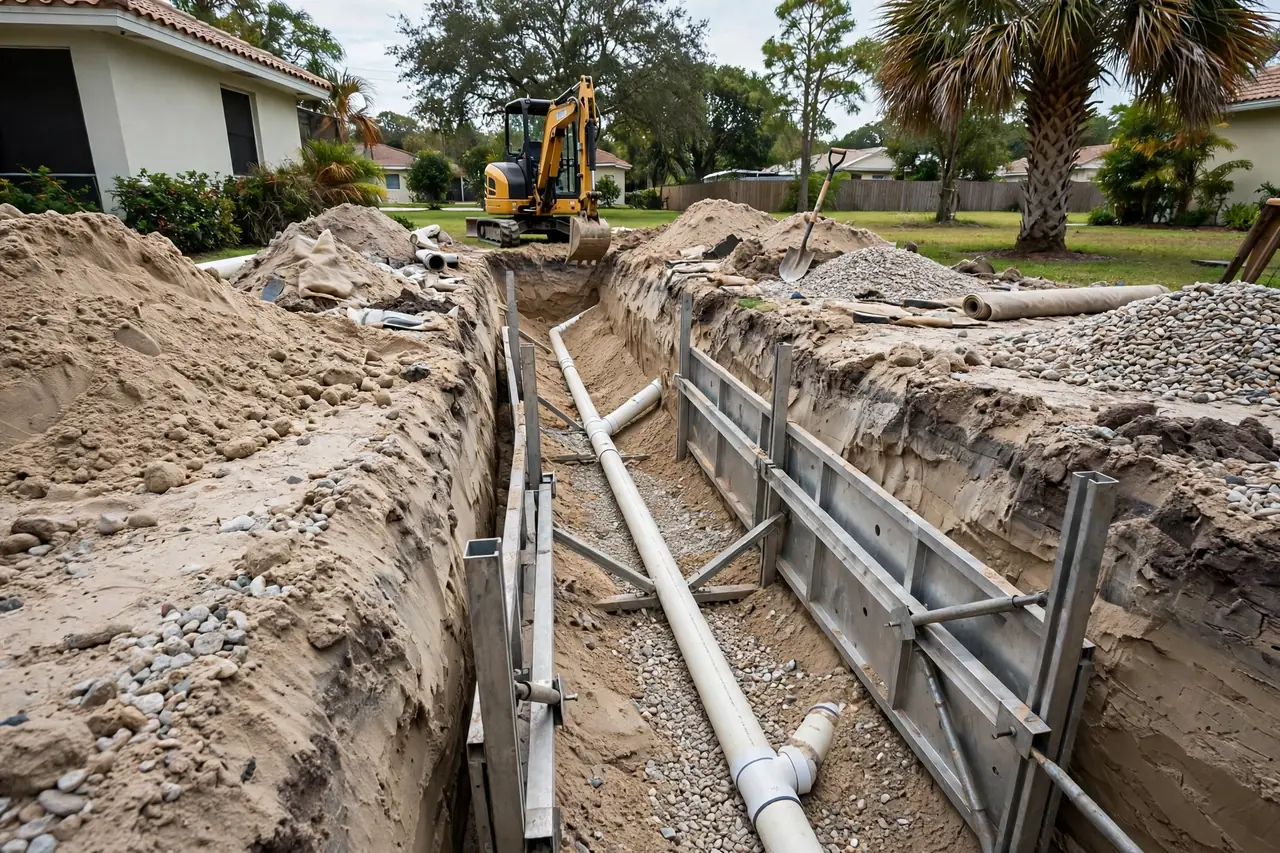
Sewer Line Replacement
Sewer line replacement in Sarasota, FL by excavation when trenchless won't work: proper grade, modern PVC pipe…
Learn more →Nearby Service Areas
Frequently Asked Questions
How do I know if my home has Orangeburg pipe?
Check the build year: 1945 to 1972 is the window. A camera inspection confirms the material.
How long does Orangeburg pipe last in Sarasota's soil?
About fifty years by design, but many failed around thirty. Sarasota's wet, sandy soil punishes pipe that softens when soaked.
Can Orangeburg pipe be lined instead of replaced?
Only if the pipe is still round and intact. Once it ovalizes, pipe bursting is the reliable fix.
Does replacing Orangeburg mean digging up my whole yard?
Usually not. Pipe bursting uses small entry and exit pits, leaving your driveway, landscaping, and slab in place.
Should I get a camera inspection before buying a 1960s Sarasota home?
Yes. Standard home inspections do not scope the sewer line, so get the footage before you close.