Wet Spots in the Yard: When a Soggy Patch Points to a Sewer Leak
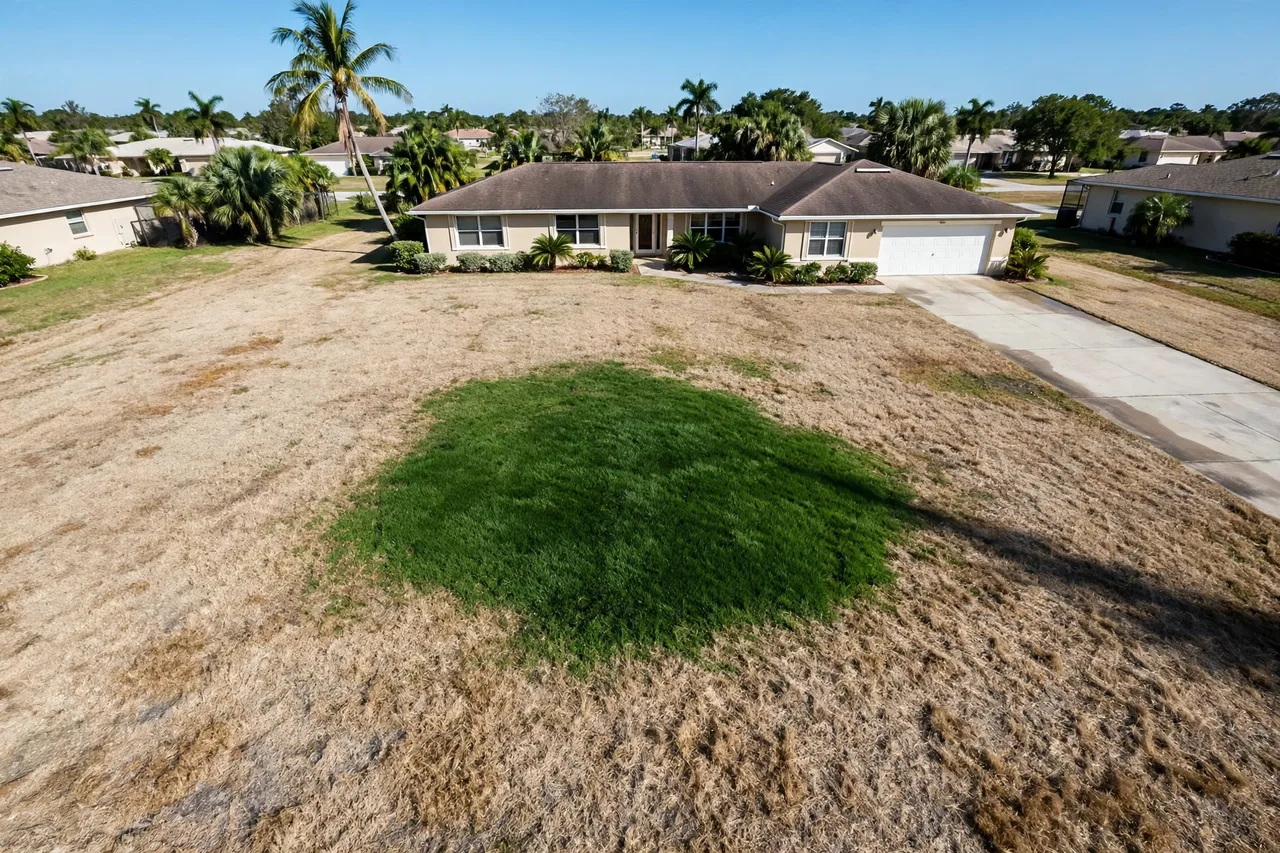
In Sarasota's dry season, one patch of lawn that stays green, soft, and wet while everything around it goes brown is worth a hard look. A leaking lateral can feed a spot like that from below, around the clock, whether you are running water or not.
A yard patch that stays wet in dry weather, outgrows the grass around it, or sinks along a line toward the street often sits over a leaking sewer lateral. Mark the spot, keep kids and pets off it, and do not dig. We locate the line, camera it, and confirm the leak before any repair talk. Call (941) 344-0088.
What Causes Wet Spots Over a Sewer Line
A sewer lateral is supposed to be a one-way street: waste water in, nothing out. When a joint separates or a pipe wall cracks, the street leaks. Waste water seeps into the surrounding soil with every flush and shower, and soil that is watered from below all day behaves differently from soil watered from above. It stays saturated in a drought, grows lusher grass than its neighbors, and eventually loses its structure as the leak washes fine soil particles down into the pipe, leaving the ground soft, spongy, and then sunken.
Sarasota's older pipe materials supply the openings. Clay tile laterals are built from short sections with a joint every few feet, and joints shift as soil moves and roots press. Cast iron corrodes from the inside out over decades until the bottom of the pipe is more scale than metal. Both fail the same way in the yard: quietly, underground, with the lawn as the only witness. In the wet season the direction can even reverse, with groundwater pushing in through the same openings, but a wet spot that persists into the dry months is exfiltration talking, and it does not heal.
Sewer Leak or Sprinkler Line
Irrigation is the main impersonator, and timing separates them. A sprinkler leak follows the watering schedule and dries out between cycles. A sewer leak ignores the schedule, stays wet through dry weeks, often carries a faint odor on still days, and tends to lie along the straight path from the house to the street, because that is where the lateral runs.
Septic properties have a second source of yard wetness that mimics the first. A drainfield that is saturated or failing surfaces effluent above its trenches, and the wet area takes the field's long, rectangular footprint rather than the pipe's straight line. The two problems even share the lush grass. What separates them is location and plumbing behavior: drainfield trouble usually arrives with slow drains and gurgling inside the house, while a leaking lateral between the house and the tank can wet the yard over a house that drains perfectly. Knowing which system your address uses is the first fact we establish on any wet yard call.
When a Wet Spot Is an Emergency
Call (941) 344-0088 the same day if the ground is sinking visibly, a soft area opens near the driveway or a walkway where soil support matters, or pooling carries a strong sewage odor. A washout under a driven-on or walked-on surface is a safety problem, not a lawn problem, and it moves to the front of the schedule.
Safe First Checks in the Yard
Start by turning detective, not excavator. Watch the spot across several days and note whether it tracks your irrigation schedule or ignores it. Photograph its edges; a sewer-fed spot grows. Check whether the softness follows a line toward the street rather than spreading as a round puddle, and get close enough to notice odor, which often shows up in the cool of early morning.
Keep the spot undisturbed. Do not dig into it to investigate: the area may sit over other buried utilities, the soil around a leak is contaminated, and a shovel through a weakened pipe turns a leak into a break. Keep children and pets off ground that stays wet, since it can carry what the pipe carries, and wash hands after any contact with the soil.
One more boundary: do not try to dry the area out with lime, fill, or fresh sod on top. Covering a leak hides the evidence while the washout underneath keeps growing, and the cavity that forms is the part that ends up mattering. A spot that is sinking, however slowly, is a spot to have located and inspected, not landscaped over.
One controlled test sharpens the picture before we arrive. Turn the irrigation system fully off for two or three dry days and watch the spot. Irrigation-fed wetness fades on that schedule; a sewer leak does not, because the house keeps watering it with every shower and flush. Note also whether the spot pulses: a patch that grows softer in the hours after heavy household water use is responding to your plumbing, not the weather. Record the result either way. Two sentences of observation from the homeowner can save a full round of elimination on site.
How We Confirm and Fix a Yard Leak
Confirmation is a two-step that involves no digging. A camera inspection runs the lateral from the cleanout, and the camera head carries a transmitter that our surface locator reads through the soil. The leak shows itself twice over: on screen, as the cracked joint or corroded section, and on the lawn, as the locator's mark directly above it. You learn the depth, the distance from the house, and the condition of the rest of the line in the same visit.
Repair options scale with what the camera found. A single failed joint in otherwise sound pipe suits a spot repair or a short liner. A lateral leaking at several joints suits full trenchless lining, which seals every joint in the run at once. A pipe too deformed to line goes to bursting or a conventional sewer line replacement. Because the locator already marked the spot, even the digging option digs one hole in the right place instead of trenching the yard on a hunch.
When a spot repair is the answer, it looks smaller than homeowners expect. The locator mark means the excavation is a single pit over the failed joint, not a trench across the lawn. The bad section comes out, new pipe goes in, the pit is backfilled and compacted, and the surface goes back close to how it started. Lining jobs are smaller still at the surface: access from the cleanout, the liner cured inside the existing pipe, and the yard disturbed only where the crew stood. The era of diagnosing a yard leak by digging the yard is over; the camera ended it.
After the Repair: Watching the Ground Recover
Repaired pipe, recovering yard: expect the ground above a leak to settle for a while as backfill compacts and the washed-out soil redistributes. We flag the settling pattern to watch for, and a recheck of the area after the first heavy rains tells you whether the surface is behaving like ordinary lawn again.
The wider lesson is that the yard reports on the pipe constantly once you know the language. Lush lines, soft paths, and sinking strips are the lateral's inspection reports, delivered free. A homeowner who reads them calls about a joint. A homeowner who misses them eventually calls about a cavity, and the difference is only attention.
And if the spot proves to be nothing more than a sprinkler head buried under mulch, take the win and keep the habit anyway. Yards change slowly, pipes age steadily, and the homeowner who walks the line's path a few times a year, looking at the grass the way a roofer looks at shingles, catches the serious problems while they are still small ones.
Wet Spots in the Yard: Related Guides and Services
Keep reading on the problems that travel together, and the services that solve them.

Tree Roots in the Sewer Line
Tree roots in your Sarasota sewer line keep coming back until the joints are sealed. Camera diagnosis first. C…
Learn more →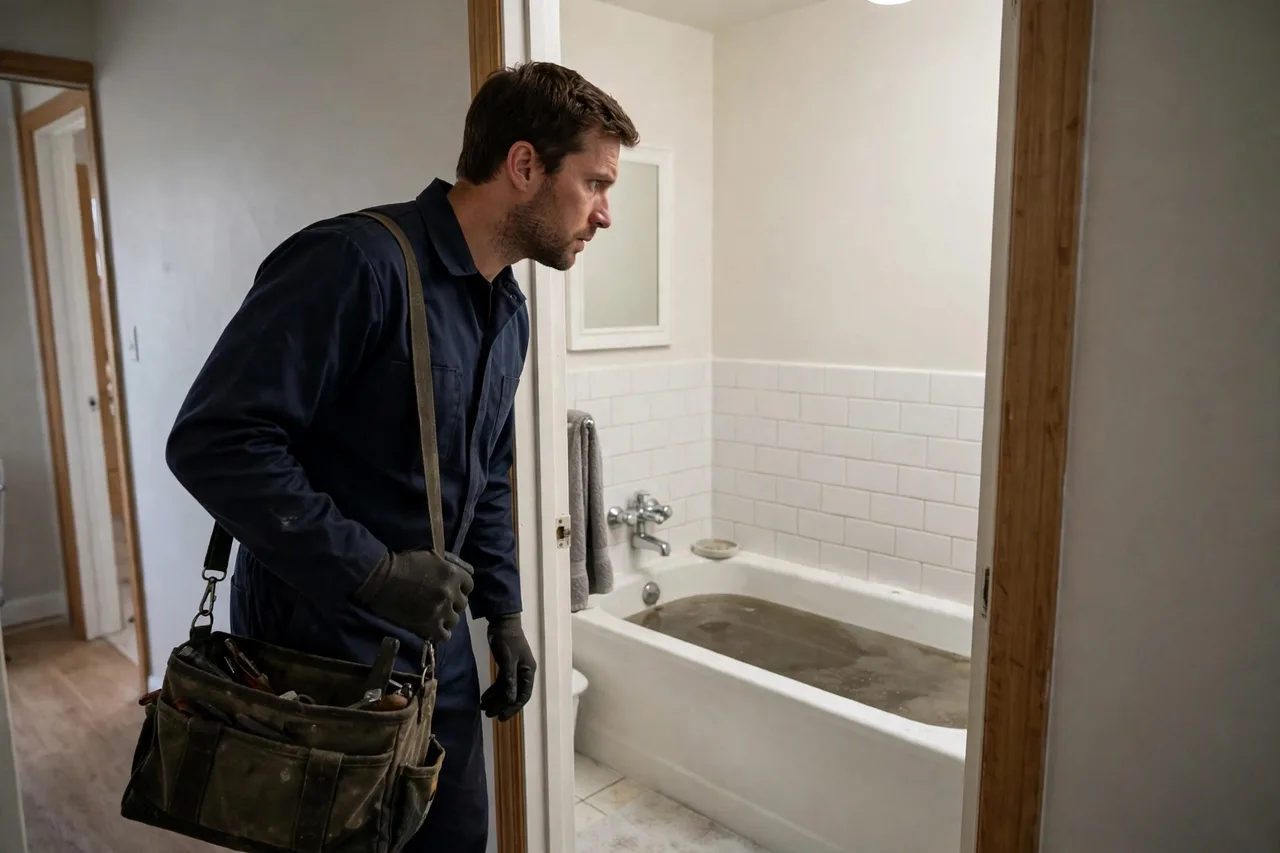
Sewage Backing Up Into the Tub
Sewage backing up into your Sarasota tub means the main line is blocked or overwhelmed. Stop water use now and…
Learn more →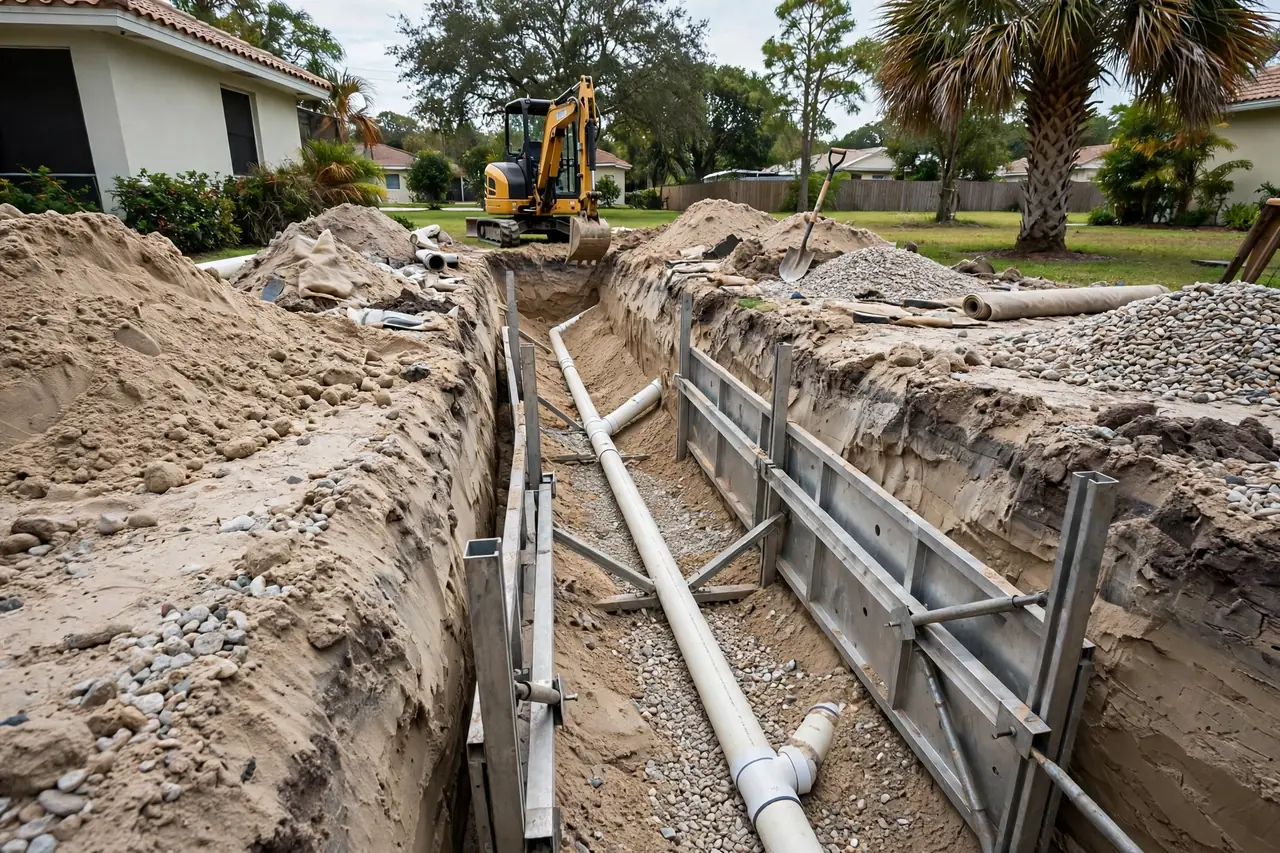
Sewer Line Replacement
Sewer line replacement in Sarasota, FL by excavation when trenchless won't work: proper grade, modern PVC pipe…
Learn more →
Emergency Sewer Repair
Emergency sewer repair in Sarasota, FL for backups and burst lines. Fast response, camera diagnosis. Call (941…
Learn more →Frequently Asked Questions
What else can cause a wet patch besides a sewer leak?
Three usual suspects: a broken irrigation line or a stuck sprinkler zone, a leaking pressurized water service line, and, on septic properties, a drainfield working at the surface. Timing separates most cases: irrigation follows its schedule, a water service leak runs constantly and can move your water meter, and a sewer leak follows the house-to-street path and its own schedule, which is whenever you use water.
Why is the grass greener over the wet patch?
Because the leak is fertilizing it. Waste water carries nitrogen and other nutrients that lawns love, delivered at root depth around the clock. A strip of grass that outgrows and outgreens its neighbors in a dry month is eating something the rest of the yard is not, and over a sewer line, the menu is obvious.
How much soil can a small leak actually wash away?
More than intuition suggests. Every discharge carries fine soil particles into the pipe along with the water, a few grains at a time, for months or years. The result is a void that mirrors the pipe's path, sometimes large enough to drop a section of driveway or walkway. It is the quietest damage a sewer line does, and the reason a sinking strip of yard deserves a camera, not a bag of fill dirt.
The wet area smells fine. Could it still be sewage?
Yes. Soil is a good filter, and it strips much of the odor from water that seeps slowly through it, especially in dry weather. Absence of smell rules out almost nothing about an underground leak. The reliable evidence is the pattern: persistent wetness off the irrigation schedule, lush growth, softening ground, and a location along the line's path to the street.
How do you find the exact leak without digging up the yard?
The camera that inspects the pipe also broadcasts its position. As it travels the lateral, a locator at the surface tracks the signal through the soil and marks depth and location in real time. When the camera reaches the crack or open joint, the mark on the grass is directly above it. Diagnosis finished, yard intact, and if digging is ever needed, it happens once, in the right square yard.