Pipe Bursting vs. Pipe Lining: Which Fits Your Sarasota Home?
Two trenchless technologies solve the same problem, a failed sewer line, in opposite ways. Understanding how each works is the difference between a repair that lasts and a repair that disappoints.
How Pipe Bursting Works
Pipe bursting is replacement disguised as repair. A cone-shaped bursting head is pulled through the old pipe, fracturing it outward into the surrounding soil, and a new pipe, typically HDPE, follows immediately behind the head into the path the old pipe just vacated. The old line is destroyed and replaced in a single pass, with only entry and exit pits dug at the ends.
Think of it as a train entering a tunnel that is exactly its own width: the head clears the way and the new pipe rides in behind. Because the new pipe is pulled through the burst path, its diameter can match or even exceed the original, bursting can upsize a line, which matters when a home's drainage demand has grown or the original line was undersized.
What Bursting Demands From the Pipe
Bursting asks almost nothing of the old pipe, because the old pipe is sacrificed. That is why bursting handles collapsed sections, heavily deformed clay, and crumbled cast iron that lining cannot touch. What bursting does demand is the surrounding soil: the burst path has to hold its shape while the head passes, and nearby utilities have to be located and accounted for. In Sarasota's Myakka fine sand, loose saturated sand can complicate the burst path, a good contractor verifies soil and utility conditions before committing to the method, which is why pipe bursting always starts with a camera inspection and utility locates.
How Pipe Lining (CIPP) Works
Cured-in-place pipe lining, CIPP, is repair that leaves the old pipe in place. A flexible liner saturated with resin is inserted into the existing pipe, inflated to press against the pipe walls, and cured in place, with hot water, steam, or UV light, until it hardens into a smooth, jointless new pipe inside the old one. The old pipe becomes a host shell; the liner becomes the pipe.
The result is a continuous, seamless interior with no joints for roots to enter and no rough scale for debris to catch on. Because the liner follows the existing pipe's path, lining handles bends and direction changes that would complicate other methods. The liner does reduce the internal diameter slightly, a real but often overstated concern, since the smooth new surface flows more efficiently than the rough old one.
What Lining Demands From the Pipe
Lining asks a lot of the old pipe: it must exist, hold its shape, and stay round enough for the liner to inflate against it. Cracked but intact clay, corroded but standing cast iron, and joints with minor separation are all lining candidates. Collapsed sections, severely deformed pipe, and bellies that hold standing water are not, a liner cured into a belly preserves the sag forever. CIPP pipe lining is only as good as the host pipe it inherits, which is why the camera inspection before lining is not optional.
The Deciding Factor: What the Camera Shows
Every honest comparison of these two methods ends in the same place: the camera footage. The choice is not philosophical, it is diagnostic. A technician reads the pipe's condition section by section and matches the method to the damage, and mixed conditions often mean a mixed solution, lining for the intact-but-cracked run, a spot repair or burst for the collapsed section.
When Bursting Wins
Collapsed pipe, crumbled cast iron, severely deformed or misshapen sections, bellies that hold standing water, and lines that need upsizing. If the pipe cannot serve as a host, bursting replaces it outright. Bursting is also the natural choice when the old pipe's material is the problem, cast-iron laterals whose internal corrosion is the failure mode gain nothing from being lined into a host of corroded iron.
When Lining Wins
Intact-but-cracked clay, corroded-but-standing cast iron, separated joints without collapse, root intrusion through joints in an otherwise sound pipe, and runs with bends that bursting equipment cannot navigate cleanly. Lining is also the lower-disruption option when the line runs under landscaping, driveways, or structures you want to leave entirely untouched, the insertion points are smaller than bursting's pits.
Either way, the decision starts with seeing the pipe. Our trenchless sewer repair process begins with camera diagnosis and recommends the method the footage supports, not the method the equipment truck happens to carry.
Sarasota Soil Changes the Calculation
Sarasota's ground is not neutral territory for trenchless work, and both methods interact with it differently. The county's Myakka fine sand, Florida's state soil, is loose and fast-draining when dry but loses all structural support when saturated. During the rainy season, with the water table at 0 to 3.5 feet, the soil around a sewer lateral is essentially a wet sponge holding a pipe that is barely deeper than the groundwater.
For pipe bursting, saturated loose sand is the complicating case: the burst head needs the surrounding soil to hold the path while the new pipe is pulled through, and sand that flows like water does not cooperate. Bursting is generally scheduled with soil conditions in mind, and a responsible contractor will tell you when the ground says wait. For lining, groundwater is the complication in a different way, active infiltration through cracks can interfere with liner curing, and a pipe full of intruding groundwater is not a clean host. Both methods work fine in Sarasota; both require a contractor who reads the ground as carefully as the pipe.
The Under-Slab Question
In Gulf Gate and Bee Ridge, the failing pipe often runs under the slab, cast-iron DWV lines buried beneath the home's foundation. Trenchless methods earn their keep here: neither bursting nor lining requires breaking up the slab, which is the entire point. The lateral from the house to the street is the typical trenchless candidate, and the under-slab interior lines are evaluated separately. A camera inspection shows which sections are under slab, which are in the yard, and which method each section deserves.
What About Cost, Lifespan, and Disruption?
Homeowners reasonably ask which method costs less and lasts longer. The honest answer is that both, done correctly on the right pipe, deliver a decades-long result with minimal landscape disruption compared to open-trench replacement. Comparing their price tags without the camera footage is meaningless, the pipe's condition, length, depth, and access determine the scope, and the scope determines the number. Any contractor who quotes a method before seeing the pipe is selling, not diagnosing.
Disruption is the real differentiator for most Sarasota homeowners. Traditional replacement means an open trench from the house to the street, through the lawn, the driveway, the landscaping you have spent years growing. Both trenchless methods leave the surface essentially intact: two small pits for bursting, even smaller access for lining. In neighborhoods where the yard is the home's best asset, that difference is the whole argument.
The Prep Step Nobody Should Skip
Whichever method the footage points to, the pipe gets cleaned first. Hydro jetting scours scale, grease, and debris from the pipe walls so the liner bonds properly or the bursting head travels true. Skipping the cleaning step to save a visit is how trenchless repairs fail, the method was right, the preparation was not. If a contractor proposes lining or bursting without a jetting step, ask why.
The Bottom Line for Sarasota Homes
Intact but cracked, line it. Collapsed or deformed, burst it. Mixed conditions, let the camera write the plan, section by section. And whichever method wins, insist on a contractor who inspects first, cleans second, and repairs third. Call (941) 344-0088 for a camera inspection that tells you which trenchless method your pipe actually deserves.
Timing the Work Around the Water Table
Sarasota homeowners sometimes ask whether trenchless work should wait for the dry season. The honest answer depends on the method and the pipe. A lateral that is actively infiltrating groundwater cures poorly as a lining host, so lining a wet-season pipe sometimes means dewatering or waiting. Bursting in saturated sand can mean a sloppier burst path. Neither is a hard rule, both get done year-round, but a contractor who schedules around the water table instead of ignoring it is a contractor who has done this work in Sarasota before. Ask the question; the answer tells you who you are dealing with.
Published 2026-10-09 · Sarasota Sewer Specialists
Related Sewer Services
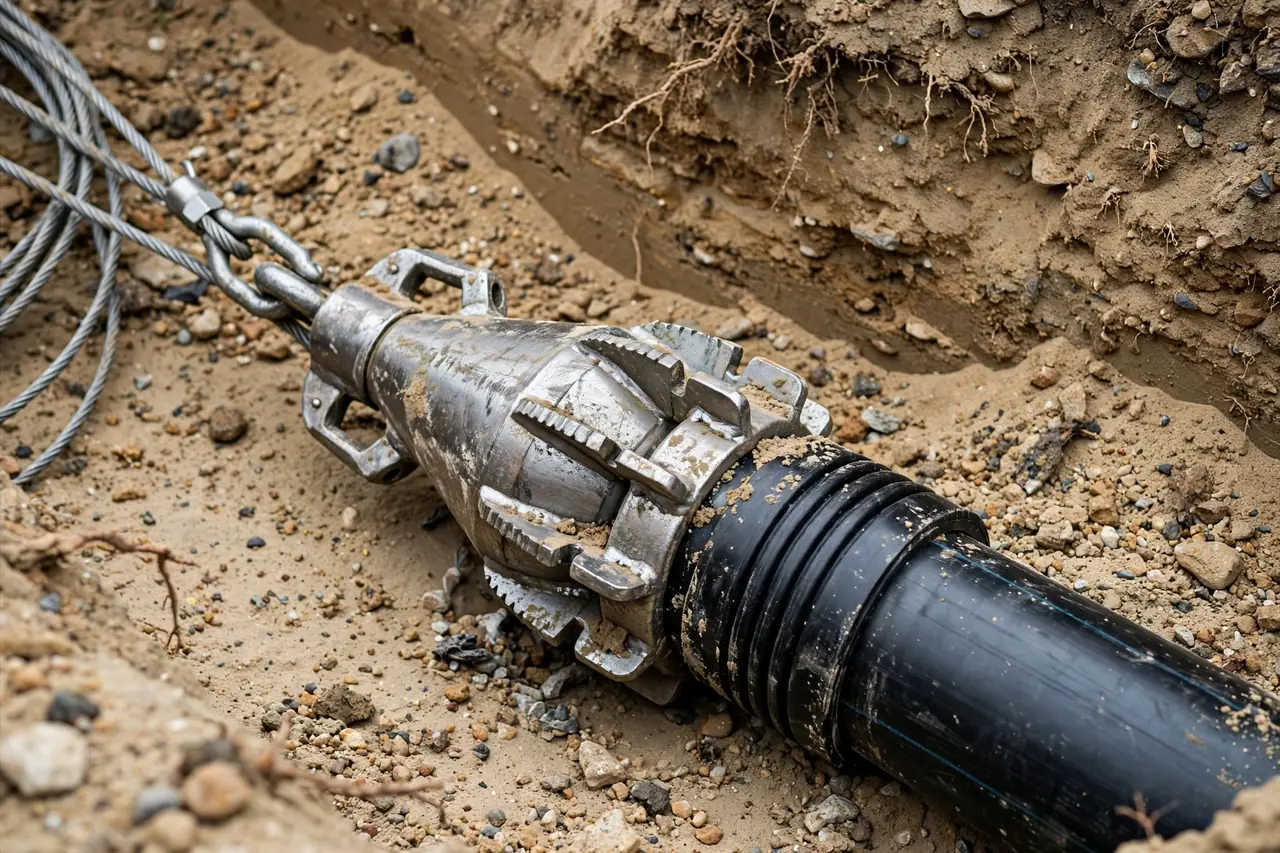
Pipe Bursting
Pipe bursting in Sarasota, FL replaces collapsed sewer lines with minimal digging: new pipe pulled through the…
Learn more →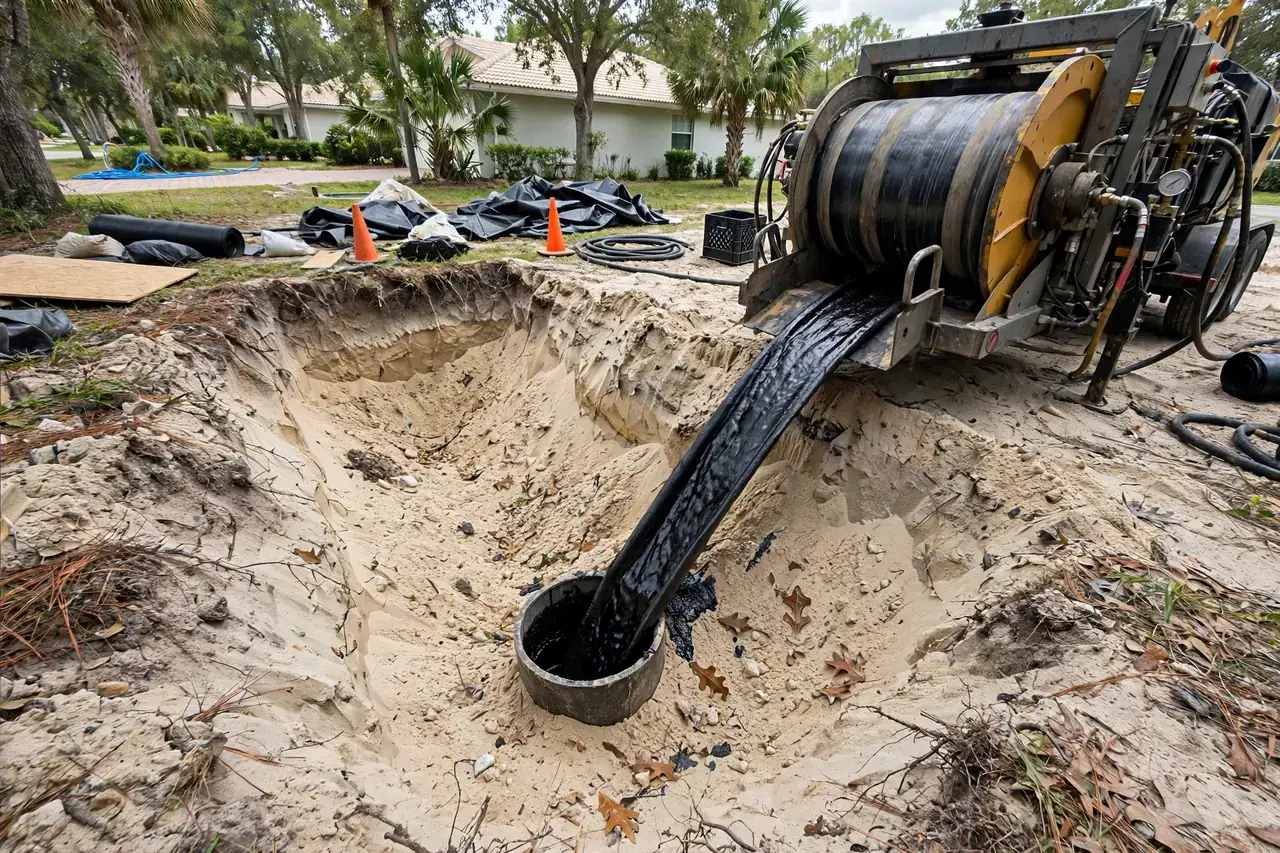
CIPP Pipe Lining
CIPP pipe lining in Sarasota, FL creates a new pipe inside the old one: no trench. Camera inspection, cleaning…
Learn more →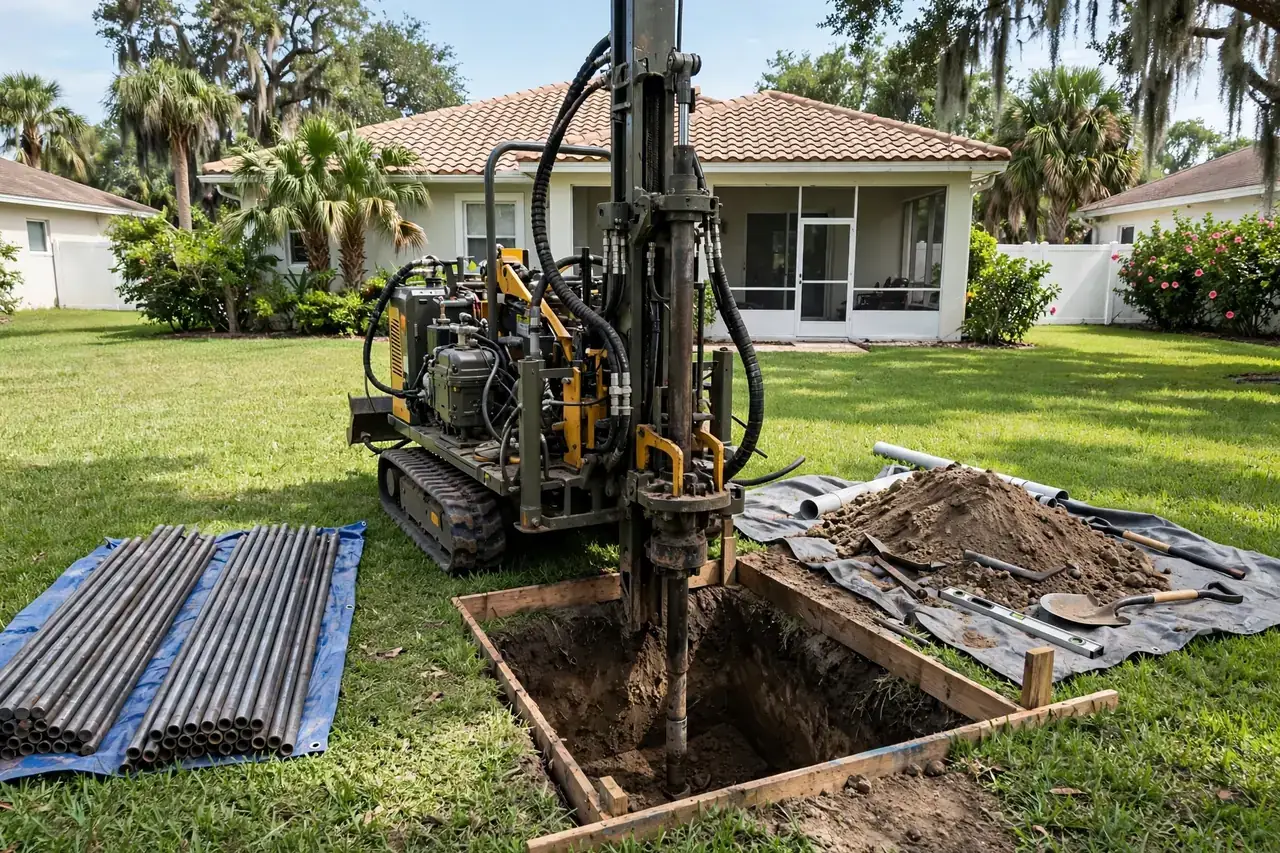
Trenchless Sewer Repair
Trenchless sewer repair in Sarasota, FL with minimal digging. Camera diagnosis, pipe bursting & CIPP lining. C…
Learn more →Nearby Service Areas
Frequently Asked Questions
My pipe is collapsed. Does that rule out both methods?
Not always, and the camera is what settles it. Pipe lining needs an existing pipe to line, a collapsed or badly misshapen pipe cannot hold a liner. Pipe bursting destroys the old pipe, so it handles collapse, but it needs the surrounding soil to hold the burst path. Roughly speaking, lining wins when the pipe is intact but cracked; bursting wins when the pipe has failed structurally.
Do either of these methods require digging at all?
Both are trenchless, meaning no continuous open trench from house to street. Both still need small access points, typically one or two pits, at the ends of the run. Pipe bursting usually needs slightly larger entry and exit pits because the bursting head and the new pipe are larger than a liner insertion point.
Which method works best for the cast-iron pipes under slab in my Gulf Gate home?
Cast-iron laterals under slab, the prime failure cohort in Gulf Gate and Bee Ridge, often have internal scale and corrosion but hold their shape, which favors lining. Clay laterals with separated joints and root intrusion can go either way; the camera decides. A bellied section that holds standing water is a bursting candidate, since lining a belly preserves the sag.
Does the pipe need to be cleaned before either method?
Hydro jetting first. A liner needs a clean pipe wall to bond against, and bursting needs the path clear of debris so the head travels straight. Jetting is the standard prep step for both methods, it is not an optional upsell, it is what makes the trenchless repair hold.
Can these methods connect to my existing line at the street?
Yes, provided the connection at the main is sound. Both methods terminate at the city main or at a sound section of existing pipe. If the connection itself is the failed point, a separated joint at the main, that section may need a spot repair regardless of which trenchless method handles the rest of the run.