Trenchless vs. Traditional Sewer Repair: A Sarasota Guide
When a sewer line fails in Sarasota, homeowners usually face the same fork in the road: repair it with minimal digging through trenchless methods, or excavate the traditional way. Both are legitimate. The right choice depends on the pipe, the soil, and what sits above the line.
What Trenchless Repair Covers
Trenchless repair is an umbrella term for methods that fix or replace a sewer line without opening a continuous trench along its length. In residential Sarasota work, it almost always means one of two techniques, sometimes used together on the same property.
Pipe Lining (CIPP)
Cured-in-place pipe lining rebuilds the pipe from the inside. A flexible liner saturated with resin is pulled or inverted into the existing line, then cured, with heat, steam, or ambient cure depending on the product, until it hardens into a smooth, jointless new pipe nested inside the old one. The old pipe becomes the form; the liner becomes the pipe. Access happens through existing cleanouts or small excavated pits at the ends of the run, so the soil above the line stays in place. Cured-in-place pipe lining works best when the old pipe is still structurally round enough to host the liner, heavy scale is cleaned out first, and when the run is reasonably straight, since sharp offsets and collapsed sections can block the liner's path.
Pipe Bursting
Pipe bursting is a replacement method, not a lining method. A conical bursting head is pulled through the old pipe, fracturing it outward into the surrounding soil, while a new pipe, typically HDPE or PVC, is towed in directly behind the head along the same bore path. When the pull is complete, the old pipe is gone and an entirely new line sits in its place. Bursting handles pipe that is too far gone to line: collapsed sections, missing bottoms, severe channeling. It needs entry and exit pits rather than a full trench, and it needs the old line's path to be traceable and reasonably straight so the bursting head can follow it.
What Traditional Excavation Covers
Traditional sewer repair, open-cut excavation, is the original method and still the most direct. The crew locates the damaged section, excavates down to the pipe, removes the failed material, lays new pipe at the correct slope, backfills, compacts, and restores the surface: sod, pavers, driveway, or slab concrete depending on what was opened.
Excavation's advantage is certainty. There is no question about what went into the ground, because the crew handled it with their hands. It deals with anything: lines that have shifted off their original path, sections crushed by soil movement, multiple problems at different depths, and connections that need to be rebuilt rather than bridged. If the camera shows a line that has wandered from its original alignment, not uncommon in Sarasota where saturated sand has been shifting bedding for decades, excavation may be the only method that can correct the slope and the path.
The trade-off is disruption. A trench through a yard means excavation equipment, a soil pile, and restoration of whatever was on top. A trench through a slab means cutting concrete inside the home, dust control, and concrete and flooring restoration afterward. For a short, accessible run, one bad joint in an open side yard, for example, excavation can be the simplest and most straightforward option. For a long run under a house, a pool deck, or mature landscaping, the restoration bill in time and disturbance is what pushes homeowners toward trenchless options.
How Sarasota's Soil and Water Table Shape the Choice
Sarasota's ground conditions do not pick a winner, but they change the math for both sides. The county sits largely on Myakka fine sand with pockets of poorly drained EauGallie fine sand, and the seasonally high water table runs just 0 to 3.5 feet below grade across much of the county. A typical residential lateral runs deeper than that at its low end, which means most Sarasota sewer work happens in ground that is wet or saturated for a good part of the year.
For excavation, that water table is the main complication. An open trench dug below the water table fills with water, and the crew has to dewater it, pump it down and keep it down, while the pipe is laid and bedded. Dewatering slows the job, requires equipment and discharge planning, and in fine sand it can pull sand with the water, undermining the trench walls. None of this makes excavation impossible; it is routine work in Florida. But it is a real factor in scheduling and scope, and it is one reason a trenchless method that avoids a long open cut can be attractive in wet months.
For trenchless methods, saturated soil is less of a direct obstacle, the work happens inside the pipe, not in an open cut, but it is not irrelevant. Entry and exit pits still have to be dug, and in high water-table conditions those pits need the same dewatering attention as any excavation. Soft, saturated sand also means less resistance to pipe bursting, which is helpful, but it can mean less predictable soil support during the pull. And for lining, the saturated ground outside the pipe does not affect the cure, but groundwater infiltrating through large cracks can interfere with resin adhesion if the infiltration is heavy enough, which is why bad infiltration is usually addressed before a liner goes in.
The honest summary: Sarasota's soil and water make every method's planning a little more involved than it would be in dry, stable ground, but they rarely rule any method out. What they do is reward crews who plan for the water, dewatering where needed, infiltration control before lining, and penalize anyone who treats the ground like an afterthought.
Decision Factors: Pipe Condition, Access, and Landscaping
When the camera footage is on the screen, the decision usually comes down to four factors. Run through them in this order and the right method tends to pick itself.
Pipe Condition
This is the gatekeeper. If the pipe is round, continuous, and passable, even with heavy scale or moderate corrosion, lining is on the table, because the old pipe can serve as the liner's host. If the pipe has collapsed sections, missing bottoms, or severe channeling, lining is off the table and the choice is between bursting and excavation. If the line has wandered off its original path or sits at the wrong slope, excavation may be the only method that can truly correct it. Condition first, always.
Access
Trenchless methods need working room at the entry and exit points: space to set up the pull rig, dig pits, and stage equipment. Most Sarasota lots have enough room at the cleanout and the property line, but tight side yards, pool equipment pads built over the lateral, and zero-lot-line situations can constrain the setup. Excavation needs a working corridor along the damaged section itself, plus room for the soil pile and equipment access. A line that runs under a slab with no accessible ends may need excavation at the start just to create trenchless access, which is how hybrid jobs are born.
Landscaping and Hardscaping
What sits above the line matters enormously. A mature live oak canopy, a paver driveway, a pool deck, an irrigation system, all of it is expensive to remove and restore. When the line runs under high-value landscaping or hardscaping, the trenchless methods' small footprint is their strongest argument. When the line runs through an open, easily restored lawn, excavation's simplicity can win on its own merits. Walk the lateral's path with the crew and price the restoration in your head before you choose.
Long-Term Plan
Lining gives you a smooth, jointless rebuilt interior inside the existing pipe's alignment, excellent for corrosion, scale, and joint problems in an otherwise well-placed line. Bursting gives you an entirely new pipe with new material and new joints along the old path, the answer when the old pipe is done. Excavation gives you new pipe exactly where and how the crew lays it, including corrected slope and rerouted sections. All three are long-term fixes when matched to the right problem. None of them is a patch.
Comparing Disruption and Timelines Honestly
Homeowners often ask which method is faster. The fair answer: trenchless jobs are usually shorter in active work days because there is no trench to dig, backfill, and restore, a straight lining or bursting run can often be completed in a day or two of field work. Excavation takes longer because the digging and the restoration are real work: concrete cutting, compaction, sod or paver relaying, each with its own cure and settle time.
But active work days are not the whole story. Permitting, scheduling, and restoration sequencing affect the calendar for both. And a trenchless job that uncovers an impassable section mid-pull, a collapsed segment the camera underestimated, can convert to a hybrid job on the spot, with excavation added for the problem stretch. That is not a failure of the method; it is the reason the initial camera work should be thorough. A careful inspection up front is what keeps either method on schedule.
Disruption is where the methods differ most visibly. Trenchless work concentrates the mess at two pits: noise, equipment, and a soil pile, but the yard between the pits stays intact and the slab never opens. Excavation distributes the disruption along the trench: the line's full path is open ground for the duration, and anything above it, grass, pavers, concrete, is removed and later restored. If you work from home, have pets, or simply dread a torn-up yard for weeks, that difference matters more than a day or two of schedule.
A Practical Way to Decide
Start with a sewer camera inspection and a locate, the footage plus a map of the line's path and depth. That is the information every decision rests on, and any contractor who quotes a method before scoping the line is guessing. With the footage in hand, walk the four factors: pipe condition, access, what sits above the line, and your long-term plan for the property.
Then get the recommendation in plain language. A trustworthy contractor can tell you why lining will or will not work for your pipe, where bursting would need pits, and what excavation would disturb, and the answers should reference your footage, not a brochure. If two methods are both viable, the deciding question is usually restoration: what does the yard, driveway, or slab look like afterward, and what does putting it back cost in time and money? There is more detail on the no-dig side in our overview of trenchless sewer repair in Sarasota, and on the conventional side in our page on sewer line replacement.
One last honest note: the cheapest bid is not the same as the cheapest outcome. A trenchless method applied to a pipe that cannot take it fails expensively. An excavation that tears up an expensive, mature landscape to fix a line that could have been lined is money spent on restoration instead of repair. Match the method to the diagnosis, and the rest, schedule, disruption, and durability, follows.
Published 2026-10-09 · Sarasota Sewer Specialists
Related Sewer Services
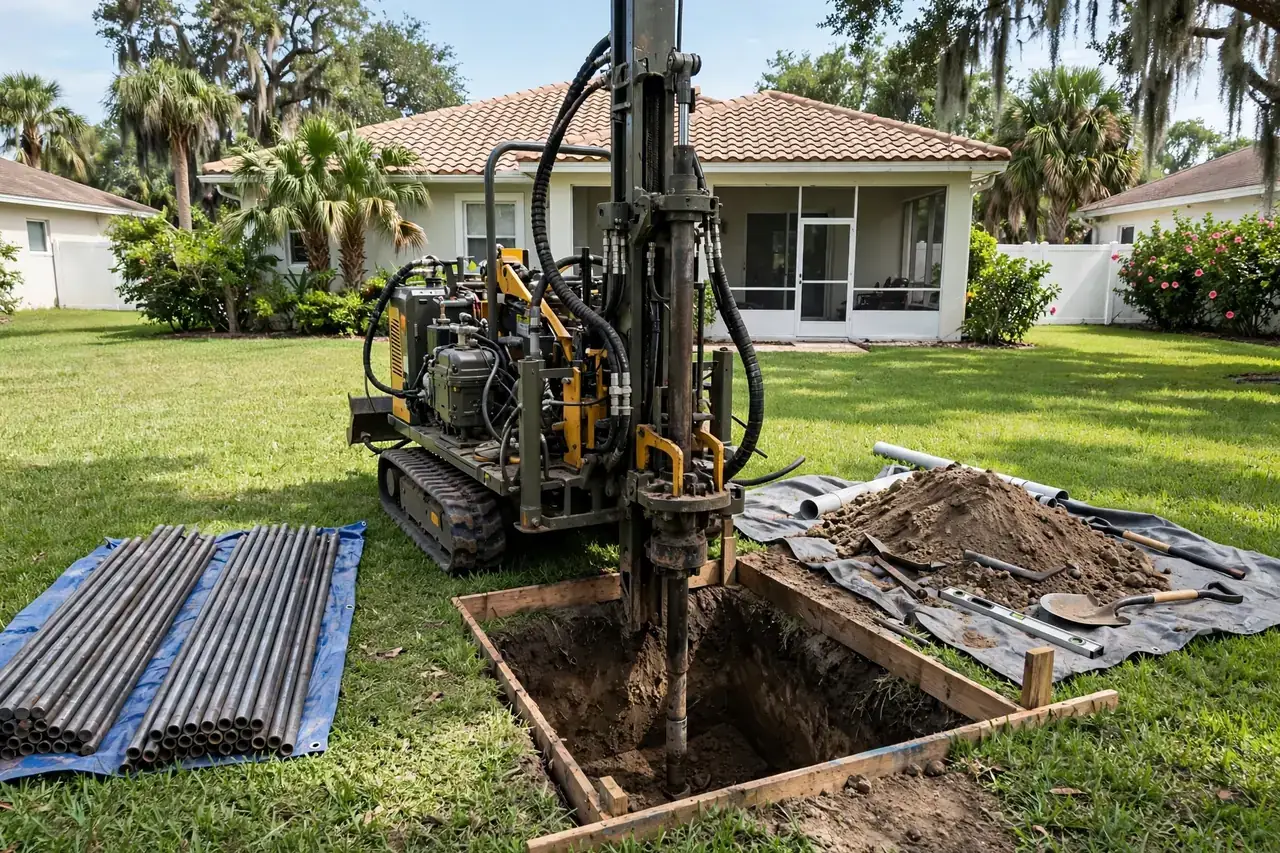
Trenchless Sewer Repair
Trenchless sewer repair in Sarasota, FL with minimal digging. Camera diagnosis, pipe bursting & CIPP lining. C…
Learn more →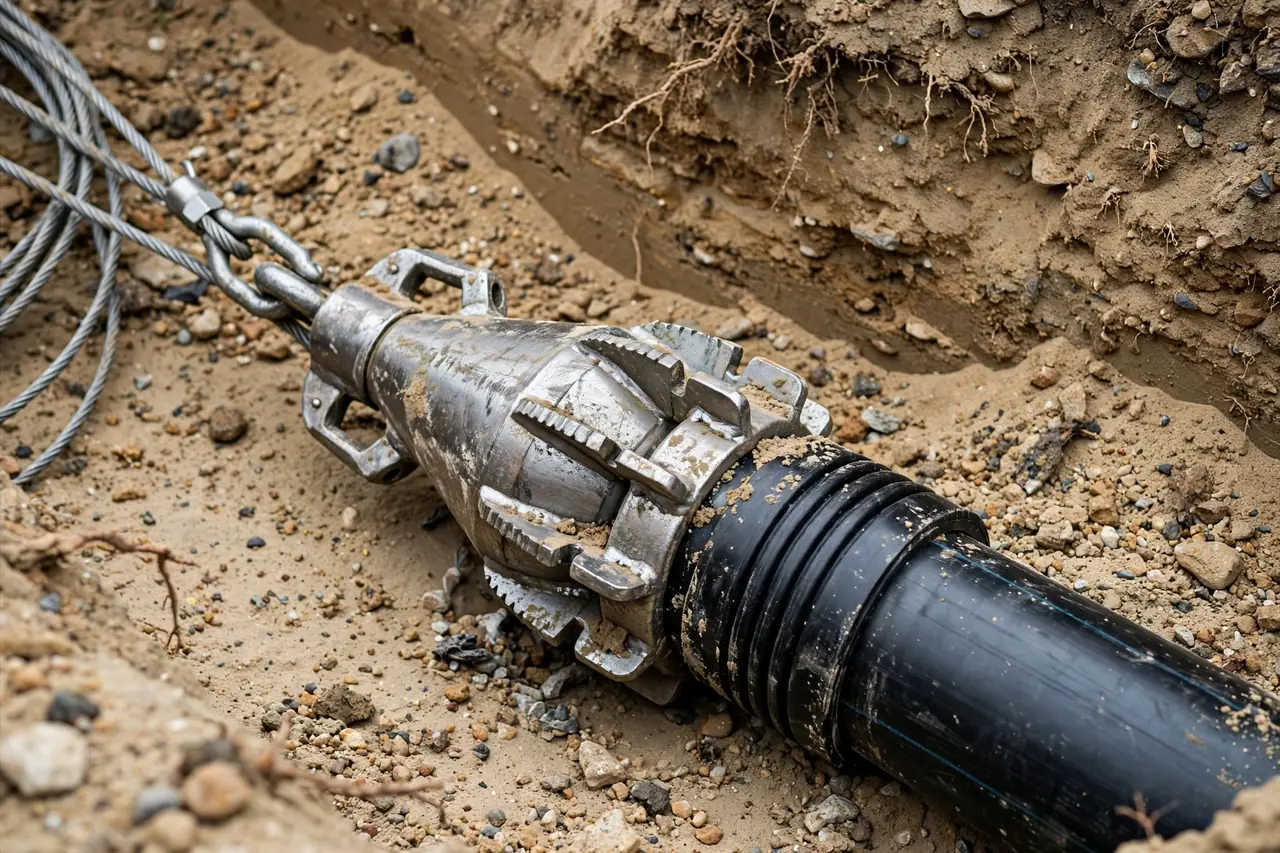
Pipe Bursting
Pipe bursting in Sarasota, FL replaces collapsed sewer lines with minimal digging: new pipe pulled through the…
Learn more →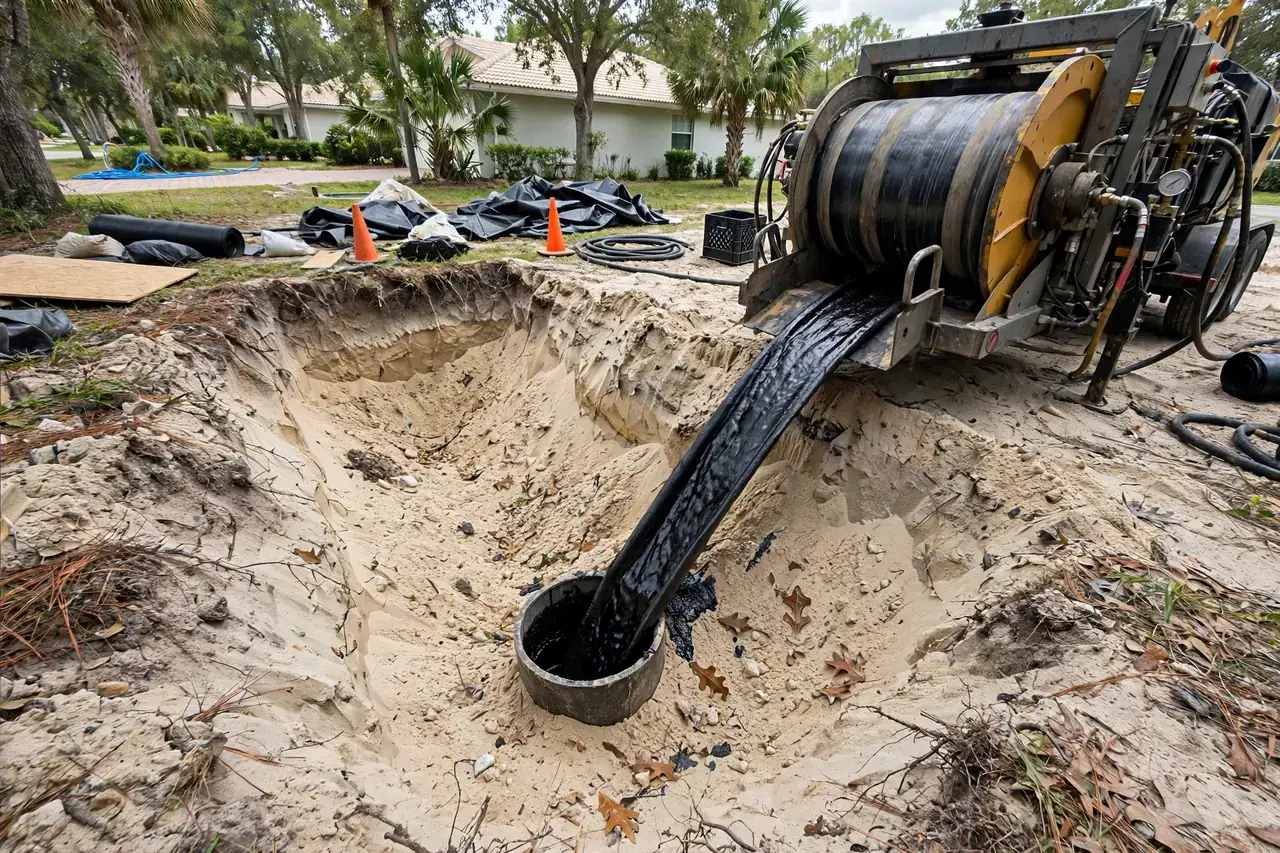
CIPP Pipe Lining
CIPP pipe lining in Sarasota, FL creates a new pipe inside the old one: no trench. Camera inspection, cleaning…
Learn more →Nearby Service Areas
Frequently Asked Questions
Is pipe lining better than pipe bursting?
Neither. Lining rebuilds the pipe inside the existing one through access points; bursting replaces it by fracturing the old pipe outward while pulling new pipe through the same path. Lining keeps the old pipe's alignment; bursting leaves you with an entirely new pipe. Both avoid a continuous trench. The camera footage determines which one your line can take, lining needs a round, passable host pipe.
Can a camera inspection tell me which method I need?
A camera inspection can tell you a great deal: the pipe's material, its internal condition, the location of every defect, and whether the line is straight enough for lining or bursting. What the camera cannot show is soil conditions outside the pipe or how deep the pipe runs, those come from locating equipment and site knowledge. Together they are usually enough to choose a method with confidence.
How long does a typical sewer repair take in Sarasota?
Usually a few days for trenchless work and longer for full excavation, but the honest answer is that it depends on the length of the run, access, permits, and restoration. A short straight run in an accessible yard can go quickly by either method. A long run under a slab with restoration work afterward takes longer. Ask for a timeline estimate after the inspection, when the scope is known.
Does Sarasota's high water table affect which method is used?
Yes, with a caveat. The water table matters most during excavation: an open trench below the water table needs dewatering, which slows the job. Trenchless methods spend most of their time underground and are less affected by surface conditions, but saturated soil can still complicate pit excavation. Either way, a competent crew plans around Sarasota's water table rather than being surprised by it.
What is the most important factor when choosing a repair method?
Start with the camera. Then weigh the pipe's condition (can it be lined?), the access situation (is there room for pits or a trench?), what sits above the line (slab, driveway, mature landscaping?), and the long-term plan (lining gives you a rebuilt interior; replacement gives you all-new pipe). The cheapest option that does not match your pipe's condition is the wrong option. Match the method to the diagnosis.