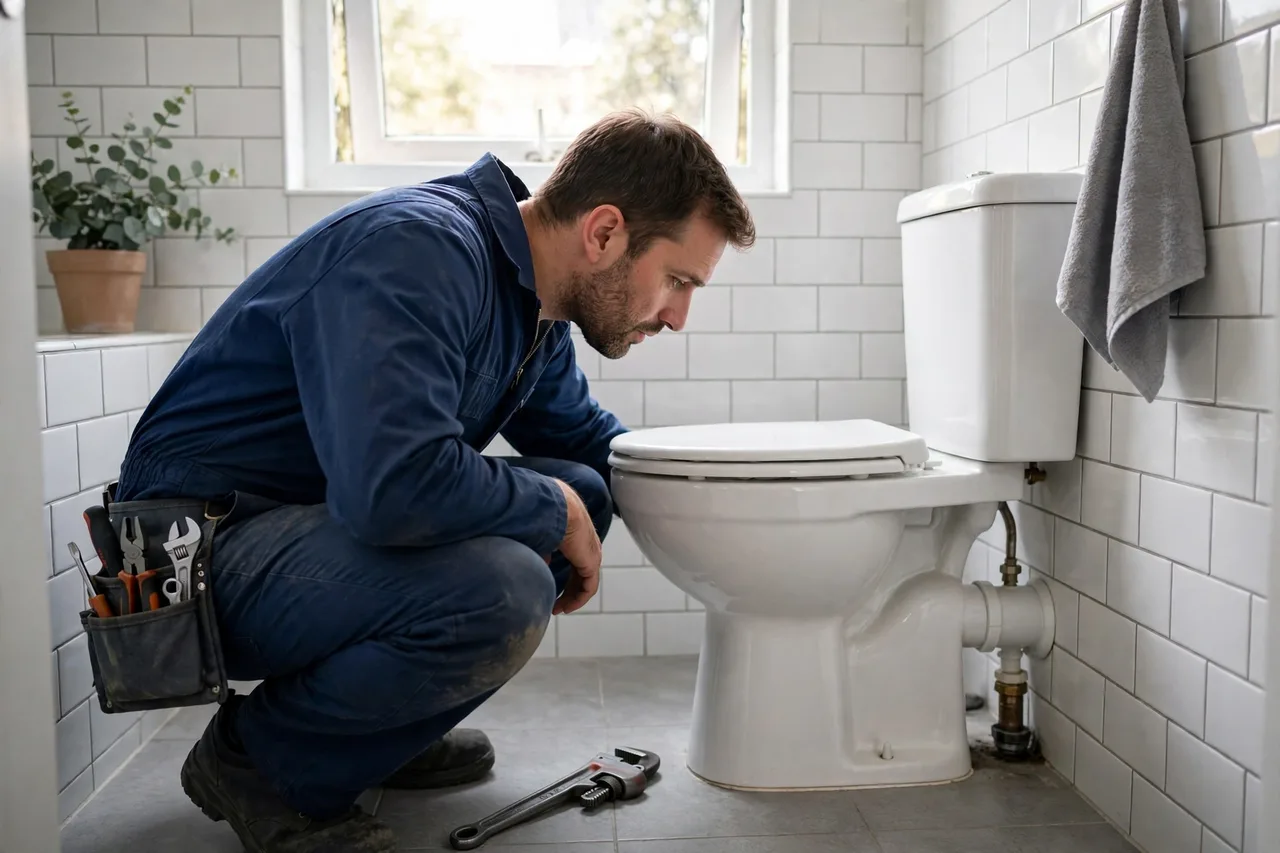
Gurgling Drains in Sarasota: Early Sewer Warning
You run the washing machine and the toilet across the hall starts talking back. A low gurgle, a bubble or two, then quiet. It sounds harmless, almost funny, until it happens every load. In Sarasota that sound is rarely random. It usually means air is trapped somewhere in your drainage system, and the cause is often a venting fault or a partial blockage in the main sewer line.
Gurgling drains mean air is moving through water in your traps instead of flowing freely through the vent or the sewer line. A single gurgling fixture usually points to a local vent or branch problem. Gurgling in several fixtures, or a toilet that bubbles when another fixture drains, points to the shared main line. That pattern is the one to take seriously. A sewer camera inspection shows whether the cause is a partial blockage, a root intrusion, a belly, or a vent fault, so the fix matches the cause.
What That Gurgle Actually Is
A gurgle is the sound of air fighting its way through water. Every drain has a trap, a U-shaped bend that holds a plug of water to block sewer gas. Behind the trap, a vent pipe runs up through the roof and lets air in and out so water can flow smoothly. When something restricts the vent or the pipe, air finds another route and bubbles up through the nearest trap instead.
Think of pouring water from a bottle. Tip it upside down and the water glugs, because air must get in past the water coming out. Give the bottle a second opening and the flow turns smooth and silent. Your plumbing works the same way, and the vent is that second opening.
One Fixture or the Whole House
The most useful question is how many fixtures are involved. A single sink that gurgles is usually a local problem: a slow trap, a partial clog in that branch, or a vent shared by one bathroom. Gurgling in two or more fixtures, or a toilet that bubbles when the washer runs, points to the main line every fixture shares. That distinction decides what happens next, because a branch problem and a main line problem are fixed in completely different ways.
Venting Trouble: When Air Has Nowhere to Go
Vents fail quietly, which is why they get overlooked. The most common cause in Sarasota is a blocked vent stack. Roof vents sit open to the sky, and in a city of live oaks, palms, and afternoon storms, they collect leaves, palm fronds, and nesting material. A vent can also be damaged by a roof repair or crushed where it passes through the attic. When the vent is blocked, draining water pulls a vacuum behind it, and the nearest trap gives up some of its water to fill the gap. That is the gurgle, and it is also a warning: a trap that loses its water seal lets sewer gas into the house.
Older homes add a second vent problem. Many 1960s and 1970s houses in Gulf Gate and Southgate were built when venting standards were looser, and later remodels sometimes tie new fixtures into old vent runs that were never meant to carry them. A bathroom added over a garage can leave a fixture venting through a run that is too long or too narrow. The drain works most of the time, then gurgles when two fixtures run at once. Sewer odor detection often starts with exactly this complaint: a smell that comes and goes with the gurgle.
A Partial Blockage in the Main Line
The other common cause is less forgiving: a partial blockage in the main sewer line. Unlike a vent problem, a partial blockage affects the whole house, and it gets worse over time. The line is still open enough for water to pass, so drains work, just slowly and noisily. Air pushed ahead of a slug of water has nowhere to go but back through a trap, and the toilet is usually the first to complain, because its trap holds the most water and sits closest to the main.
In Sarasota the usual culprits are familiar ones. Tree roots enter through clay and cast-iron joints, drawn by the moisture inside the pipe, and a root mass that started as a few fine hairs becomes a net that catches paper and waste. Internal scale narrows aging cast-iron pipe under the slab, roughening the walls until flow slows. Sandy soil, which shifts with the water table, lets a pipe section sag into a belly that holds standing water and waste. Any of these can produce months of gurgling before the first real backup. Our guide to signs of sewer line failure covers the other symptoms that travel with gurgling, and when several show up together, the case for a camera look gets strong.
Why Sarasota Homes Hear It More Often
Gurgling is not a Sarasota-only problem, but Sarasota's housing stock and ground conditions make it more common here than in most Florida cities. The city has a large share of slab homes built from the 1960s through the 1980s, and those homes carry cast-iron drain pipe under the concrete and clay or cast-iron laterals out to the street. Both materials are at the end of their working life now. Cast iron scales from the inside, clay joints shift and open, and both invite roots. A newer PVC lateral in Palmer Ranch or Fruitville can gurgle too, but it usually takes a root intrusion at a joint or a belly from settling soil to do it.
Then there is the ground itself. Sarasota sits on deep, loose sand with a water table that rises close to the surface in the rainy season. Saturated sand loses its grip on a buried pipe, and sections settle unevenly, opening joints and forming bellies. The same water table also pushes groundwater into cracked pipes, narrowing the flow just when the household is using the most water. Barrier island homes on Siesta Key and Longboat Key live with the highest water table of all, and their laterals are the first to complain after a storm.
What to Check Before You Call
You can learn a lot in ten minutes without touching a tool. Start by running one fixture at a time and listening. Fill the kitchen sink, pull the plug, and listen at the nearest toilet. Then run the washing machine and stand in the bathroom. Note which fixtures gurgle, which ones drain slowly, and whether the sound follows a pattern. Write it down. A technician who hears, in your words, that the guest bathroom toilet bubbles every time the washer drains has a much better starting point than one who hears that the drains make noise sometimes.
Next, check the obvious. Is only one drain slow, or are several slow at once? Is there a smell, and does it come and go with the gurgle? Has the problem changed since the last big rain? Look outside for a cleanout, the capped pipe near the house wall or in the yard, and note whether the ground around it is wet or sunken. Do not open the cleanout yourself if sewage could be standing behind it. Skip the chemical drain cleaners. They rarely reach a main line blockage, they can damage older pipe, and they make the line hazardous for whoever opens it next. A plunger is fine for a single slow toilet, but it will not fix a main line. If sewage ever backs up into a tub, stop running water and call for emergency sewer repair.
When a Camera Inspection Is the Right Next Step
A camera inspection is the right next step when the pattern points to the main line, when the gurgling has lasted more than a couple of weeks, or when it comes back after a clearing. The camera goes in through a cleanout, travels the full lateral to the street or septic connection, and records everything it sees: roots at a joint, scale narrowing a cast-iron run, a belly holding standing water, a cracked section, a separated joint. You watch the footage with the technician, so the diagnosis is not a guess. It is a picture of your pipe.
The footage also decides the fix, which is the real reason to get it. Roots at one joint call for tree root removal and a look at whether that joint can be sealed. Scale through a long run may call for hydro jetting to scour the pipe walls and restore flow. A collapsed or badly bellied section calls for replacement, and the camera shows exactly where, so the repair targets one section instead of the whole yard. A vent problem, by contrast, shows a clear main line, which rules out the major repair and points the work at the roof instead. A sewer camera inspection turns a worrying noise into a plan. Our problem page on gurgling toilets and drains walks through the same decision in symptom form.
Published 2026-11-07 · Sarasota Sewer Specialists
Related Sewer Services
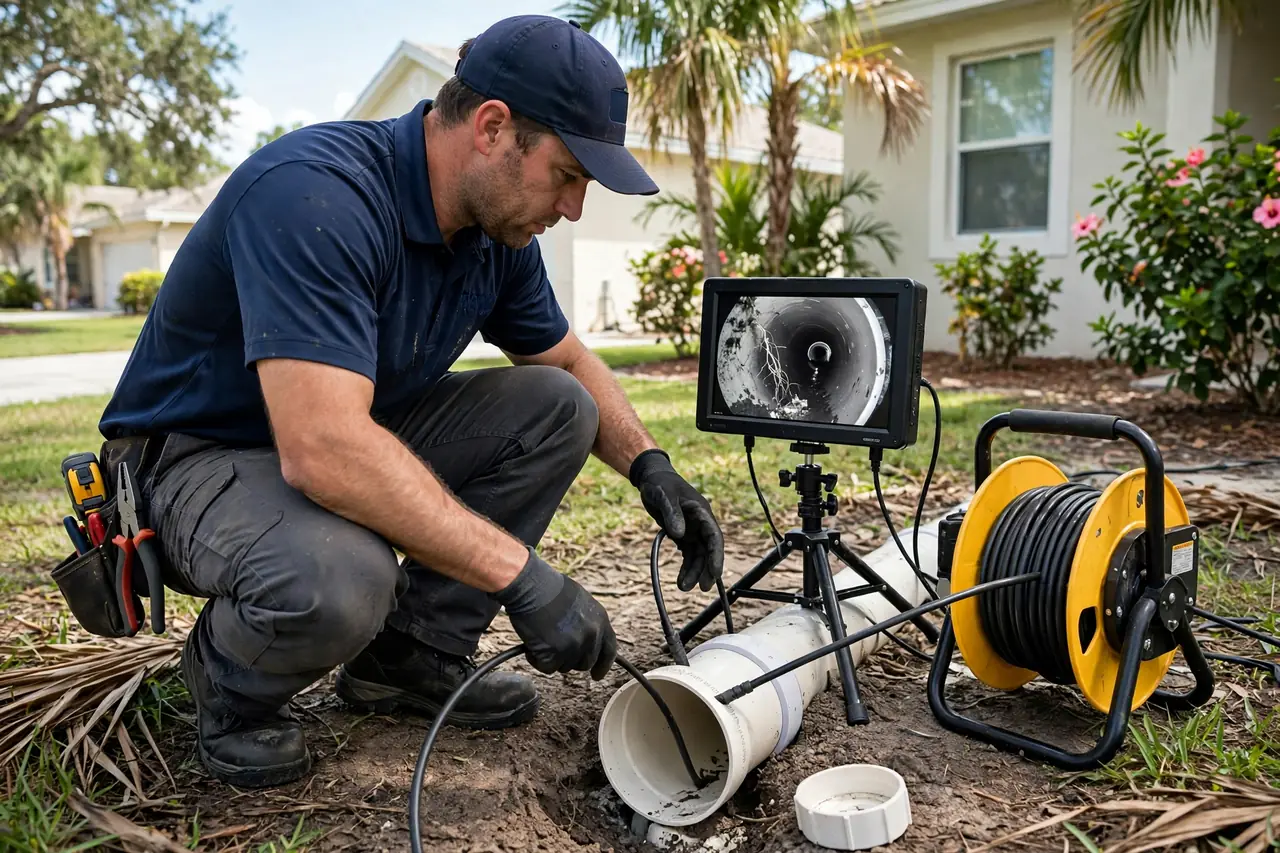
Sewer Camera Inspection
Sewer camera inspection in Sarasota, FL finds roots, scale, bellies & breaks before you dig. HD video diagnosi…
Learn more →Sewer Odor Detection
Sewer odor detection in Sarasota, FL. We find the source of sewer gas smells: vents, traps, laterals. Call (94…
Learn more →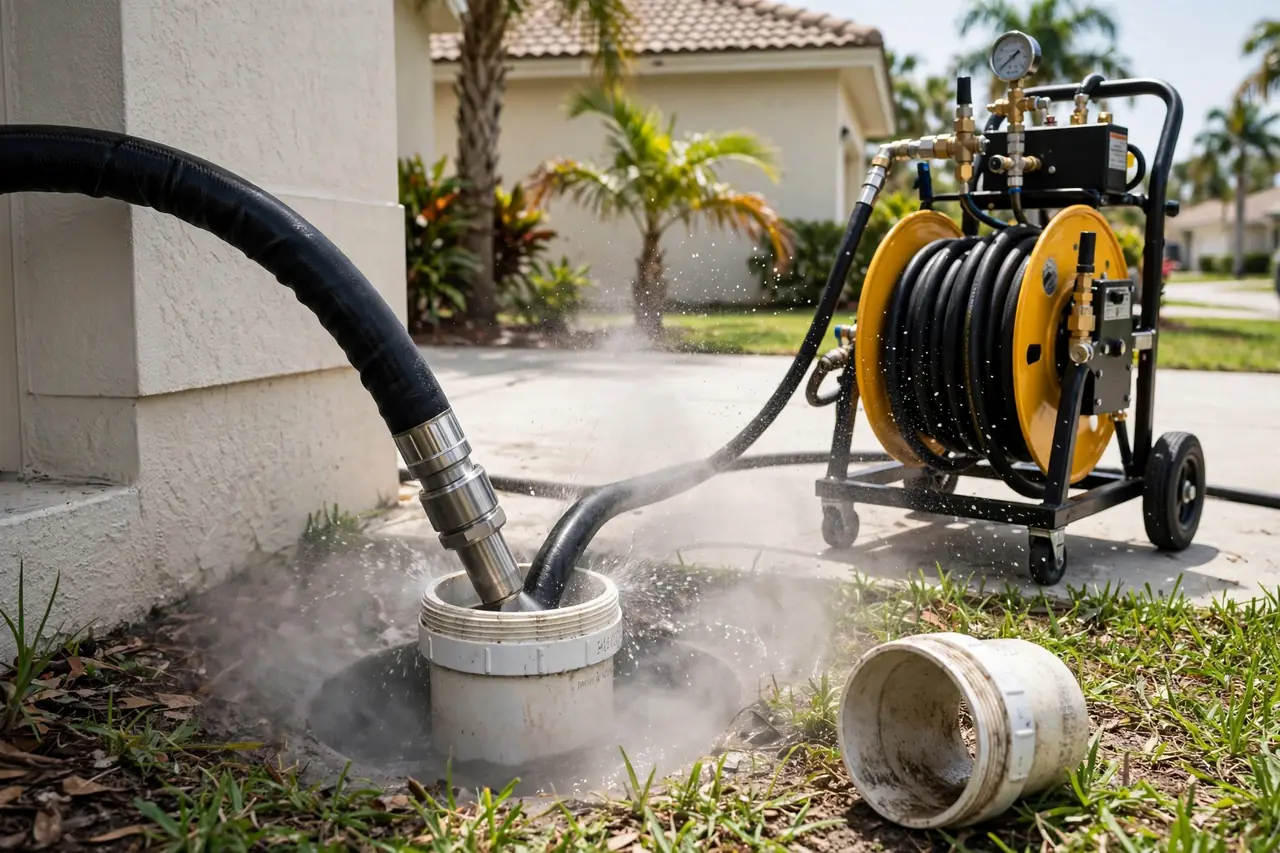
Hydro Jetting
Hydro jetting in Sarasota, FL clears grease, scale, and sand with pressurized water. Camera inspection first. …
Learn more →Nearby Service Areas
Frequently Asked Questions
Why does my toilet gurgle when the washing machine drains?
The washing machine discharges a large volume of water quickly, and that water pushes air ahead of it through the main line. If the line is partially blocked or the vent cannot keep up, the air escapes through the nearest trap, which is usually the toilet. A toilet that bubbles when another fixture drains is one of the clearest signs the problem is in the shared main line rather than in the toilet itself.
Is a gurgling drain an emergency?
Usually not, but it is a warning worth acting on. Gurgling on its own, with drains still working, means you have time to diagnose the cause with a camera inspection. It becomes urgent if sewage backs up into a tub or shower, if several fixtures back up at once, or if flushing one toilet makes water rise in another. At that point, stop running water and call for emergency help.
Can a blocked vent cause gurgling in every drain?
A single blocked vent usually affects only the fixtures that share that vent stack, often one bathroom group. Gurgling in every drain at once points further downstream, to the main sewer line. A roof vent blocked by leaves or nesting material is a common Sarasota cause, and it often brings a faint sewer smell with it, because a trap that loses its water seal lets gas into the house.
Will a drain snake fix a gurgling sewer line?
Sometimes, for a short while. A snake can punch a hole through a soft blockage and restore flow, which stops the gurgling for a week or two. It does not remove a root mass, it does not scour scale off cast-iron walls, and it cannot fix a belly or a collapsed section. If the gurgle returns after a snaking, the underlying cause is still in the pipe, and a camera inspection is the way to find it.
What will a camera inspection show that a plunger cannot?
A plunger moves water. A camera shows the pipe. The footage reveals roots at a joint, scale narrowing the line, a belly holding standing water, a crack, or a separated joint, and it shows exactly where each problem sits. That is what turns a symptom into a repair plan, because the fix for roots is different from the fix for scale, and both are different from the fix for a collapsed section.