Sewer Line Repair in North Port, FL
North Port holds the largest share of residential development in Sarasota County, and more than a third of the county's septic systems, with phase one residential septic-to-sewer conversions scheduled by 2031.
The County's Largest Residential Footprint
North Port is the biggest city in Sarasota County by land area, and its residential volume dwarfs every other community in this service area. Tens of thousands of homes spread across a street grid laid out for growth, and much of that housing stock dates to the mid-century development wave, with later infill from every decade since.
That scale creates a distinctive sewer picture. The oldest homes carry cast-iron DWV and clay laterals now well into their failure years. Mid-era homes carry transitional pipe. Newer construction is PVC. And running beneath and alongside all of it: the county's largest concentration of residential septic systems.
More than a third of Sarasota County's septic systems sit in North Port. For many homeowners here, the sewer question is not just whether the lateral is failing, but what happens when the street converts, and the answer to the second question starts with knowing the condition of the first.
The 2031 Conversion Timeline
Sarasota County's septic-to-sewer program has North Port's phase one residential conversions scheduled by 2031, part of a broader push driven by Florida's 2030 septic deadline. For homeowners on septic, that timeline is both a promise and a planning tool: the conversion is coming, and the years before it are the time to prepare.
Conversion means your home's wastewater will travel through a new lateral to a county main instead of a drainfield in your yard. The condition of your home's internal drain piping, the route the new lateral will take, and the state of the soil along that route all affect how smoothly the conversion goes, and a camera inspection of your existing lines now gives you a head start on all three.
There is also the interim to manage. A septic system with years left before conversion still has to function through the rainy seasons between now and then. Drainfields in North Port's high-water-table soils are already stressed; keeping them working until conversion day is a maintenance question worth taking seriously. Our septic-to-sewer conversion service covers both the planning and the transition.
Warm Mineral Springs and the Southern Lowlands
North Port's southern edge sits near Warm Mineral Springs, and much of the city occupies low, flat terrain threaded with creeks and wetlands. It is a landscape where water is never far away, above ground in the wet season, and below ground year-round.
The seasonally high water table across much of Sarasota County sits just 0 to 3.5 feet down, and in North Port's lowlands it can reach the surface after heavy rain. Septic drainfields need unsaturated soil to treat effluent; when the water table rises into the drainfield, the system cannot do its job, and backups follow.
The same groundwater pressures sewer laterals. Myakka fine sand, saturated for weeks during the June-to-September rainy season, stops supporting buried pipe, bellies form, clay joints separate under settlement, and groundwater infiltrates cracked lines. Whether your home is on septic or sewer, North Port's water table is the force your wastewater system is fighting.
What Aging Sewer Laterals Look Like Here
North Port's sheer housing volume means our cameras see the full timeline of pipe in a single week. A sewer camera inspection here sorts findings neatly by era:
Cast Iron in Mid-Century Homes
The oldest North Port homes show the familiar cohort signature: scaled, narrowing cast iron under the slab, sometimes with the pipe bottom gone entirely. Symptoms arrive at the fixtures, slow drains, repeat clogs, because the pipe itself is invisible under concrete.
Clay Joints in the Yard
Clay laterals from the same era show shifted joints, root entry from mature landscaping, and infiltration staining on the camera. Each open joint admits groundwater during the wet season and soil year-round, slowly undermining the pipe bed.
Newer Pipe and Construction Defects
In newer PVC neighborhoods, failures are rarer but real: bellies from settled backfill, separated couplings, and root intrusion at joints. A camera establishes the baseline so small defects get fixed before they become big ones.
Rainy Season Pressure on Septic and Sewer Alike
North Port's rainy season, June through September, carrying about sixty percent of the area's 49 to 53 inches of annual rain, stresses both kinds of wastewater systems at once. August, the wettest month at 9.11 inches, is when the calls peak for both septic and sewer alike.
For septic homes, saturation means drainfields that cannot percolate: slow drains, gurgling, wet spots over the drainfield, and odors. For sewer homes, saturation means bellied laterals ponding wastewater and groundwater infiltrating through cracked joints, which can look, from inside the house, exactly like a septic backup.
The August 2024 inland flooding from Debby was a preview of what extreme wet seasons do here, and the 2024 season kept going with Helene and Milton. After a season like that, any system, septic or sewer, deserves an inspection before the next one arrives.
Repair and Conversion Options
For failing sewer laterals, North Port homeowners have the same trenchless options as the rest of the county: pipe bursting to replace a collapsed or badly bellied line along its existing path, and cured-in-place lining to rehabilitate a line that still holds its shape. Both avoid open trenches across large suburban lots. Learn more about trenchless sewer repair.
For septic homeowners, the smart play is staged: maintain the existing system so it survives to conversion, and use the years before 2031 to understand what the conversion will require, the lateral route, the connection point, and any internal piping that needs attention first.
In both cases the work starts the same way: a camera inspection that shows what is actually in the ground. North Port's scale means we have seen every variation this city produces; the footage still gets the final word on your home.
Service Across North Port
Sarasota Sewer Specialists serves North Port in ZIP codes 34286, 34287, and 34288, including:
- Established mid-century neighborhoods with original cast-iron and clay lines
- Septic-system streets slated for phase one conversion by 2031
- Newer PVC subdivisions needing inspection and maintenance
- Homes near Warm Mineral Springs and the southern lowlands
Sewer repair, septic-to-sewer planning, and camera inspections across the county's largest city, call (941) 344-0088.
Sewer Services in North Port
Full-service sewer line care for North Port homes.
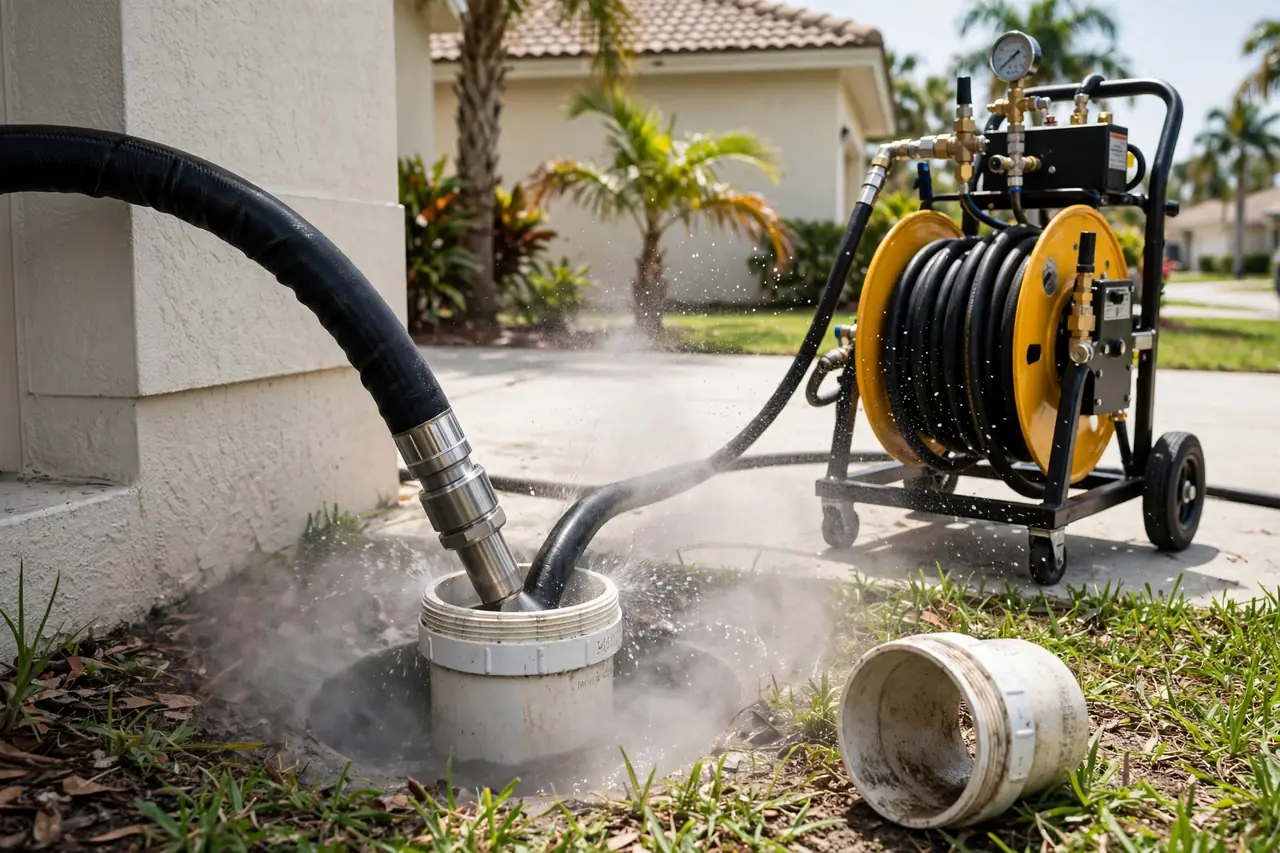
Hydro Jetting
Hydro jetting in Sarasota, FL clears grease, scale, and sand with pressurized water. Camera inspection first. …
Learn more →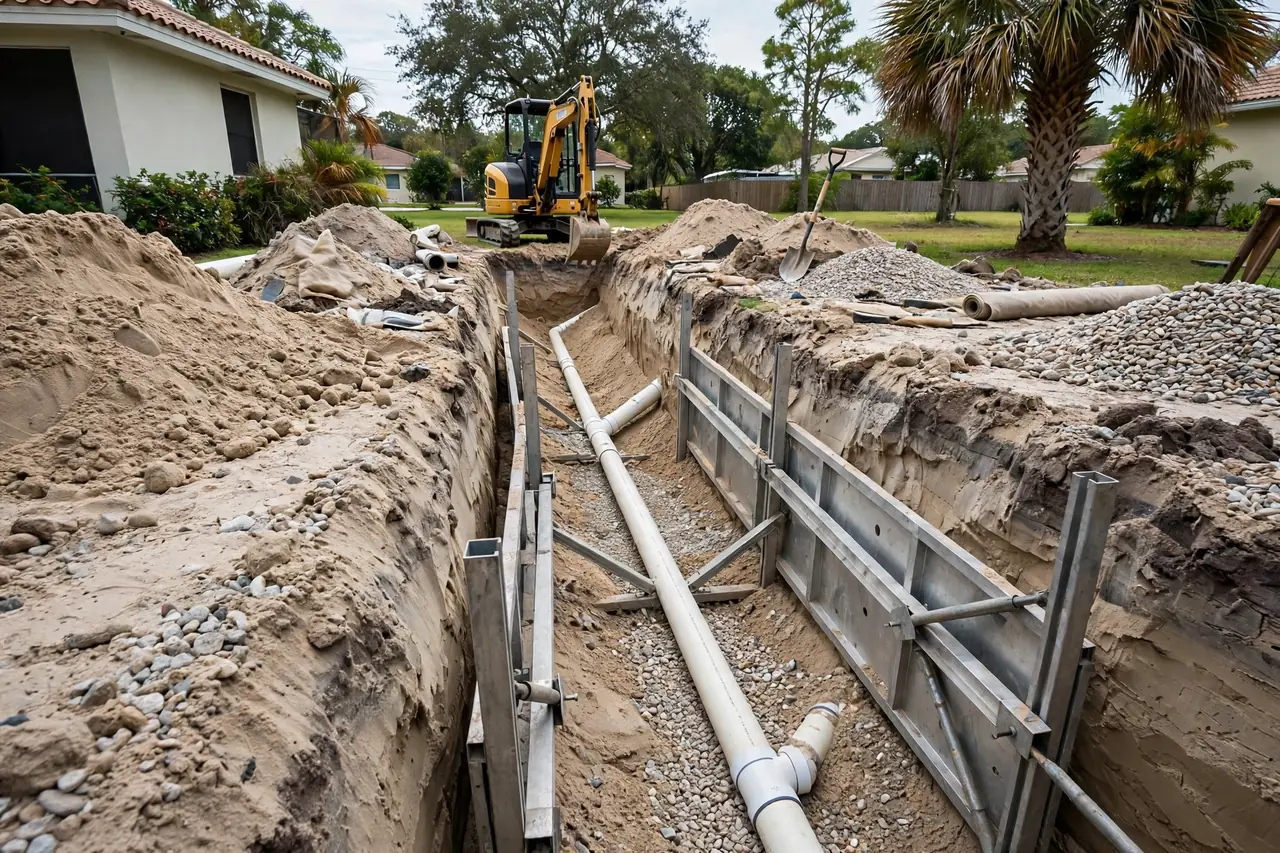
Commercial Sewer Services
Commercial sewer services in Sarasota, FL for restaurants, offices, HOAs. After-hours scheduling. Call (941) 3…
Learn more →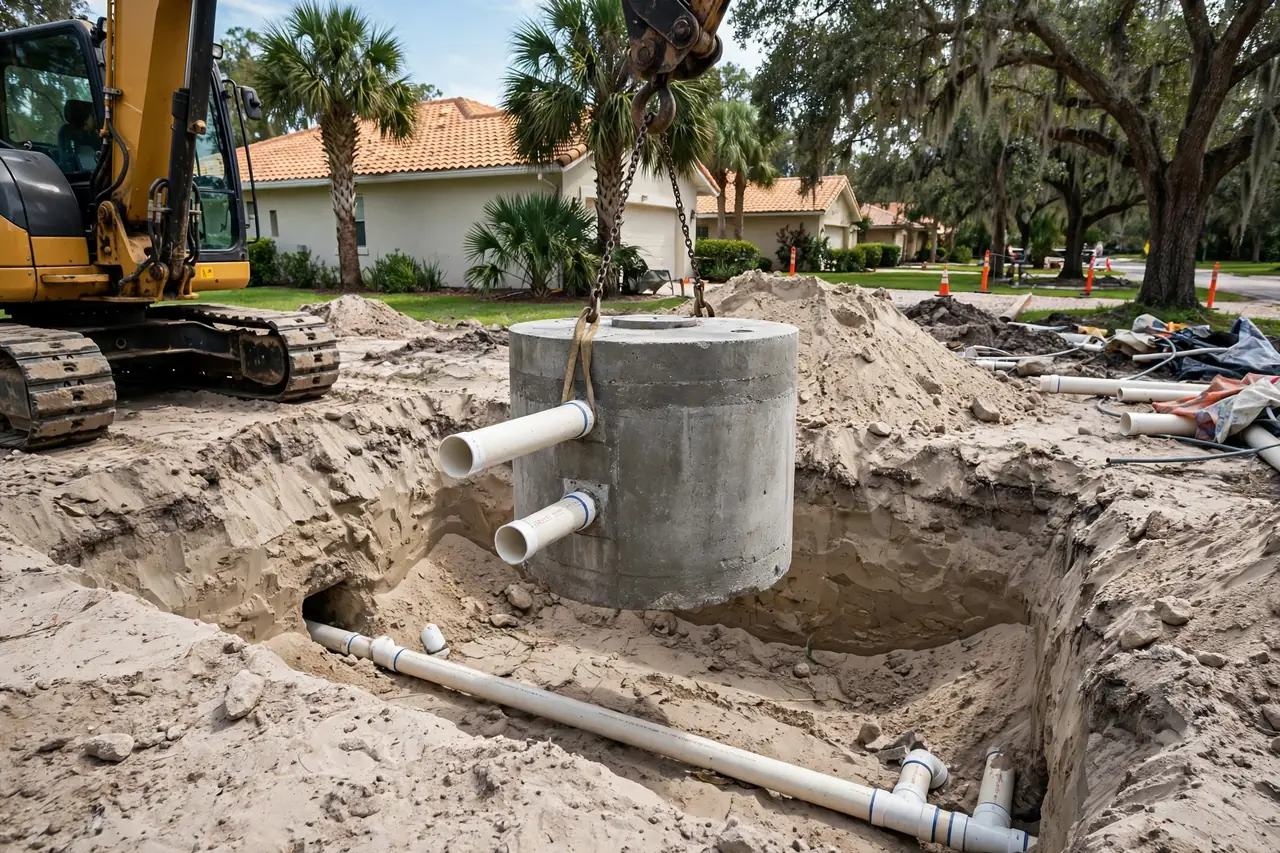
Septic-to-Sewer Conversion
Septic-to-sewer conversion in Sarasota County, FL. County program, timelines, and what owners must do. Call (9…
Learn more →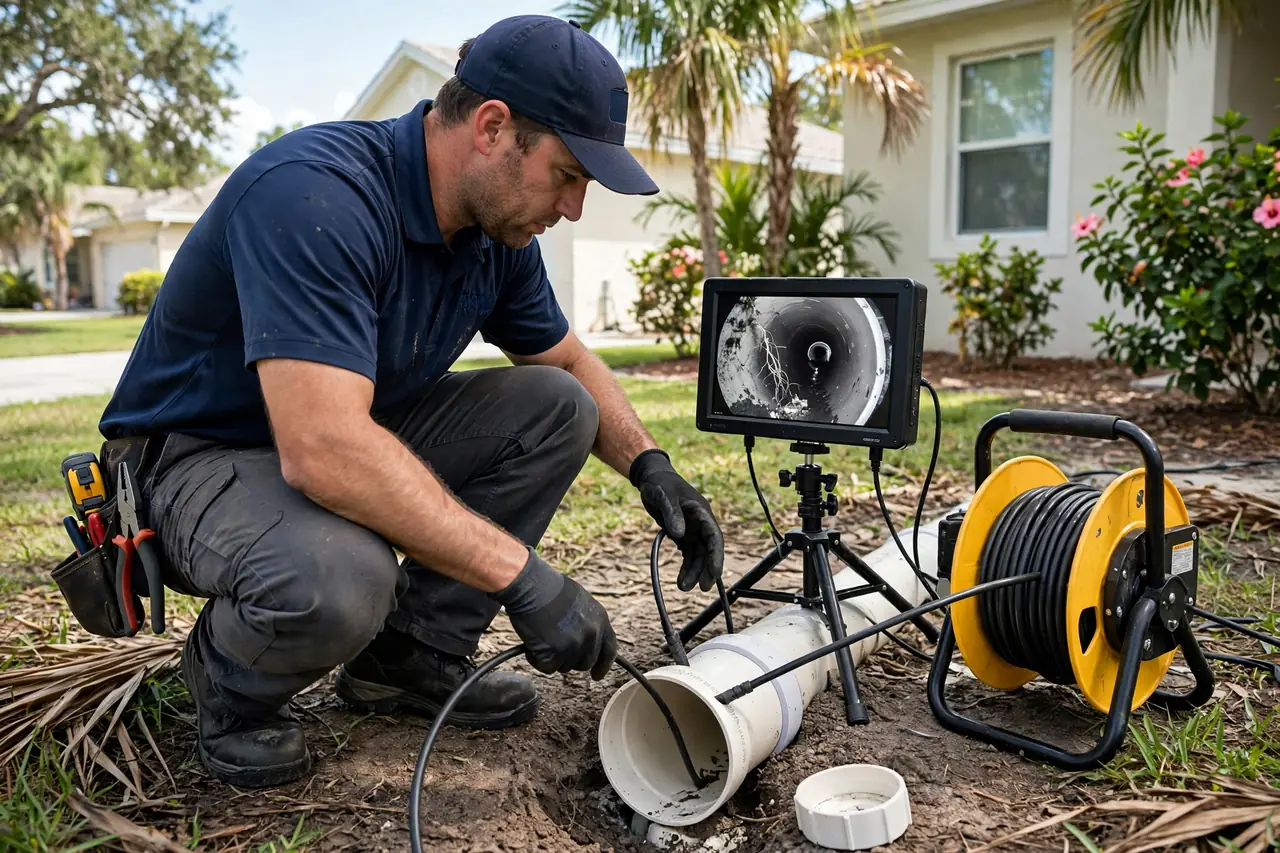
Sewer Odor Detection
Sewer odor detection in Sarasota, FL. We find the source of sewer gas smells: vents, traps, laterals. Call (94…
Learn more →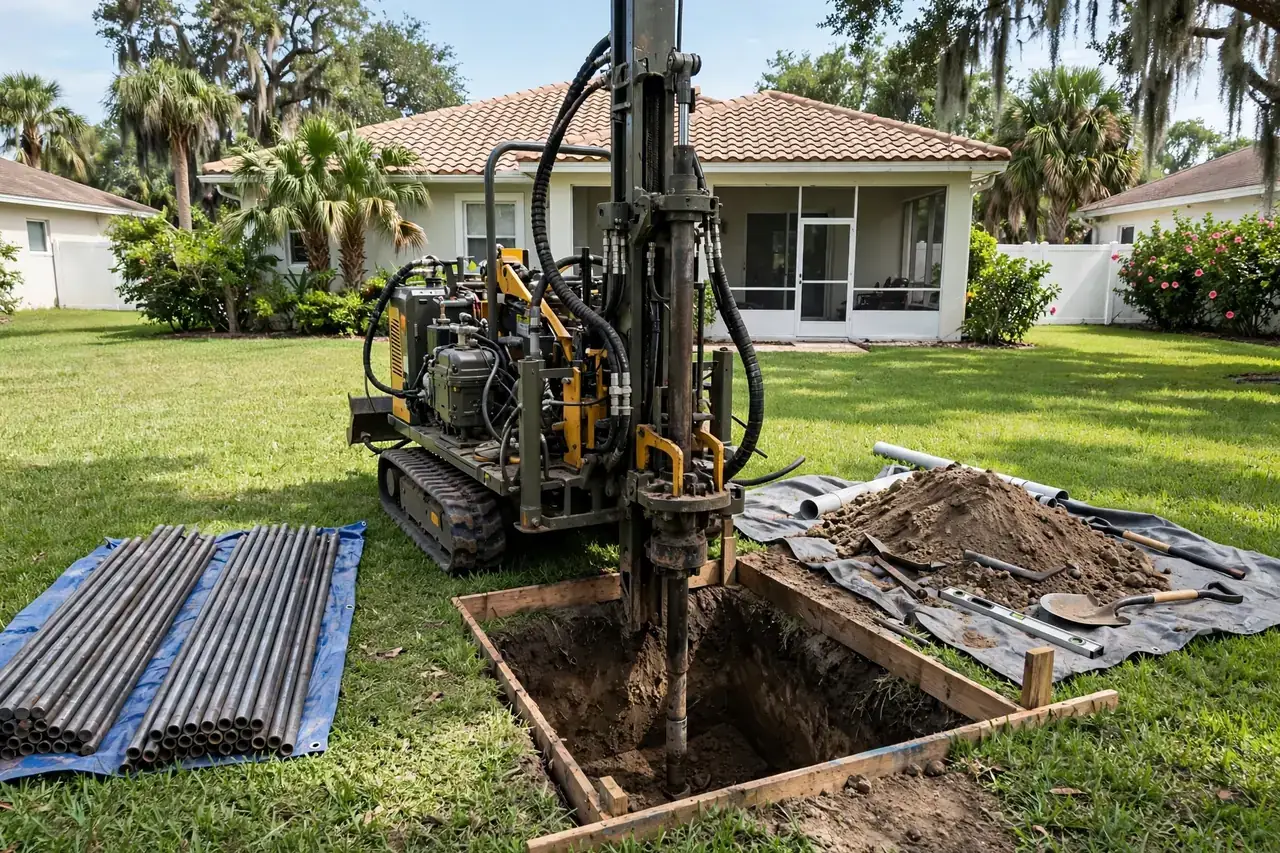
Trenchless Sewer Repair
Trenchless sewer repair in Sarasota, FL with minimal digging. Camera diagnosis, pipe bursting & CIPP lining. C…
Learn more →ZIP Codes Served
Local Sewer Guides
Septic-to-Sewer Conversion in Sarasota County: The 2026 Picture
Sarasota County septic-to-sewer conversion: deadlines, timelines, and what homeowners should know. Call (941) …
Learn more →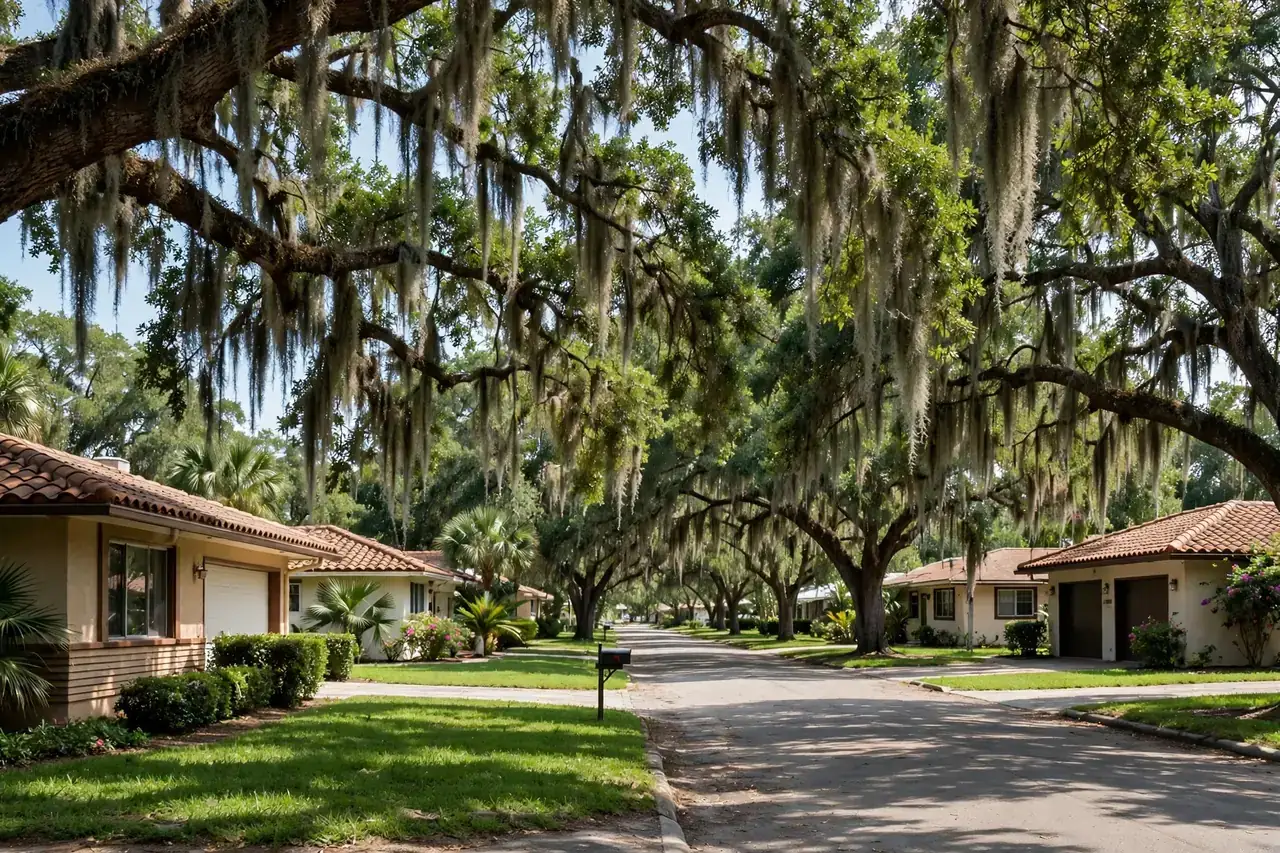
Why Sarasota Sewer Backups Spike Every Rainy Season
Sarasota sewer backups spike every rainy season, June to September. Learn why and what to do. Call (941) 344-0…
Learn more →Frequently Asked Questions
When will my North Port street convert from septic to sewer?
Phase one residential conversions are scheduled by 2031, as part of the county's broader program driven by Florida's 2030 septic deadline. Timelines can shift, infrastructure projects do, so treat 2031 as the planning horizon, not a guaranteed date. Your street's position in the phasing sequence determines when the work reaches you; the county publishes the sequencing as it firms up.
Should I keep repairing my septic system if conversion is coming?
In most cases, yes, the system has to carry you through the years between now and conversion. A drainfield in North Port's high-water-table soils is already working hard; skipped maintenance can turn those remaining years into a string of backups. Keep up with pump-outs, protect the drainfield from traffic and excess water, and address problems early rather than limping to conversion day.
Why does my drainfield struggle every rainy season?
Drainfields need unsaturated soil to treat effluent, and North Port's seasonally high water table, 0 to 3.5 feet across much of the county, rises into many drainfields during the June-to-September rainy season. When the field is submerged, it cannot percolate: drains slow, toilets gurgle, wet spots appear over the field, and odors surface. August, averaging 9.11 inches of rain, is peak season for it.
What will the septic-to-sewer conversion require from my home?
Your home will get a new lateral connecting to the county main, replacing the drainfield's role. What helps the project go smoothly: knowing your internal drain piping's condition, understanding the route the new lateral will take across your lot, and identifying any soil or root issues along that route in advance. A camera inspection of your existing lines now answers all three questions.
Are North Port's sewer laterals as old as Sarasota's?
Many are. North Port's oldest neighborhoods date to the mid-century development wave, with cast-iron drain pipe under slabs and clay laterals in yards, the same prime failure cohort as Sarasota's Gulf Gate and Bee Ridge. Later infill brought transitional pipe and then PVC. As always, the home's era predicts the pipe, and a camera inspection confirms it.
Can trenchless repair handle North Port's long suburban lots?
Yes, long suburban lots are ideal for it. Pipe bursting pulls a continuous new pipe through the old line's path with digging limited to small entry and exit pits, so the length of the lot stops mattering. Lining works the same way on lines that still hold their alignment. Either way, there is no open trench across the yard.
Do you serve all three North Port ZIP codes?
We serve all of North Port, ZIP codes 34286, 34287, and 34288, from the established mid-century neighborhoods to the septic-system streets slated for conversion and the newer PVC subdivisions. Sewer repair, conversion planning, and camera inspections: call (941) 344-0088.