Sandy Soil and Sewer Lines in Sarasota: Shifting Ground
Sarasota looks solid from the street. Lawns are flat, driveways are level, and the houses sit square on their slabs. Underneath, the ground is anything but solid. Most of Sarasota County sits on deep, loose sand with a water table that rises and falls with the seasons, and a buried sewer line has to survive in that moving ground for decades. When sand shifts, settles, or washes away, rigid pipe cannot bend with it. Joints open, bellies form, and cracks spread.
Sarasota sewer lines fail in sand because the ground itself moves. Loose Myakka sand settles unevenly, washes away from under the pipe, and turns heavy when the water table rises. Rigid pipes cannot flex with that movement, so joints open, low spots called bellies form, and cracks let sand and roots in. A camera inspection shows the grade and the joints, and flexible trenchless replacement is usually the lasting fix.
What Sarasota's Sandy Soil Actually Is
Walk any Sarasota yard with a shovel and you will find the same thing a few inches down: fine, pale sand that runs through your fingers and holds almost no shape. The dominant soil here is Myakka fine sand, the state soil of Florida, and it covers much of Sarasota County. It is mostly quartz grains with very little clay to bind them together. That is why it drains fast after a storm and why it never packs down into the firm, cohesive bed that a buried pipe wants underneath it.
The county is not uniform, and the variations matter. Bee Ridge and parts of east Sarasota sit on EauGallie soils that hold water longer and drain poorly, so laterals there spend more of the year in wet ground. Near the bayfront and the barrier islands, the sand is even looser and the water table is higher.
This matters because a sewer line depends on its bedding. The pipe carries the water, but the soil around it carries the pipe. In firm clay country, the ground grips the pipe and holds its slope for decades. In Sarasota sand, the grip is weak, the support is uneven, and every heavy rain rewrites the load. Our guide to sewer line lifespan in Florida breaks down how each pipe material ages in this soil.
How Shifting Sand Moves a Buried Pipe
Sand fails a pipe slowly, in inches and fractions of inches, and that is what makes it hard to catch. It starts with settlement. When a lateral is first laid, the trench is backfilled with sand, and that loose fill compacts over the first few years. If one stretch compacts more than the next, the pipe above it sags. Plumbers call that low spot a belly, and water and solids start pooling there.
Then the sand starts to migrate. A hairline crack or an open joint lets a little water out, and the water carries sand grains with it. Each leak washes a little more bedding away from under the pipe, which lets the pipe sag a little more, which opens the joint a little wider. It is the same self-feeding loop that ruins clay joints, only the sand is doing the work instead of the roots.
Tree roots finish what the sand started. A live oak does not need to break a pipe to hurt it. Its roots push through loose sand easily, and once they reach a joint that sand movement has already opened, they grow into the gap and wedge it wider. The clay pipe joints guide shows how roots exploit those open joints. A sewer camera inspection shows the whole story at once: the belly, the offset joint, and the sand washing in through the crack.
The Water Table Makes It Worse
Sarasota's water table is shallow, often just a few feet below grade, and it moves with the seasons. In the dry winter months it drops and the sand above it dries out and lightens. In the rainy season, from June through September, it rises until the sand around a buried lateral is saturated. Saturated sand is heavy, and that weight presses down on the pipe while groundwater pushes up from below. A rigid pipe caught between those forces has nowhere to go except down at its weakest point.
High water also turns small leaks into big ones. When the ground is saturated, water flows into the pipe through every open joint and crack, a process called infiltration. The extra water overwhelms the line during storms, which is a major reason Sarasota sewer backups spike every rainy season.
On the barrier islands and near the bayfront, the water table barely drops at all. Laterals on Siesta Key and Longboat Key spend most of the year in wet sand Inland, the swing between wet and dry seasons is the problem: the ground swells and shrinks around the pipe twice a year, and sixty years of that cycling is enough to walk a joint apart.
Which Pipes Suffer Most in Sand
Clay pipe suffers first, because it has the most joints. A clay lateral is a chain of short segments joined with mortar, and every joint is a place where sand movement can open a gap. The clay itself can last a century, but the joints cannot survive decades of settling sand. Once a joint opens, sand and roots come in together, and the line starts clogging at that seam every few months.
Cast iron fails differently. Under a Sarasota slab, cast iron corrodes from the inside out, and sandy soil makes the outside worse: shifting sand abrades the pipe wall and lets groundwater reach bare metal wherever the coating has worn thin. Orangeburg, the tar-paper pipe used in homes built from the 1940s to the 1970s, is the worst of all in sand: it deforms under load, flattens into an oval, and eventually collapses. See our Orangeburg guide.
Modern PVC handles sand better than any older material, because it flexes instead of cracking and its joints are glued, not mortared. Even PVC can develop a belly if the trench was backfilled with loose sand and never compacted. The lesson is not that one material is perfect. It is that in Sarasota, the soil is part of the pipe system, and any repair that ignores the bedding is a repair that sand will undo.
The Warning Signs of a Shifting Lateral
A shifting lateral announces itself in a pattern, and the pattern is easy to miss if you treat each symptom separately. The first sign is the drain that slows down and then fixes itself. The tub drains slowly on Tuesday and fine on Wednesday, because the belly filled and then cleared, or a root mass shifted and the flow found a new path.
Next comes the recurring clog. A snake clears the line, everything works for a few months, and the same fixture backs up again. Snaking clears the symptom, which is the buildup in the belly, but it does nothing about the sag that caused the buildup. If the same line needs clearing twice in a year, the problem is geometry, not grease. Outside, look for the lush stripe: a band of greener grass marking the line's path, fed by leaking water.
The end stage is the backup that arrives with heavy rain. The belly is already full of standing water, so the storm inflow has nowhere to go, and the line backs up into the lowest fixture in the house. At that point, stop guessing and get the camera in. The seven signs of sewer line failure overlap heavily with sand damage. Ask for the grade: where the line sags and by how much.
Fixing a Line That Sand Keeps Moving
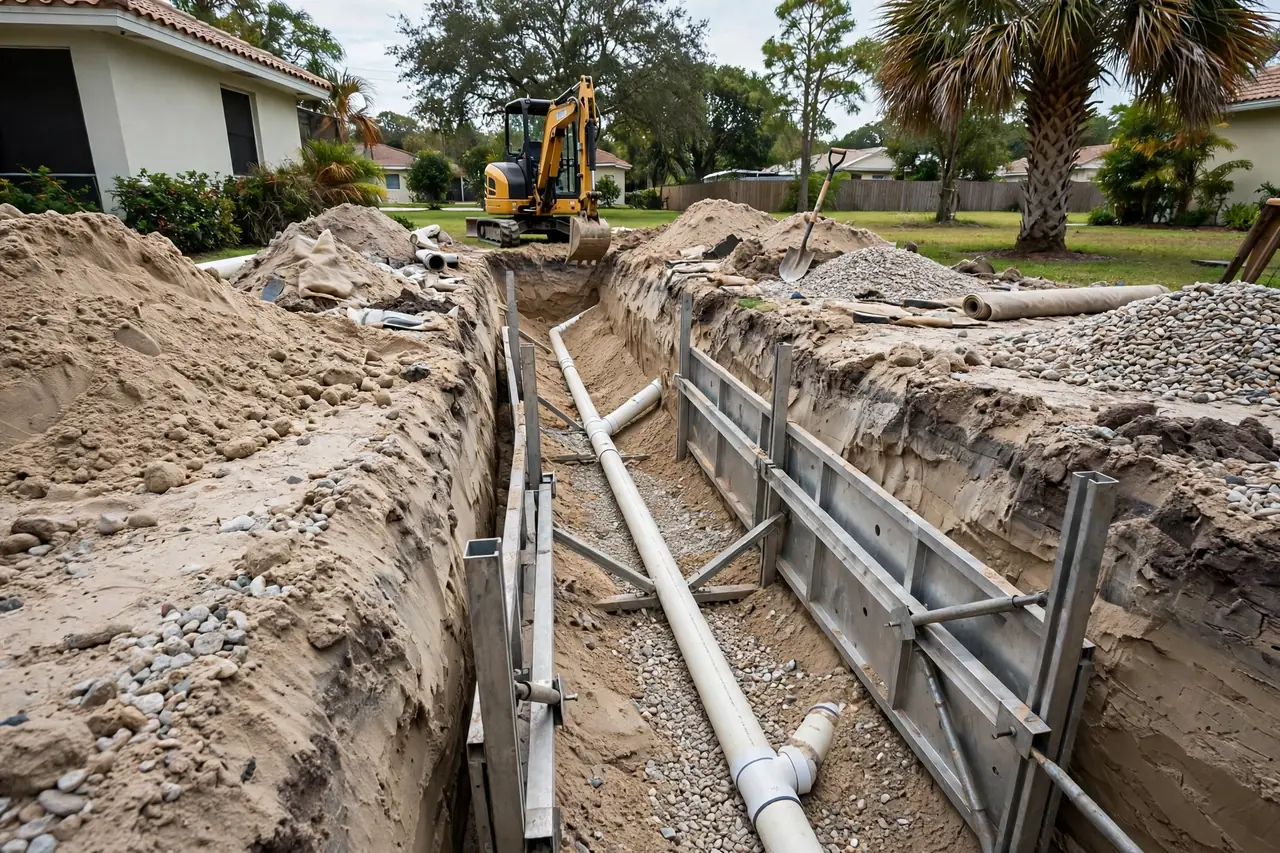
The fix starts with the camera and a locate, and the locate matters as much as the footage. The locate shows where the belly sits and how deep it is. A shallow belly under a lawn can sometimes be fixed by digging down, re-bedding the pipe on compacted gravel, and restoring the grade.
When the damage runs the length of the line, trenchless methods are the stronger answer. Pipe bursting pulls a continuous length of flexible HDPE pipe through the old path, breaking the old pipe outward as it goes. The new line has no joints for sand to open and enough flex to tolerate small ground movement, which is exactly what Sarasota soil demands. Cured-in-place pipe lining is the other option: a resin liner cures into a seamless inner pipe, bridging every joint and crack. Our comparison of pipe bursting vs. pipe lining explains the choice.
What does not work is repeating the same repair on the same sand. Patching one joint while the bedding washes out under the next one just means facing the same problem twice. The lasting fix addresses the soil as well as the pipe: proper bedding, correct grade, and a pipe material that can live with ground that moves. When the camera shows a line that sand has beaten, sewer line replacement with proper gravel bedding is the honest answer. Call (941) 344-0088 and we will show you the grade, the joints, and the sand, on video, before you spend anything on a repair.
Published 2026-11-07 · Sarasota Sewer Specialists
Related Sewer Services
Sewer Line Replacement
Sewer line replacement in Sarasota, FL by excavation when trenchless won't work: proper grade, modern PVC pipe…
Learn more →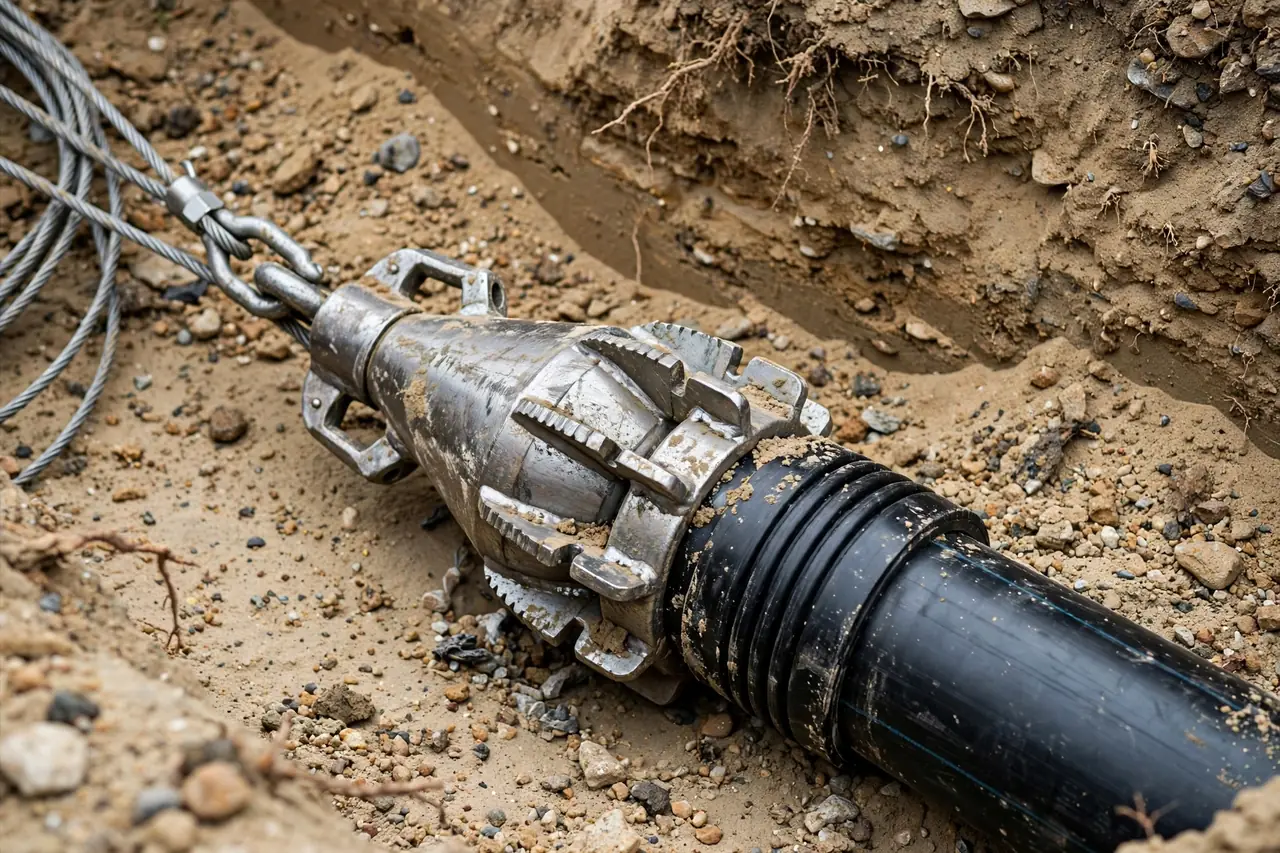
Pipe Bursting
Pipe bursting in Sarasota, FL replaces collapsed sewer lines with minimal digging: new pipe pulled through the…
Learn more →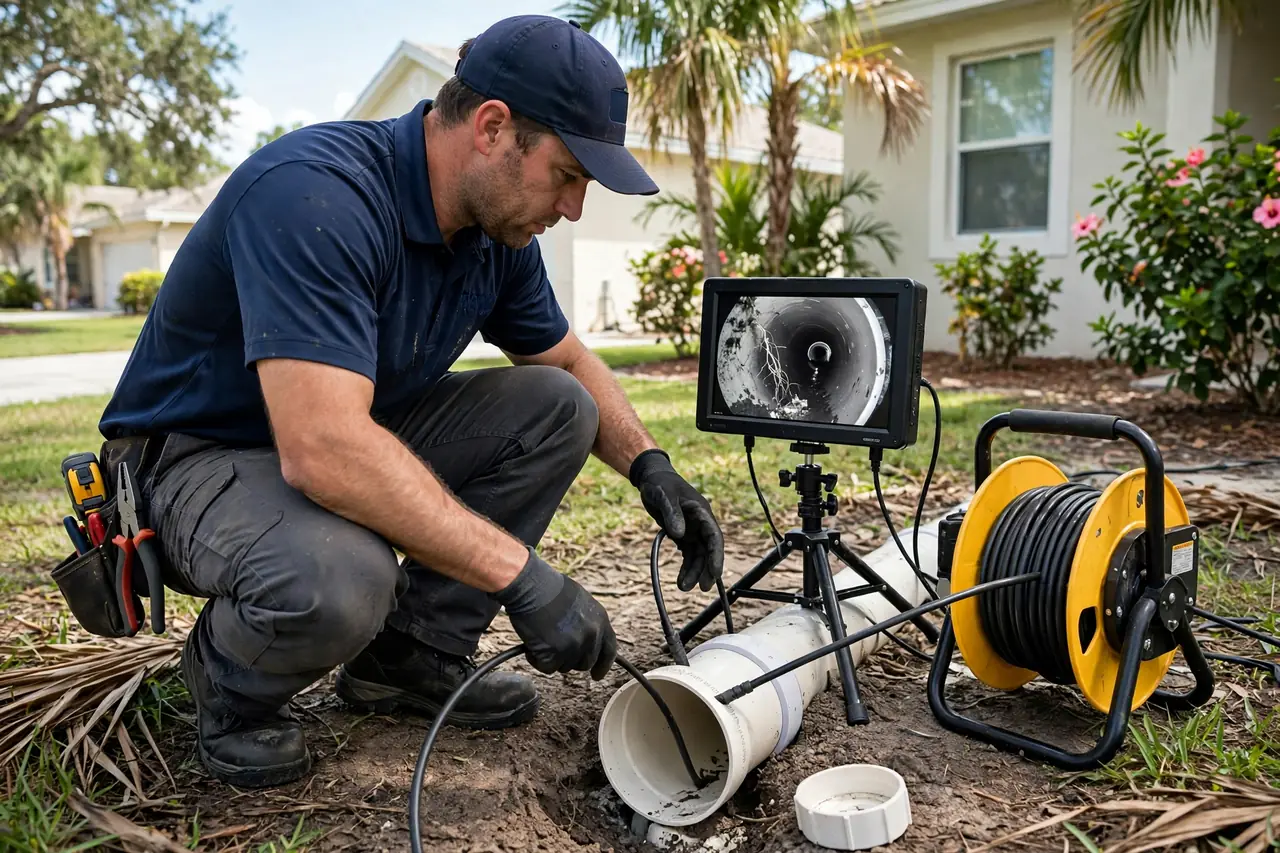
Sewer Camera Inspection
Sewer camera inspection in Sarasota, FL finds roots, scale, bellies & breaks before you dig. HD video diagnosi…
Learn more →Frequently Asked Questions
How do I know if sandy soil damaged my sewer line?
The signs are indirect but consistent: drains that slow down and speed up again, clogs that return weeks after a snaking, a green stripe in the lawn, or a dip forming above the line. A camera inspection gives the direct answer, showing bellies, offsets, and open joints on video.
Can sand really break a sewer pipe?
Yes. Sand does not crush pipe the way a rock would. It moves, settles, and washes away from under the pipe, leaving sections unsupported. A rigid pipe spanning a void eventually cracks or sags, and joints pull apart a fraction of an inch at a time.
Is pipe bursting better than lining in sandy soil?
Often, yes. Pipe bursting pulls a continuous length of flexible HDPE through the old path, so there are no joints for sand to work open and the new pipe can tolerate small ground movement. Lining also works well when the old pipe still holds its shape. The camera decides which one fits.
Does the rainy season make sandy soil worse for pipes?
Yes. From June through September the water table rises and saturated sand grows heavy, pushing and pulling on the line at the same time. That is when bellies worsen, infiltration spikes, and backups cluster. If your line struggles every summer, soil and water are likely part of the story.
Will a camera inspection show sand damage?
Yes, and it shows more than damage. The camera measures the grade, so you can see where water ponds in a belly instead of flowing. It also shows sand washing in through cracks, which tells you the bedding around the pipe is already gone.