
Sewer Line Repair in Downtown Sarasota, FL 34236
Downtown Sarasota's oldest neighborhoods still run on clay tile and early cast-iron sewer laterals installed nearly a century ago. We diagnose those aging lines with camera inspection and repair them with trenchless or traditional methods that fit the lot.
Why Downtown Sarasota Sewers Fail First
Downtown Sarasota is where the city began, and its underground infrastructure shows it. Homes in Laurel Park, the Rosemary District, and Gillespie Park were largely built between the 1920s and 1940s, and the sewer laterals serving them went in during the same era. Clay tile laterals with mortar-sealed joints are the rule here, not the exception, and after eighty or more years underground, those joints are the weak point.
Clay Tile Joints and Sarasota's Water Table
Clay tile pipe comes in short segments, which means a lateral running from a Laurel Park bungalow to the city main has a joint every two to three feet. Each joint is a potential entry point for roots and a potential source of infiltration. In much of Sarasota County the seasonally high water table sits just 0 to 3.5 feet below the surface, so when the rainy season arrives from June through September, these old laterals are sitting in groundwater. Cracked joints let that water pour in, and infiltrating groundwater can overwhelm a lateral and back up a home's drains even when the pipe itself has not fully collapsed.
Early Cast Iron in the Later Years of the Core
As construction continued through the 1930s and 1940s, early cast iron began replacing clay tile for both building drain lines and laterals in parts of downtown. That cast iron is now pushing the same age as the clay it replaced, and cast iron fails from the inside out: internal corrosion roughens the pipe wall, scale builds up and narrows the bore, and the pipe eventually pits through. A camera inspection is the only reliable way to see which sections of a downtown lateral are clay, which are cast iron, and where each material is failing.
Burns Court: 1924 to 25 Mediterranean Revival Bungalows
The Burns Court Historic District south of downtown preserves some of Sarasota's most distinctive architecture: Mediterranean Revival bungalows built in 1924 and 1925, dense and pedestrian-scaled, with courtyards and alley-facing garages. Their sewer laterals are as old as the buildings themselves. When these lots were first plumbed, clay tile was the standard material, laid in trenches that were backfilled with native Myakka fine sand.
What a Century of Sand Does to a Lateral
Myakka fine sand is Florida's state soil and it drains quickly, but when it stays saturated through August, the wettest month of the year, sandy backfill around a century-old trench can lose compaction. The lateral settles unevenly, creating bellies where wastewater pools instead of flowing. A belly in a Burns Court lateral is a quiet failure: drains slow down gradually, the homeowner adjusts, and by the time backups start, a section of pipe has been holding standing waste for years. Camera inspection locates the low spots precisely, which is what makes a targeted trenchless repair possible instead of guessing with a shovel.
Access Constraints on Small Historic Lots
Burns Court lots are small, buildings sit close to property lines, and courtyards and mature landscaping leave little room for excavation equipment. This is exactly the setting where trenchless methods earn their value: pipe bursting or pipe lining can replace or rehabilitate a lateral through one or two small access pits, leaving the bungalow, the courtyard, and the streetscape intact. On tight downtown parcels, preserving the property above the pipe matters as much as fixing the pipe itself.
Rosemary District and Gillespie Park
North of the bayfront core, the Rosemary District and Gillespie Park carry the same vintage as Laurel Park, wood-frame and block homes from the 1920s through the 1940s, many renovated over the decades. Renovations complicate sewer diagnosis: a home may have a modernized bathroom and kitchen on the inside while the lateral outside is still original clay tile. We see this mismatch often in pre-war homes that were flipped or remodeled without the sewer line being touched.
Roots From Mature Canopy Trees
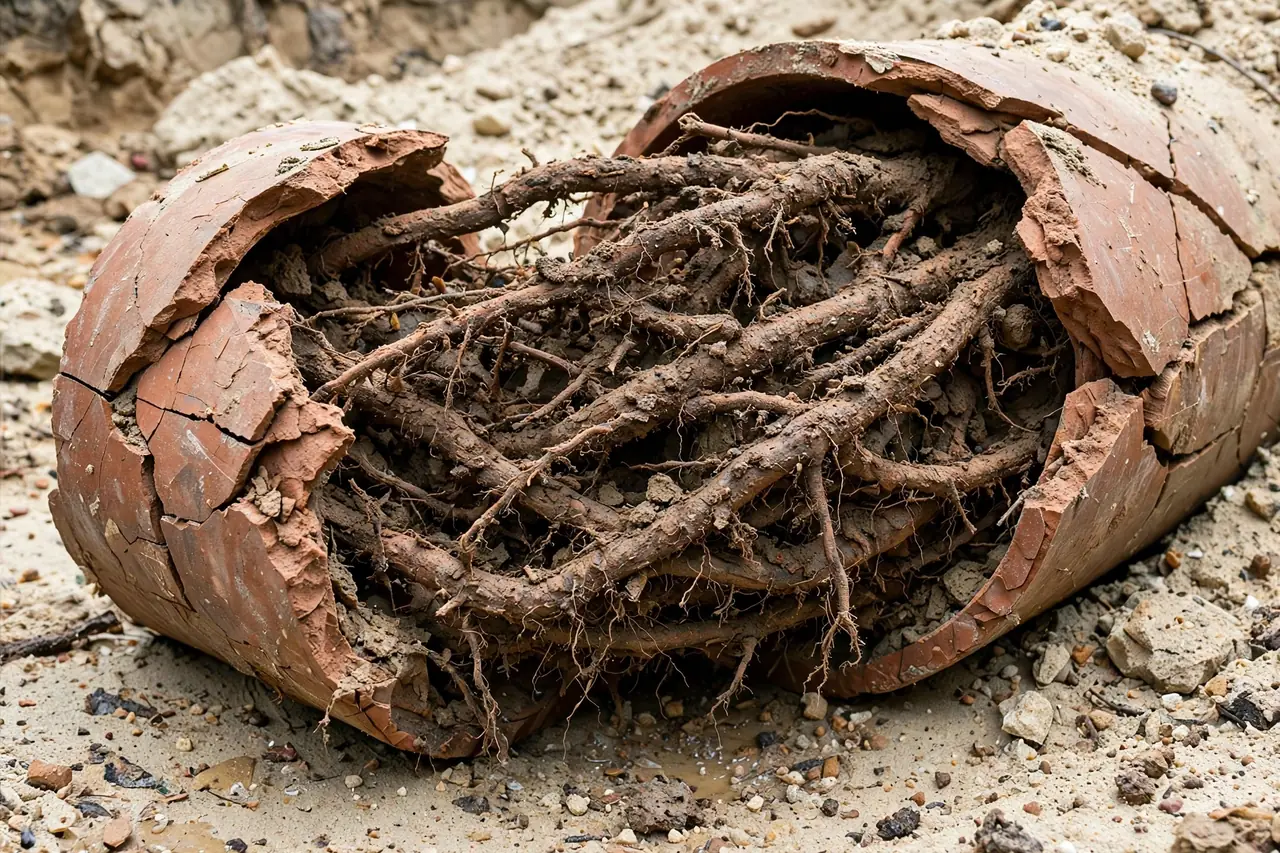
Downtown's mature live oaks and ficus trees are part of what makes these neighborhoods attractive, and they are also the primary biological threat to old clay laterals. Roots seek the moisture leaking from aged mortar joints, enter the pipe, and expand inside it. Once established, a root mass traps paper and waste, and the blockage compounds. Mechanical root cutting clears the symptom; removing the root problem permanently means addressing the joints the roots are entering through, usually with lining or bursting.
Gillespie Park's Slight Elevation Advantage, and Its Limits
Gillespie Park sits a touch higher than the lowest bayfront streets, which helps with surface drainage, but elevation does not change what is happening at pipe depth. The water table is still seasonally high, and a heavy August rain, the county's wettest month at 9.11 inches, can saturate the soil around a lateral in hours. Homeowners here should treat repeated rainy-season backups as a structural warning, not a plumbing nuisance.
Bayfront Proximity and Infiltration
Downtown Sarasota edges directly onto Sarasota Bay, and the streets nearest the bayfront sit low with water close beneath them. During the rainy season, when roughly 60 percent of the area's 49 to 53 inches of annual rain falls, groundwater presses up around every buried utility. For an intact modern lateral this is a non-event. For a clay tile lateral with eighty-year-old joints, it is the season the pipe shows its age.
How Infiltration Presents in a Downtown Home
Groundwater infiltration typically shows up as drains that work fine in the dry season and misbehave from June through September: gurgling toilets, a washing machine that backs up the shower drain, a floor drain that weeps during storms. Because the pipe is not broken in one obvious place, snaking the line provides only temporary relief. A camera inspection during or after a rain event can show active infiltration, water visibly entering the pipe through joint gaps, which is the evidence needed to justify lining the lateral rather than repeatedly clearing it.
How We Diagnose Downtown Laterals
Every downtown job starts the same way: a sewer camera inspection from an accessible cleanout or a pulled toilet. The camera records the pipe material at every foot, the condition of every joint, and the exact location and depth of any belly, break, or root intrusion. You see the footage with us, so the diagnosis is never a matter of trust, it is a matter of looking at the same screen.
Choosing Between Trenchless and Open-Cut
Most downtown clay and cast-iron laterals are candidates for trenchless repair if the pipe still holds a round shape; lining seals every joint at once, which is ideal for clay tile, while bursting replaces collapsed cast iron with new pipe of equal or larger diameter. Open-cut replacement is the right call when the lateral has lost its shape entirely or when the connection at the city main needs rebuilding. Either way, the decision comes from the footage, not from a rule of thumb.
Serving the 34236 Core
Our crews work throughout the 34236 ZIP, Laurel Park, Burns Court, the Rosemary District, Gillespie Park, and the bayfront streets. We also handle the barrier islands of St. Armands and Lido Key, which share the 34236 ZIP but present a completely different set of sewer challenges. If your downtown home was built before 1950 and you have never had the lateral inspected, a camera survey is the most informative hour you can spend on your plumbing.
Call (941) 344-0088 to schedule a camera inspection for your downtown Sarasota home.
Sewer Services in Downtown Sarasota
Full-service sewer line care for Downtown Sarasota homes.
Tree Root Removal
Tree root removal for Sarasota sewer lines: cutting, jetting, and camera verification for live oak and ficus r…
Learn more →
Hydro Jetting
Hydro jetting in Sarasota, FL clears grease, scale, and sand with pressurized water. Camera inspection first. …
Learn more →
Commercial Sewer Services
Commercial sewer services in Sarasota, FL for restaurants, offices, HOAs. After-hours scheduling. Call (941) 3…
Learn more →
Septic-to-Sewer Conversion
Septic-to-sewer conversion in Sarasota County, FL. County program, timelines, and what owners must do. Call (9…
Learn more →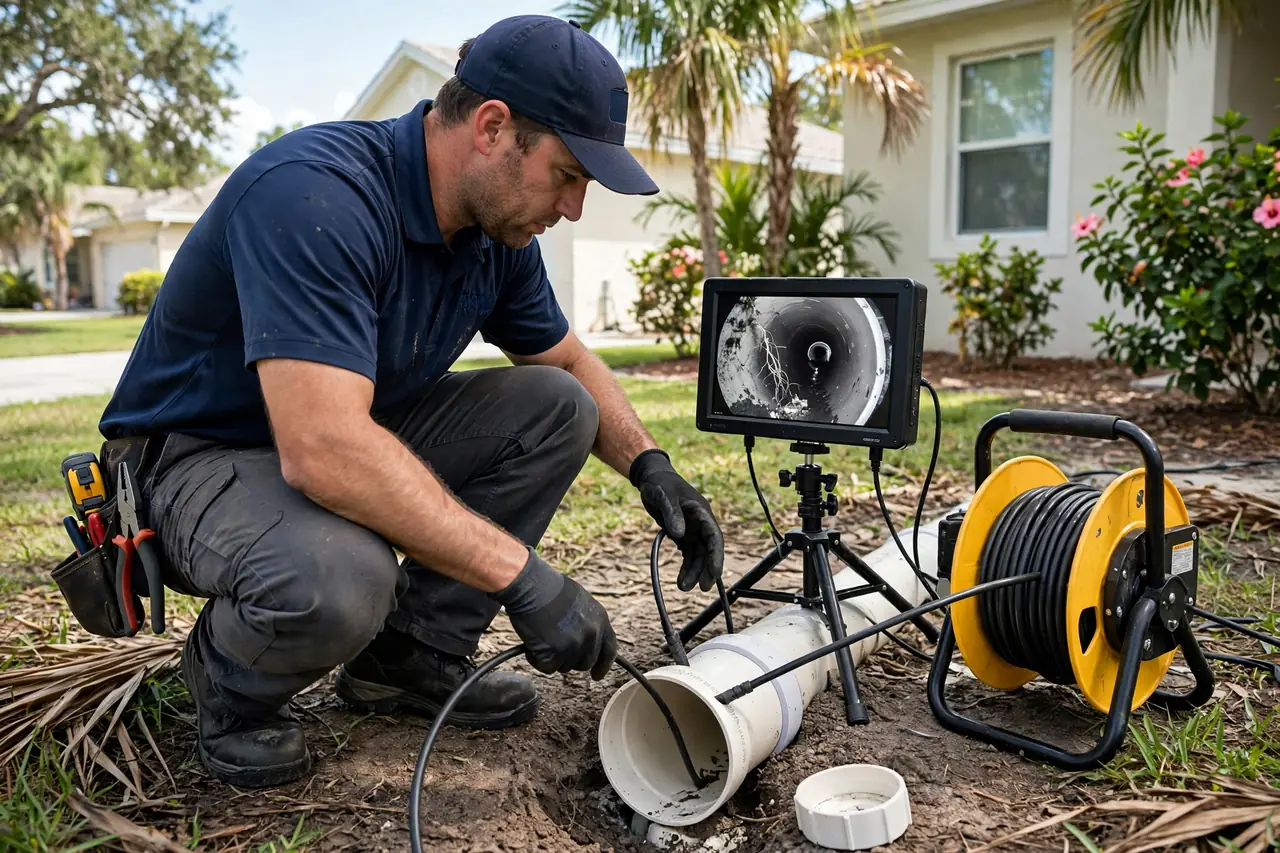
Sewer Odor Detection
Sewer odor detection in Sarasota, FL. We find the source of sewer gas smells: vents, traps, laterals. Call (94…
Learn more →ZIP Codes Served
Local Sewer Guides
Trenchless vs. Traditional Sewer Repair: A Sarasota Guide
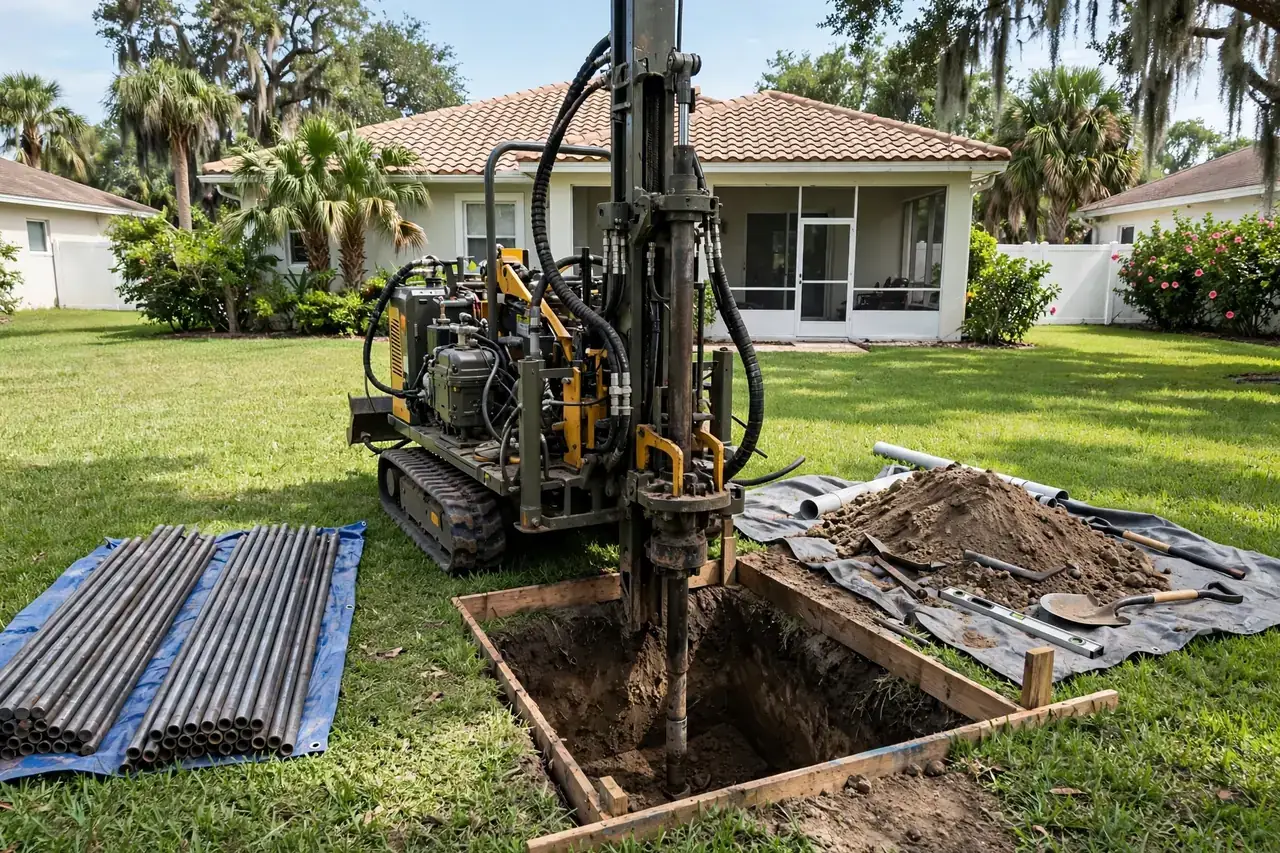
Trenchless vs traditional sewer repair in Sarasota: how pipe condition and soil shape the choice. Call (941) 3…
Learn more →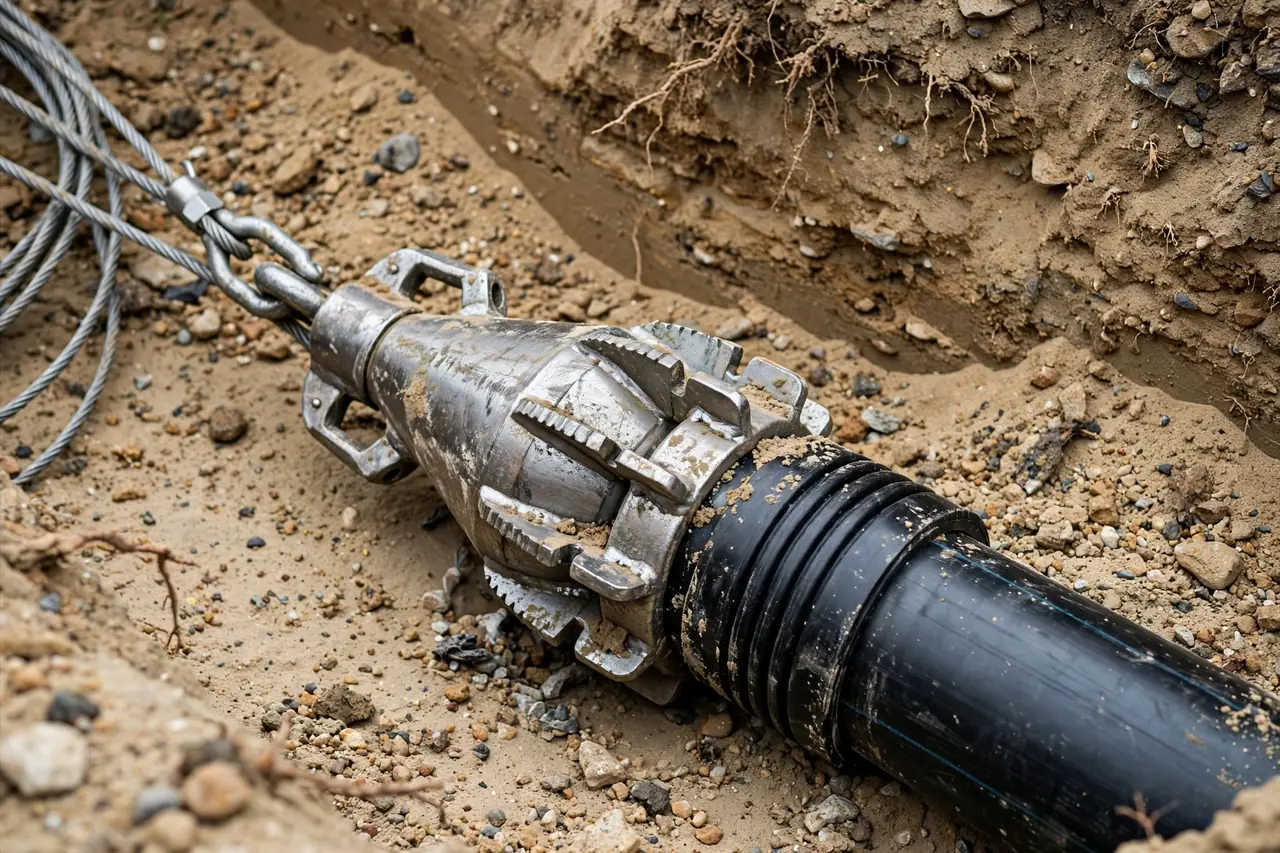
Cast-Iron Sewer Pipe in Sarasota Slab Homes: What to Know
Cast-iron sewer pipe under Sarasota slab homes from the 1960s to 1980s is corroding. Learn the signs and repai…
Learn more →Frequently Asked Questions
How old are the sewer lines in downtown Sarasota homes?
Many downtown laterals in Laurel Park, Burns Court, the Rosemary District, and Gillespie Park date to the 1920s to 1940s, when clay tile with mortar joints was standard. That makes the oldest lines roughly a century old. A camera inspection can confirm the material and condition of your specific lateral.
Why do my drains only back up during the rainy season?
From June through September, Sarasota's seasonally high water table rises around old clay tile laterals. Cracked joints let groundwater infiltrate the pipe, adding volume the line cannot carry. If backups follow the rain calendar, the joints, not just a clog, are the likely cause.
Can tree roots really break into a sewer pipe?
Roots do not break sound pipe; they enter through joints that have already deteriorated. Downtown's mature live oaks and ficus trees send fine roots toward the moisture leaking from old clay tile joints, and the roots expand inside the pipe. Cutting them back helps temporarily; sealing the joints fixes the entry point.
Is trenchless repair possible on a 1920s clay tile lateral?
Often, yes. If the clay tile still holds a round cross-section, pipe lining can seal every joint from the inside through small access points, a major advantage on tight Burns Court lots. If the pipe has collapsed or lost its shape, pipe bursting or open-cut replacement is the better option.
Will repair work damage my historic home's yard or courtyard?
Trenchless methods are designed for exactly this constraint. Lining and bursting typically need only one or two small access pits, so courtyards, landscaping, and driveways stay intact. We walk the property with you before work begins to confirm access points.
How do I know if my lateral is clay or cast iron?
You cannot tell from above ground. A camera inspection shows the material at every foot of the line, along with joint condition, bellies, and breaks. Homes built in the 1920s to 30s are most likely clay tile; 1940s construction may be either.
What does a sewer camera inspection involve?
We feed a camera through an accessible cleanout or a pulled toilet and record the full run to the city main. You watch the live footage with our technician, and we mark the location and depth of any defects. The inspection takes about an hour for a typical downtown lateral.