Sewer Smell in the House: Finding the Source in Sarasota Homes
A sewer smell indoors is gas escaping somewhere it should not: a dried-out trap, a failed toilet wax ring, a cracked vent pipe, or a damaged line under the slab. Your nose can find the room. The diagnosis has to find the opening.
Most indoor sewer smells trace to a dry trap, a tired toilet wax ring, or a cracked vent pipe, not a broken sewer line. Fill every drain with water, check whether the toilet rocks at its base, and note when the smell peaks. If it lingers, a smoke test finds the opening fast. Call (941) 344-0088.
What Causes a Sewer Smell Indoors
Every drain in your house is sealed against sewer gas by a simple device: the trap, a bend of pipe that holds water and blocks gas from rising back inside. When that water seal fails or a pipe opens somewhere it should not, gas takes the path it is offered. The smell is the messenger, not the malfunction, and the source list is shorter than most people fear.
Dry traps lead the list. A guest bathroom that goes unused for weeks, a floor drain in a laundry room, or a shower in a seasonal home loses its water seal to evaporation, and the drain becomes an open vent into the house. Wax rings come next: the seal under a toilet base softens and fails with age, letting gas seep out at floor level every time the toilet flushes. Higher in the walls, older cast iron vent stacks crack and corrode, leaking gas into wall cavities that drift into living space. The serious end of the list is a cracked lateral under the slab, where gas escapes the pipe and migrates up through the soil and the floor.
Why Sarasota Homes Get It Seasonally
This city empties out in summer. Seasonal homes sit closed for months with no water running, and every trap in the house slowly dries. Owners return in October to a house that smells like a sewer, and the fix is often nothing more than running water everywhere. Year-round homes get the same effect in miniature from any drain nobody uses.
Traps fail a second way that surprises people: siphoning. When a drain is poorly vented, a slug of water rushing down a nearby pipe pulls the trap's water seal with it, the way a straw empties when you lift it from a drink. The drain looks fine and even smells fine right after you run it. An hour later the seal is gone and the gas path is open. Siphoning is why some smells seem to appear after laundry day or after a long shower, and it is a venting problem wearing a trap problem's clothes. Condos and townhomes add their own twist, since shared vent stacks and long horizontal runs mean a neighbor's plumbing habits can change the pressure in your walls, too.
When a Sewer Smell Is an Emergency
A strong rotten-egg smell paired with headaches, nausea, or dizziness means leave first and call second. The same goes for any smell that arrives with visible sewage. Get everyone outside, call (941) 344-0088 from fresh air, and let us find the opening. Mild and localized smells can wait for a scheduled visit; symptoms cannot.
Safe Checks Before You Call
Start with water. Run every faucet, shower, and tub for a full minute, and pour a bucket of water into each floor drain. If the smell fades within a day, a dry trap was the cause, and a small pour of vegetable oil into the drain afterward slows evaporation by floating on the trap water. Next, check the toilets: grip the bowl and try to rock it gently. Movement means the wax ring has likely failed, and a ring of discoloration at the base tells the same story.
Walk the house and grade the smell room by room. Strongest in one bathroom usually means a local cause in that room. Strongest near an interior wall with no plumbing in the room itself hints at a vent problem inside the wall. Take note of timing, too: a smell that peaks after laundry or showers points at a trap being siphoned or a vent that cannot breathe.
Two hard boundaries. Do not open walls, cut pipes, or seal a vent on suspicion; gas pathways are easy to misread and harder to undo. And if the smell is strong enough to bring on headaches, nausea, or dizziness, leave the house, get fresh air, and call from outside. Ventilation experiments are not worth a headache that is trying to tell you something.
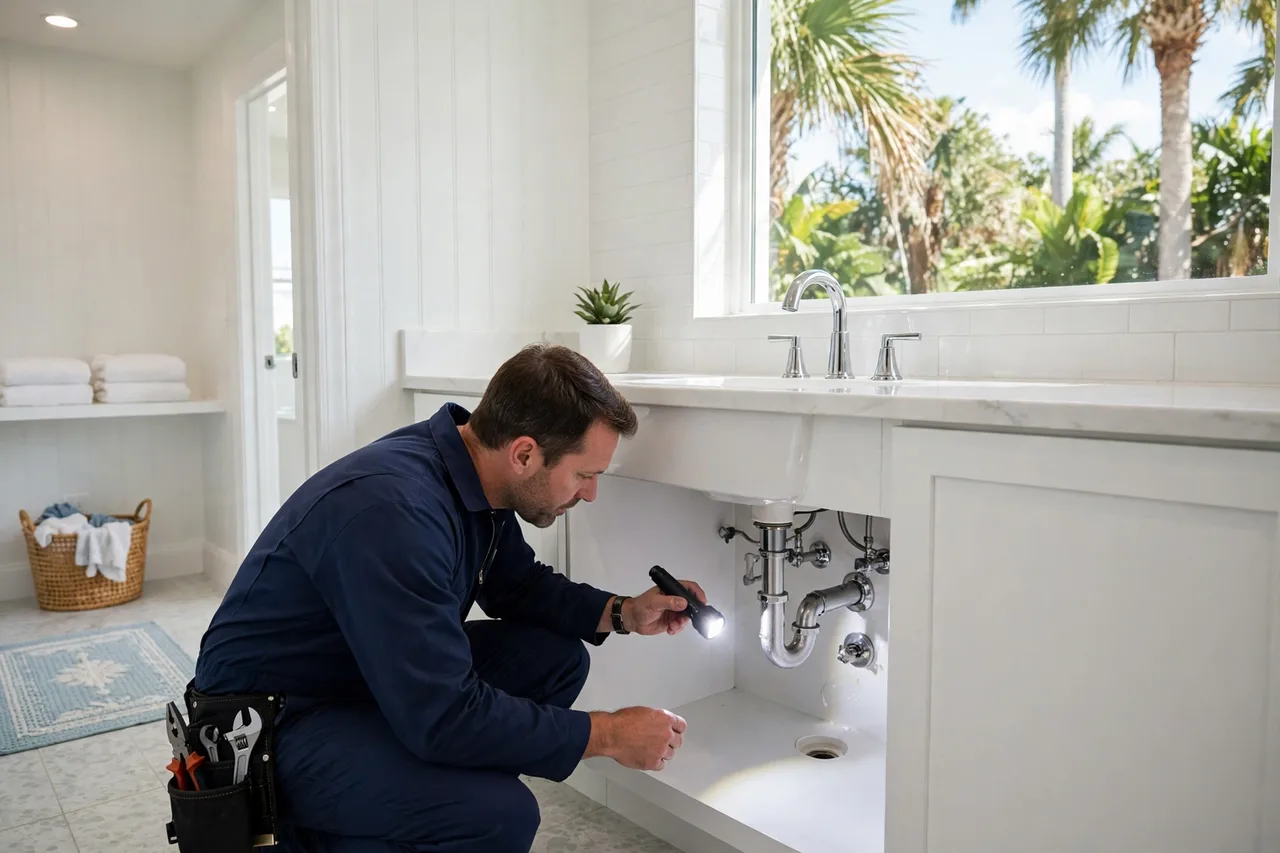
Add two outdoor checks to the list. Find your yard cleanout, usually a capped pipe near the house or along the line to the street, and confirm the cap is present and seated; a missing or cracked cap vents gas outside and can perfume a patio. Then look under your sinks at the trap arms: after remodels and garbage disposal swaps, a disconnected or uncapped stub-out occasionally hides behind cabinetry, breathing quietly into the room. Both checks take minutes and need no tools beyond a flashlight.
How We Find and Fix the Source
When the simple refills do not cure it, we test instead of guessing. The workhorse is the smoke test, described on our sewer odor detection page: harmless, non-toxic smoke is blown into the drain system and the house tells us where it escapes, at a cracked vent, a failed ring, or a broken pipe behind a wall. Smoke finds openings that no amount of sniffing can pinpoint, and it does it without tearing anything out first.
If the pattern points underground, a camera inspection runs the lateral under the slab and looks for cracks, separated joints, or a section where soil has washed in. Each finding has its own repair: a wax ring is a short visit, a vent section is a contained pipe repair, trap primers keep problem drains wet in seasonal homes, and a cracked lateral is a lining or replacement conversation guided by the footage. The order matters: locate first, open second.
What the repairs actually involve depends on which opening the test indicted. A wax ring swap is a contained visit: toilet lifted, ring replaced, base reseated and tested. A cracked vent section means opening a small, targeted patch of wall or ceiling, no more than the smoke marked. A trap primer installs on the problem drain and refills it automatically on a timer or pressure drop. Under-slab findings are the only ones that grow into a project, and even there the camera footage decides whether the answer is a liner through the existing pipe or a targeted repair at the break.
Keeping Sewer Gas Out for Good
Dry traps are a habit problem, and habits fix them. Put seldom-used drains on a monthly pour schedule, especially floor drains and guest baths. Seasonal owners should add traps to the closing checklist in spring and the opening checklist in fall: water in everything on arrival, oil in the traps on departure. Homes with a recurring dry drain are good candidates for a trap primer, which feeds the trap automatically.
For the mechanical causes, prevention means catching the early signs: a toilet that starts to rock, a faint smell that only shows up in one room, a drain that gurgles as it empties. Older homes with original cast iron vents deserve a camera and smoke check before the cracks announce themselves in the walls. None of this is glamorous, but sewer gas is one problem that stays solved once the openings are closed.
Sewer Smell in the House: Related Guides and Services
Keep reading on the problems that travel together, and the services that solve them.
Gurgling Toilets and Drains
Gurgling toilets in Sarasota mean air is trapped by a partly blocked line or vent. A camera inspection settles…
Learn more →
Sewage Backing Up Into the Tub
Sewage backing up into your Sarasota tub means the main line is blocked or overwhelmed. Stop water use now and…
Learn more →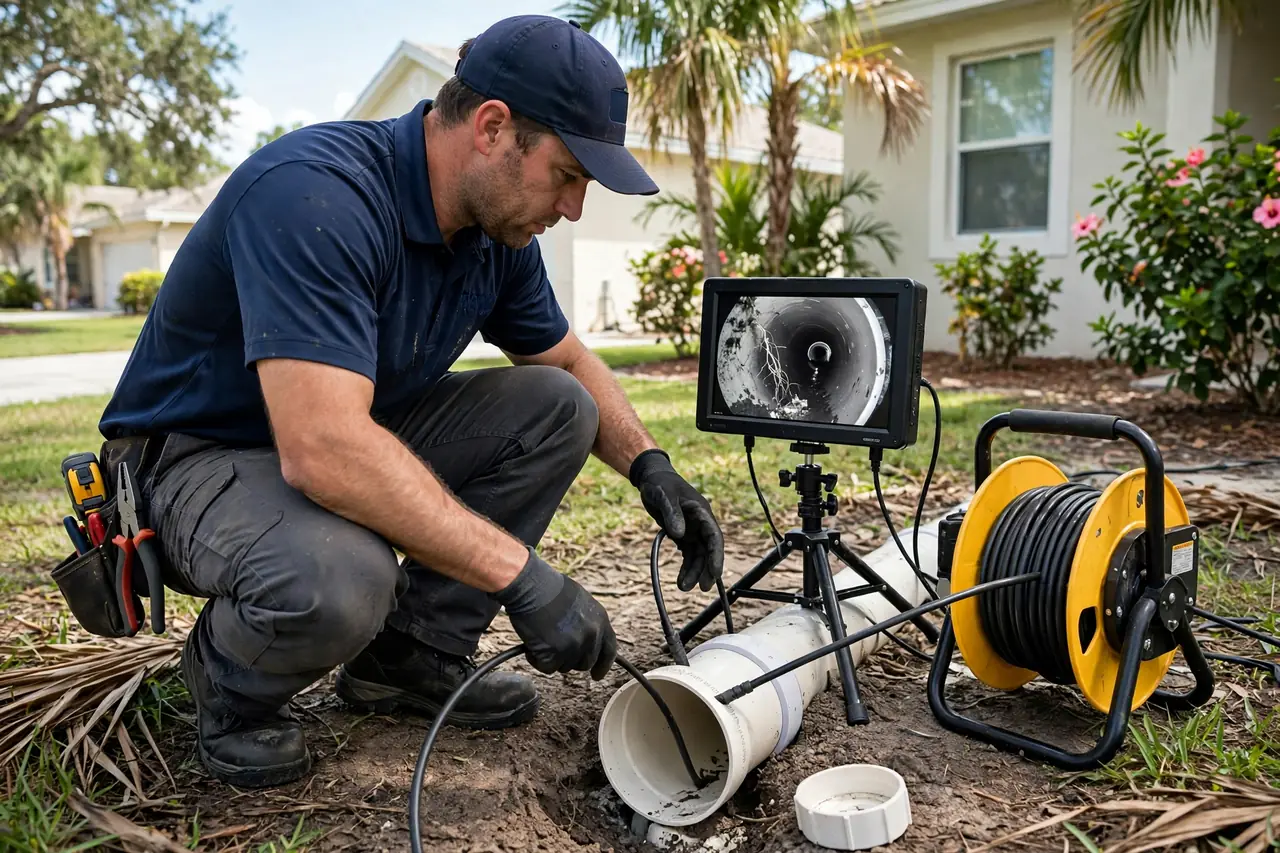
Sewer Odor Detection
Sewer odor detection in Sarasota, FL. We find the source of sewer gas smells: vents, traps, laterals. Call (94…
Learn more →
Emergency Sewer Repair
Emergency sewer repair in Sarasota, FL for backups and burst lines. Fast response, camera diagnosis. Call (941…
Learn more →Frequently Asked Questions
Why is the sewer smell only in one bathroom?
Because the opening is in that room. A smell that stays local usually means a dry trap under that sink or shower, or a wax ring failing at that toilet, rather than a problem in the main line. Refill the traps and check whether the toilet rocks. If the smell survives both, the vent section serving that bathroom is the next suspect, and a smoke test confirms it without opening the wall.
Why does the smell get worse when the air conditioning runs?
Air conditioning changes the pressure balance of the house. Return air and exhaust fans can pull the home slightly negative, and negative pressure draws air through the easiest opening, which may be a dry drain or a weak trap seal. The AC is not creating the smell; it is inhaling through the same opening the gas uses to escape. Sealing the opening fixes both directions.
Can a sewer smell make my family sick?
At the faint levels most homes notice, sewer gas is mostly a nuisance and a signal. At high concentrations it is genuinely hazardous, which is why the rule is simple: if anyone feels dizzy, nauseous, or headachy alongside a strong smell, get out and call from outside. Do not stay in the house trying to track a smell that is already affecting you.
If water fixes the smell for a day, what does that tell me?
It tells you the opening is a trap that will not stay wet. Either the trap is being siphoned by poor venting every time water drains nearby, or the trap itself is cracked and slowly losing its water. A healthy trap holds its seal for months. One that dries in a day has a plumbing cause, and that is worth a visit rather than a lifetime of refills.
How does a smoke test find the leak without tearing out walls?
We seal the drain system and blow in harmless smoke under gentle pressure. Smoke travels the same paths sewer gas travels and shows itself at the failure point: curling out at a toilet base, drifting from a wall seam, or rising at a cracked vent. You see the opening with your own eyes, and the repair opens only the spot the smoke indicted.