
Gurgling Toilets and Drains: What Your Sewer Line Is Signaling
That gurgle is air with nowhere to go. When water pushes down a partly blocked or poorly vented line, it shoves air ahead of itself, and the displaced air bubbles up through your toilet bowl and your traps. Treat the sound as an early warning, not a household quirk.
Gurgling means air is being forced through trap water because the sewer line or its vent is partly obstructed. A lone gurgle now and then is minor. Gurgling across several fixtures, or gurgling paired with slow drains, points to a developing main line problem, and a camera inspection settles the question. Call (941) 344-0088.
What Causes Gurgling in Toilets and Drains
Plumbing breathes. Every drain system is plumbed to a vent stack that rises through the roof, letting air move freely so water flows down without gulping. Gurgling is the sound of that breathing failing. Air that should travel quietly up the vent or down the pipe instead gets squeezed through the water standing in a trap or a toilet bowl, and it announces itself on the way through.
Two culprits cause nearly all of it. The first is the vent: leaves, nests, and debris can choke a vent outlet, and older cast iron vents corrode and narrow from inside. The second, and the one that matters more, is the line itself. A partial obstruction, a fringe of roots at a joint, scale building on cast iron walls, a belly holding water in a sag, leaves too little room for both water and air. Water wins, air gets pushed backward, and your toilet becomes the loudspeaker for a line that is slowly closing.
Why Gurgling Deserves Respect
A gurgle is a partial blockage introducing itself while it is still easy to meet. Lines that gurgle in spring back up in summer, when heavier rain and fuller houses load the system. The sound is data: something in the line changed, and it changed in the direction of less room.
Two smaller actors round out the cast. Many sinks and some whole bathroom groups vent through an air admittance valve, a small mechanical vent hidden under a sink or in a wall, instead of a pipe through the roof. These valves open to let air in and seal to keep gas out, and when one sticks or fails, the fixtures it serves gurgle faithfully while the rest of the house stays silent. Septic systems gurgle, too, and for an extra reason: a tank venting poorly or a drainfield taking water slowly can push air complaints back up the line just like a street-side obstruction does. Same sound, same first move: find where the air is being squeezed.
When Gurgling Turns Urgent
Gurgling graduates to urgent when it brings company: slow drains in several rooms, a sewer smell indoors, or toilet water that rises instead of falls on the flush. Those combinations mean the partial blockage is nearly complete. Stop heavy water use and call (941) 344-0088 before the warning becomes the event.
Homeowner Checks That Are Safe to Try
Be a good witness before you be a mechanic. Note which fixtures gurgle and what triggers them. Gurgling when the washing machine drains is the classic pattern, because the washer moves the most water the fastest. Gurgling only in one bathroom points at that bathroom's branch or vent. Gurgling everywhere, triggered by anything, points at the main line.
Pair the sound with a flow test. Fill the tub and let it drain while someone watches the toilet: bubbling, a rising and falling water line in the bowl, or a toilet that gurgles in rhythm with the drain confirms trapped air in a shared line. From the ground outside, you can also sight the vent pipe on the roof for obvious blockages like leaf mats or nesting material; leave any clearing up there to someone with a ladder and a reason.
What not to do: do not run a snake blindly into a gurgling line. Against roots, a cable can compact the mass tighter or wind itself stuck, and it tells you nothing about the pipe. Do not pour in chemicals, which cannot reach a vent problem at all. Gurgling is a diagnosis-first symptom; the tools that resolve it are a camera and a look at the vent, in that order.
Give the sound a week of observation if your drains still flow freely, and keep a simple diary. Note the date, the trigger, and which fixtures answered. Patterns jump off a written list that memory blurs: gurgling only when the washer drains is a flow problem, gurgling that tracks rainy days is an infiltration problem, and gurgling that slowly adds fixtures week over week is a closing passage introducing itself. Bring the diary to the visit; it shortens the diagnosis measurably and keeps anyone from chasing the wrong culprit.
How We Pinpoint a Gurgling Line
The camera goes first. A camera inspection reads the line for exactly the partial obstructions that gurgle: root fringes at joints, scale shelves, bellies holding water, and the early narrowing that precedes a backup. If the line reads clean, attention moves to the venting, where a smoke test finds cracked or blocked vent sections inside walls and attic runs.
The repair follows the finding. Root fringe and scale come out with jetting or cutting, and the entry points get a plan, which is why gurgling under big trees often ends at our tree root removal page. A belly or a failing section is a lining or replacement discussion, held with the footage on the screen. A choked vent is cleared or the vent section replaced. Either way, the gurgle is the receipt: when the air moves silently again, the line is breathing, and we confirm it by running the washer test that used to set the toilet bubbling.
When the camera acquits the line, the vent gets its own investigation. We check the roof outlet for blockages from above, test suspect air admittance valves by substitution, and smoke the vent system when a crack inside a wall is suspected. Smoke that appears in an attic or seeps from a wall seam ends the argument about location. Vent repairs are usually contained work: clearing or replacing a valve, or cutting out the failed vent section the smoke identified. The confirmation test afterward is theatrical in its simplicity: run the washer, fill and dump the tub, and listen to a house that has nothing left to say.
After the Gurgle Is Gone
Quiet drains are easy to forget, so write down what caused yours and when it was cleared; the pattern is the prediction. Root-driven gurgling returns on a growing season, and a recheck camera visit on that rhythm keeps it a maintenance item instead of a backup. Rainy season deserves a standing note, too: if the gurgling reappears only under heavy rain, infiltration has joined the story and the joints need sealing, not just clearing.
Most of all, keep the habit this symptom teaches. Plumbing that talks is giving you time. Gurgling, slow drains, and smells are one language, and the homeowners who learn it rarely meet their sewer line as an emergency.
One last calibration: a sewer line in good health is a quiet line. Barring the normal rush of water, your drains should have almost nothing to say, in any season, at any flow. The day they start commenting is the day the system changed, and systems do not change for the better on their own. Silence, once restored, is worth keeping an ear on.
Gurgling Toilets and Drains: Related Guides and Services
Keep reading on the problems that travel together, and the services that solve them.
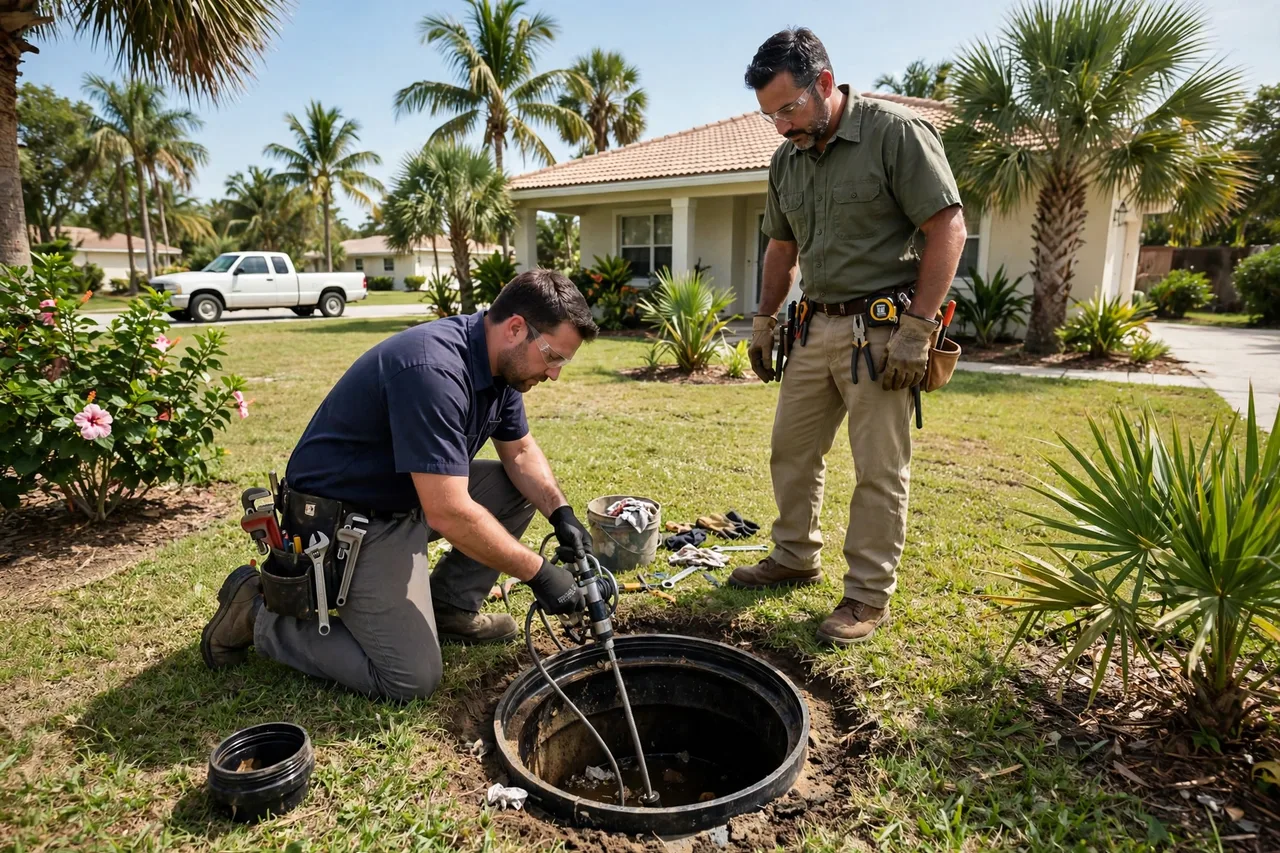
Multiple Drains Backing Up
Several drains backing up together in Sarasota points to the main sewer line. Stop water use and call (941) 34…
Learn more →
Tree Roots in the Sewer Line
Tree roots in your Sarasota sewer line keep coming back until the joints are sealed. Camera diagnosis first. C…
Learn more →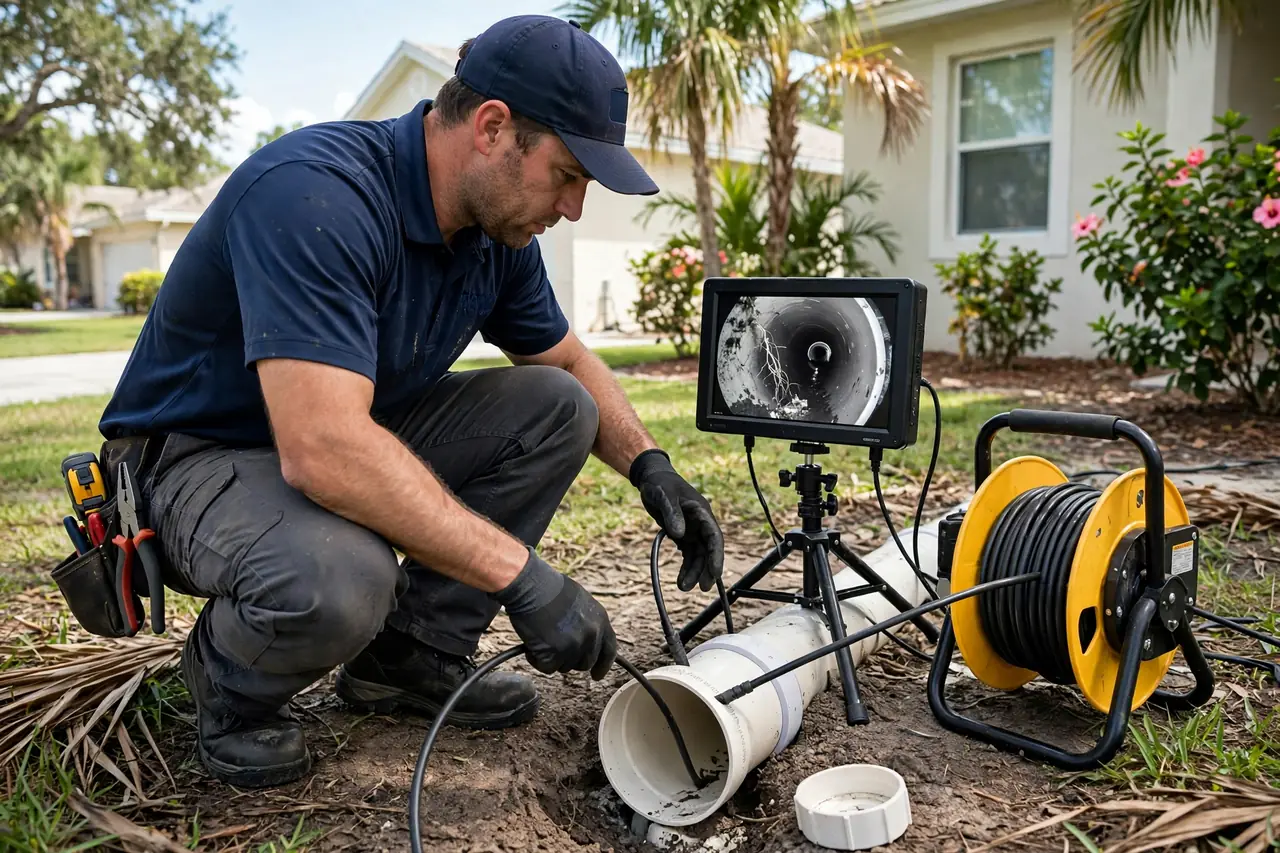
Sewer Camera Inspection
Sewer camera inspection in Sarasota, FL finds roots, scale, bellies & breaks before you dig. HD video diagnosi…
Learn more →
Emergency Sewer Repair
Emergency sewer repair in Sarasota, FL for backups and burst lines. Fast response, camera diagnosis. Call (941…
Learn more →Frequently Asked Questions
Is gurgling worse in the rainy season a sign of a sewer problem?
Yes, and a specific one. Rain-season gurgling usually means groundwater is entering the line through open joints and crowding the pipe from the outside while your own water crowds it from inside. The line is not just obstructed, it is infiltrated, and clearing symptoms without sealing joints leaves the rainy pattern intact. A camera during or just after wet weather shows the entry points in action.
My drains gurgle but everything still drains fine. Can I wait?
You can watch it briefly, with rules. If the gurgle is new, spreading to more fixtures, or joined by slow draining, the waiting period is over, because all three mean the obstruction is growing. If it has sounded identical for years with no flow change, it is still worth one camera look to know why. What you should not do is wait through a change in the pattern; change is the symptom.
Why does only one bathroom gurgle?
Because the restriction is local to that bathroom's branch or its vent. Each bathroom group has its own run to the main, and air misbehaves nearest the restriction. The good news is that a one-bathroom gurgle rarely indicts the main line. The camera still earns its keep, because branch bellies and partial clogs hide well, but the scope of repair is usually a room, not a yard.
Does gurgling mean roots are in my line?
Sometimes, and only the camera can say. Roots are a leading cause in Sarasota's older neighborhoods because the oaks are big and the clay and cast iron joints are open. But scale in cast iron, a sagging section, and a blocked vent all make the same sound. Guessing roots and ordering root work on a vent problem is how effort gets wasted; the footage settles it first.
How do I know if the vent or the line is at fault?
Location and company. Vent trouble gurgles near the vent's fixtures, behaves the same in all weather, and rarely slows your drains. Line trouble gurgles at the lowest fixtures, worsens as obstructions grow, and usually brings slow drains or smells along. When the story is mixed, the camera separates them: a clean line on screen means the vent gets the work order.