How to Tell If Your Sewer Line Is Collapsed in Sarasota, FL
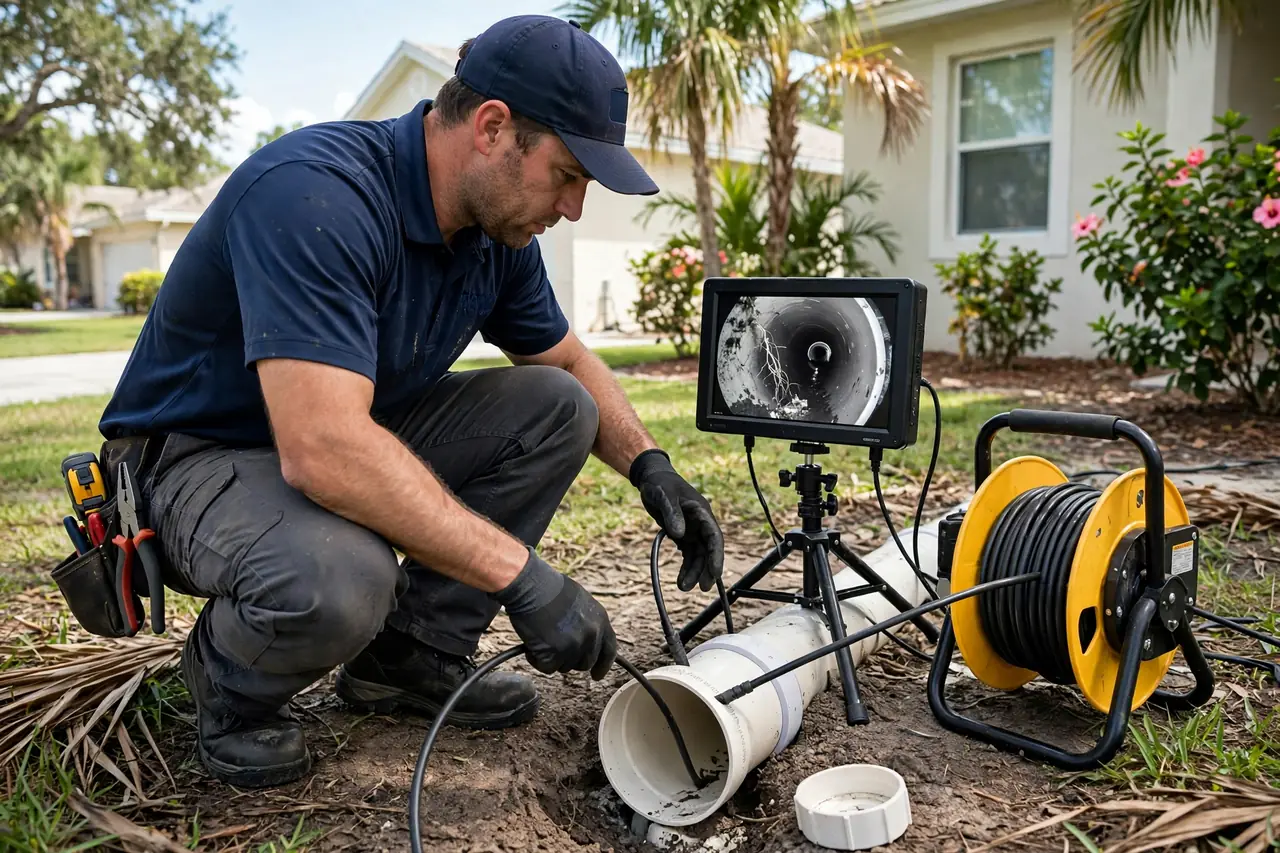
A collapsed sewer line is the diagnosis every homeowner fears, and the phrase gets used long before anyone has proof. Collapse has specific signatures, and a sewer camera separates true collapse from the many problems that only look like it.
A collapse means the pipe wall has caved inward, closing the channel wastewater travels through, so water cannot pass. The practical signs are a blockage no clearing method will fix, sewage backing up through the lowest fixture, a sinkhole or sunken patch, and gurgling that suddenly goes silent. A sewer camera separates true collapse from the many problems that only look like it.
What a Collapsed Sewer Line Actually Means
A collapse means the pipe wall has caved inward, closing the channel wastewater travels through. This is different from a crack, which is a split in an otherwise round pipe, and different from a belly, which is a sagging section that still holds its shape. In a true collapse, the pipe is crushed or folded shut, and water cannot pass.
Collapse strikes the weakest points: pipe joints, spots where soil has washed out beneath the pipe, and areas under driveways where surface weight presses down. In Sarasota, the classic setup is aging cast iron under a slab or old clay tile laterals. Decades of corrosion thin the wall until one rainy season ends it.
Sign 1: A Blockage No Clearing Method Will Fix
The first practical sign of collapse is a blockage that refuses to clear. A cable punches through and the drain works for a day, then stops again. Jetting blasts the line clean and flow still does not return. When every clearing method fails within days, the problem is not debris in the pipe. It is the pipe itself.
This pattern draws the clearest line between a clog and a collapse. Clogs respond to clearing, even if they return months later. A collapse does not respond at all, because no open channel remains. If your line has been cleared twice in a short span with no lasting improvement, stop repeating clearings and get a camera in the line. Our hydro jetting page explains what jetting can and cannot fix.
Sign 2: Sewage Backing Up Through the Lowest Fixture
When the main line closes, wastewater goes back the way it came. It rises through the lowest drains first: a ground-floor shower or tub, a floor drain, or a lower-level toilet. This is not a slow drain. It is sewage entering the living space: a collapse emergency.
Do not run more water when this happens. Every flush adds volume behind the blockage. If sewage is actively backing up, that is what our emergency sewer repair service exists for. After the crisis passes, the camera determines whether the blockage is a collapse or something clearable.
Sign 3: A Sinkhole or Sunken Patch in the Yard
A collapse underground often announces itself at the surface. When a pipe breaks open, surrounding soil washes into the pipe and gets carried away with the wastewater. The ground above loses support and settles into a sunken patch or soft spot. If the depression follows a straight line from your house toward the street, it is tracing your lateral.
Do not just fill it in. A depression like this deserves a camera inspection before any landscaping repair. When collapse is confirmed, sewer line replacement, often trenchless, fixes the pipe and stops the soil loss at its source.
Sign 4: Gurgling That Suddenly Goes Silent
Gurgling means air fighting through a partial restriction. It is noisy because the pipe is still partly open. Note when the gurgling stops and the drains stop with it. A toilet that gurgled for weeks and now does nothing, while water stands in the tub, describes a restriction that just became a closure.
This transition, from noisy partial blockage to silent total blockage, is one of the most reliable collapse signatures homeowners report.
How Sarasota's Rainy Season Turns a Weak Pipe Into a Collapsed One
Most collapses in Sarasota do not happen in January. They happen in August and September, at the tail of the rainy season, and that timing is not a coincidence. Our summer storms dump 49 to 53 inches of rain, most of it in four months, and sandy soil drains fast but shifts as it does. Each heavy storm washes a little more bedding from beneath the pipe. The water table climbs to within a few feet of the surface, so the pipe sits in saturated ground for weeks. A cast-iron line that was merely thin in May is now spanning small voids with no support underneath, carrying the weight of wet soil above it.
Roots pile on during the same window. Summer growth pushes fine roots into every joint and crack, and a root mass inside the pipe becomes a dam that traps sediment. The trapped sediment adds weight, the weight stresses the weakened wall, and one more storm finishes the job. If your drains slow down every summer and recover in winter, read our guide to rainy-season sewer backups in Sarasota. And if you have large trees near your lateral, our piece on tree roots in Sarasota sewer lines explains what the camera usually finds. A sewer camera inspection in late spring, before the rains, is the simplest way to see trouble coming.
What the Camera Shows in a True Collapse
A sewer camera inspection settles the question in minutes. In a true collapse, the camera reaches a point where the pipe simply ends: jagged edges, soil, or darkness where the channel should continue, and the camera cannot push past. Compare the lookalikes. A belly shows standing water with the camera floating through. An offset joint shows a step but the pipe continues. Roots show a fibrous mass with water moving around it.
This is why we camera first on every suspected collapse. Digging on symptoms alone risks excavating the wrong section or replacing a line that only needed lining. The footage shows where the pipe failed and how far damage extends, which determines whether spot repair, pipe bursting, or full replacement fits.
Collapse, Belly, or Offset Joint: Why the Diagnosis Changes the Repair
Homeowners often use "collapsed" for any serious sewer failure, but the exact diagnosis decides what the repair looks like. A belly, a sagging section that still holds its shape, can sometimes be lined if the pipe is otherwise sound. An offset joint, where one section has shifted at the connection, may need a spot repair at that single joint. A true collapse, where the pipe wall has caved shut, usually needs the failed run replaced, because there is no channel left to line.
This is why the camera footage matters more than the symptoms. Two homes can have identical backups with completely different fixes. Our comparison of pipe bursting vs. pipe lining walks through which failures each method handles, and trenchless vs. traditional sewer repair covers when digging is actually necessary. If you are seeing the early warnings, our guide to signs of sewer line failure helps you read them before they become emergencies.
Why Collapse Hits Some Sarasota Neighborhoods Harder
Collapse is not random. It follows pipe age, pipe material, and soil behavior, and Sarasota has neighborhoods where all three line up. The 1960s to 1980s slab subdivisions, Gulf Gate and Bee Ridge among them, run cast iron under the slab and clay or cast-iron laterals to the street. Fifty-plus years of corrosion thin those walls year after year.
Then comes the Sarasota accelerant: water. Our rainy season saturates sandy soil, bedding washes out, and unsupported sections take the full load. A pipe merely thin in May can be collapsed by September. Add aggressive roots prying at every clay joint, and the older neighborhoods earn their reputation.
What to Do in the First 24 Hours After a Suspected Collapse
Stop putting water into the system. That means no laundry, no dishwasher, short showers only, and no garbage disposal. Every gallon you send down adds volume behind the blockage and raises the backup higher into the house. Note which fixtures are affected and in what order; that sequence tells the technician where the failure likely sits.
Do not pour chemical drain cleaner into a suspected collapse. Caustics cannot open a crushed pipe, and they leave a hazardous chemical bath sitting in your line for whoever works on it next. Take photos of any backup or yard depression for your records, then schedule a sewer camera inspection. The footage gives you a diagnosis in under an hour and a repair plan based on evidence instead of guesswork. If sewage is actively entering the home, treat it as an emergency and say so when you call.
What Happens After a Collapse Is Confirmed
A confirmed collapse ends diagnosis and starts the repair conversation. A short collapsed section with sound pipe on both sides can sometimes be spot-repaired. Longer failed runs usually need full lateral replacement, planned from the footage.
Collapse does not automatically mean an open trench through your yard. Pipe bursting pulls new pipe through the old path, breaking collapsed sections outward as it goes, and trenchless sewer repair handles many failures with minimal digging. Full excavation is the fallback when the pipe has lost its path entirely. Either way, the decision starts from camera footage, not guesswork. Call (941) 344-0088.
Published 2026-10-18 · Sarasota Sewer Specialists
Related Sewer Services
Sewer Line Replacement
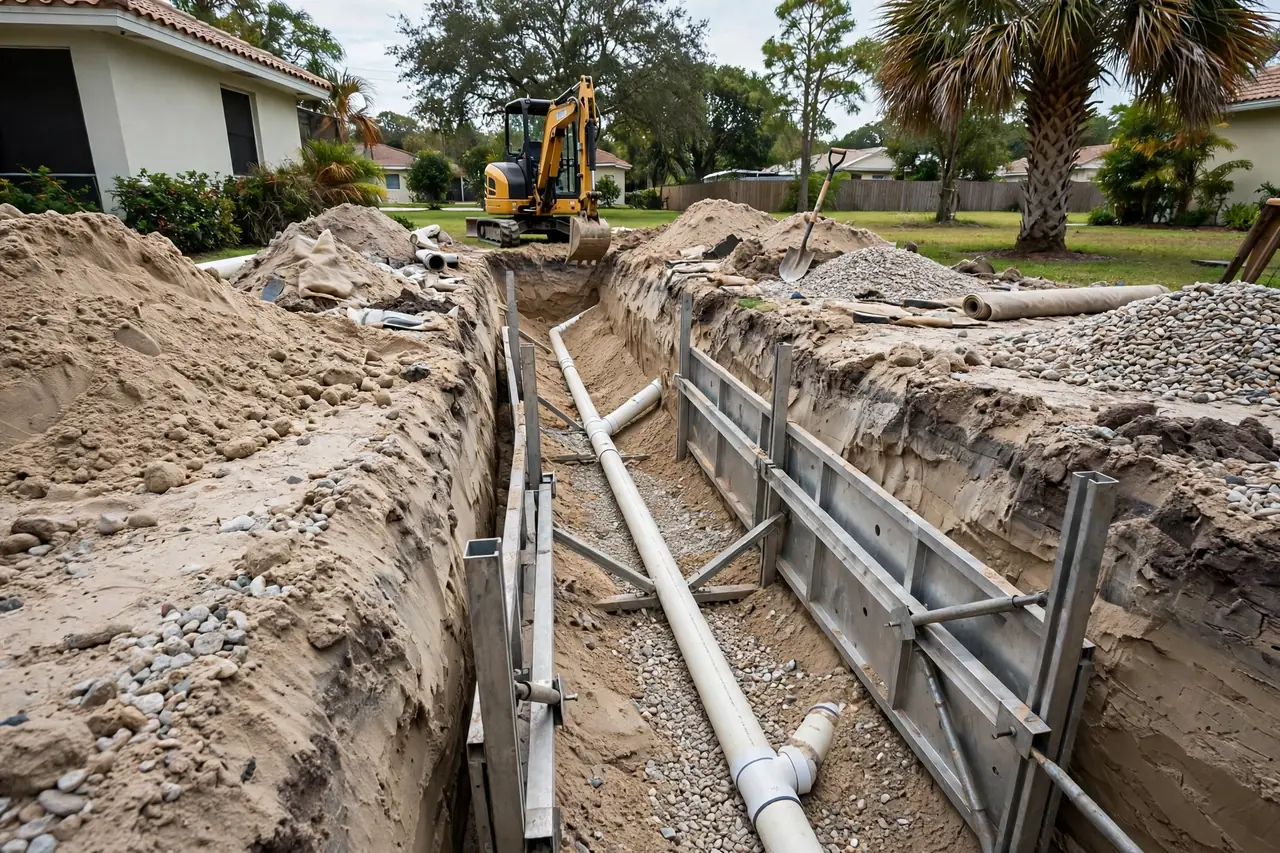
Full sewer line replacement in Sarasota, FL when trenchless methods cannot save the pipe: proper grade, modern materials, done right.
Learn more →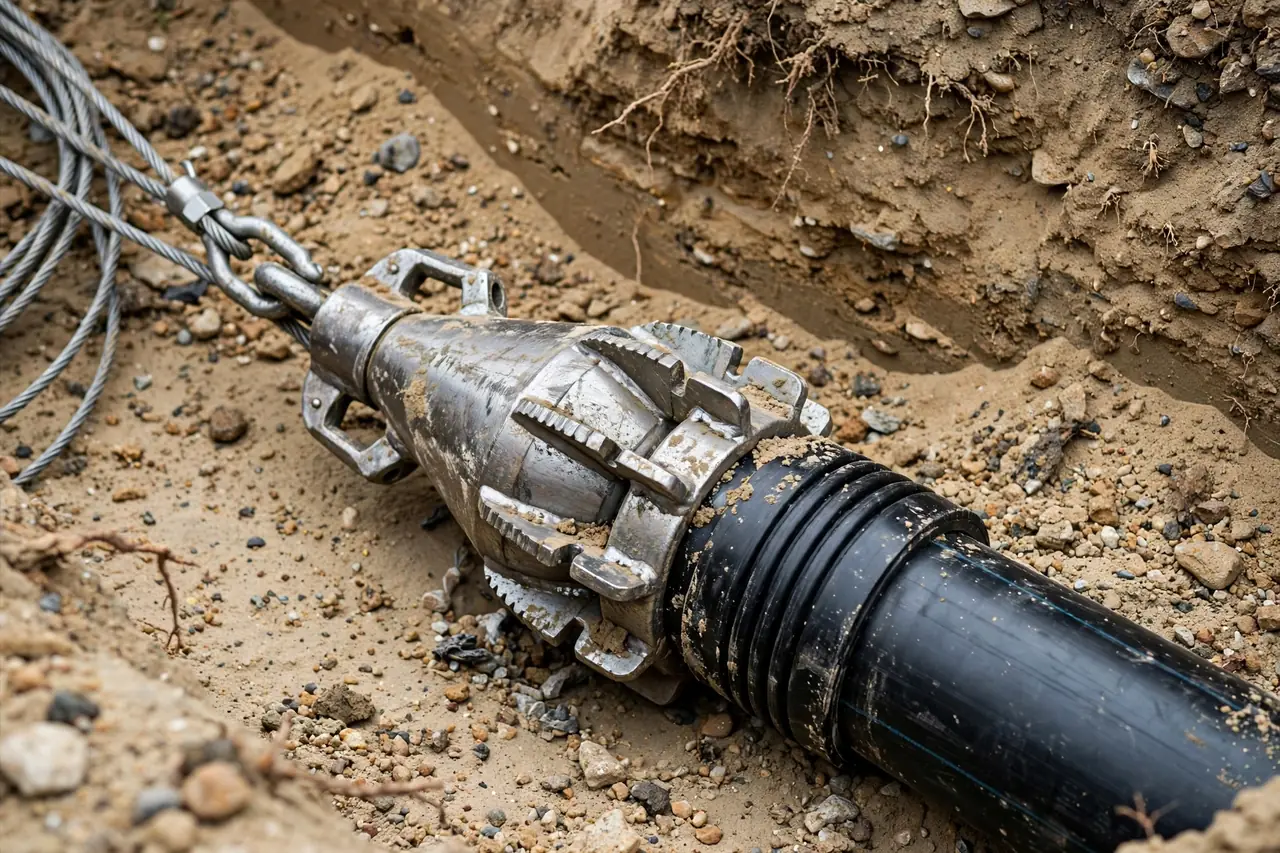
Pipe Bursting
Pipe bursting in Sarasota, FL replaces collapsed and broken lines trenchlessly: new pipe pulled through the old path, minimal digging.
Learn more →Frequently Asked Questions
How can I tell if my sewer line is collapsed or just badly clogged?
A clog responds to clearing, even briefly. A collapse does not: the drain stops again within days, or nothing passes at all. A camera inspection is definitive. If the camera cannot push past a point and shows caved-in walls or soil, that is collapse.
Can a collapsed sewer line be fixed without digging up my yard?
Often, yes. Pipe bursting pulls new pipe through the old path, fracturing collapsed sections outward, needing only small access pits. Open excavation is required only when the pipe has lost its underground path. The camera footage decides.
Does a collapsed line always cause sewage to back up into the house?
Not always, but backups are the most common emergency sign. A partial collapse can also show up as drains that stop working, or a yard sinkhole with no indoor symptoms yet. A closed pipe cannot clear itself, so things only worsen without repair.
How quickly can a sewer line go from working to collapsed?
The thinning takes decades, but the final failure can be sudden. A corroded line can sit stable for years, then collapse in one rainy season when shifting soil removes its bedding. Sarasota sees a wave of these failures every late summer.
What should I do first if I suspect my sewer line collapsed?
Stop running water into the drains, especially if sewage is backing up. Schedule a camera inspection, not another clearing. Clearing a collapsed line wastes effort and can push sewage further inside. A camera shows what failed and where, in one visit.
Will trenchless repair work on a collapsed pipe?
It depends. Pipe bursting breaks the old pipe outward while pulling in a new one, handling collapse well as long as the underground path exists. CIPP lining needs an intact host pipe, so it suits cracked pipe, not caved-in pipe. The camera makes the call.