Multiple Drains Backing Up in Sarasota, FL: Think Main Line
One slow sink is a clog in a branch. When fixtures across the house start failing in the same week, the trunk line they share is asking for help, and every gallon you run upstairs makes the mess downstairs worse. Here is how to read the pattern and what to do first.
Several drains backing up at once almost always means a blockage or failure in the main sewer line, not separate clogs in each fixture. Stop running water, keep people and pets out of rooms with standing sewage, and call (941) 344-0088. A camera inspection finds the obstruction and shows whether cleaning, lining, or replacement is the repair it needs.
What Causes Several Drains to Back Up Together
Your house drains like a tree. Every fixture has its own small branch, the branches join larger limbs, and everything empties into one trunk: the main lateral running from the house to the street or septic tank. A branch clog stays local to its one fixture. An obstruction in the trunk affects everything upstream of it, which is why a house-wide backup is a location report as much as a symptom. The drains are telling you the problem sits in the shared line.
The trunk obstructs in a few recurring ways. Root masses invade a joint and thicken into a net. Grease and scale narrow old cast iron until solids catch and pile. A belly, a sagging section of pipe, pools water permanently and collects sediment until the sag seals shut. And at the end of a pipe's life, a section collapses outright. Sarasota's rainy season adds a fifth cause: groundwater pours in through every open joint of an aging line and the soil gets saturated, so a marginal line that coped all spring can fail in the first week of serious rain.
Why the Lowest Fixtures Fail First
Water that cannot leave looks for the lowest exit, and gravity makes the choice for it. Ground floor tubs, showers, and floor drains sit lowest in the system, so they fill first while upstairs fixtures may still drain normally for a while. That pattern, downstairs bad, upstairs fine, is one of the cleanest signals that the obstruction is in the yard or the main run rather than inside the house.
Septic homes read the same symptom differently at the last step. In a septic system the trunk ends at the tank, not the street, and a tank that is full of solids, or a drainfield that can no longer absorb flow, backs the whole house up exactly the way a street-side blockage does. The pattern of fixtures is identical; only the final destination differs. That is why the first question on any house-wide backup call is which system the house uses, and why a septic home's backup sometimes ends with a pump truck instead of a repair crew.
When Several Backups Become an Emergency
Sewage standing on floors, a backup that is still rising, or your only bathroom out of service makes this an emergency, full stop. Stop all water use, keep the affected rooms closed off, and call (941) 344-0088. Drain trouble that stays contained in one unused guest bath can wait for morning; sewage in living space cannot.
What You Can Check Safely at Home
The first check is your water discipline: stop. No laundry, no dishwasher, no long showers, and minimal flushing until the line is diagnosed. Every fixture you run adds volume to a system that is already full. Then map the failure. Which fixtures are affected, and which floor are they on? Downstairs-only trouble points to the main run. Trouble everywhere, including the highest fixtures, suggests the obstruction is closer to the house or the line is overwhelmed end to end.
Outside, look at the ground around your cleanout and along the path the line takes to the street. A wet patch, a lush strip of grass, or sewage at the surface tells you the failure has a yard component. Leave the cleanout cap on: a line under backup pressure can push sewage up the moment a cap comes off, and opening it is our job, not a diagnostic you need.
Boundaries matter here. Do not plunge fixture after fixture trying to push the blockage through; pressure against a sealed line finds weak points. Do not pour drain chemicals into a backed up system; they pool against the obstruction, endanger whoever opens the line later, and fix nothing. And if sewage is standing in living areas, treat it as contamination: keep out, ventilate the room if you can do it from a doorway, and wait for the crew.
While you wait for help, build the timeline you will be asked for. When did the first fixture slow down, and which one was it? Did the trouble follow a storm, a full house over the weekend, or back-to-back laundry days? Has this happened before, and what fixed it then? Those answers narrow the suspect list before a single tool comes out of the truck. Photographing water levels helps, too: a tub that is rising on its own between checks means the system is still being fed from somewhere, or groundwater is winning.
How We Diagnose and Fix a House-Wide Backup
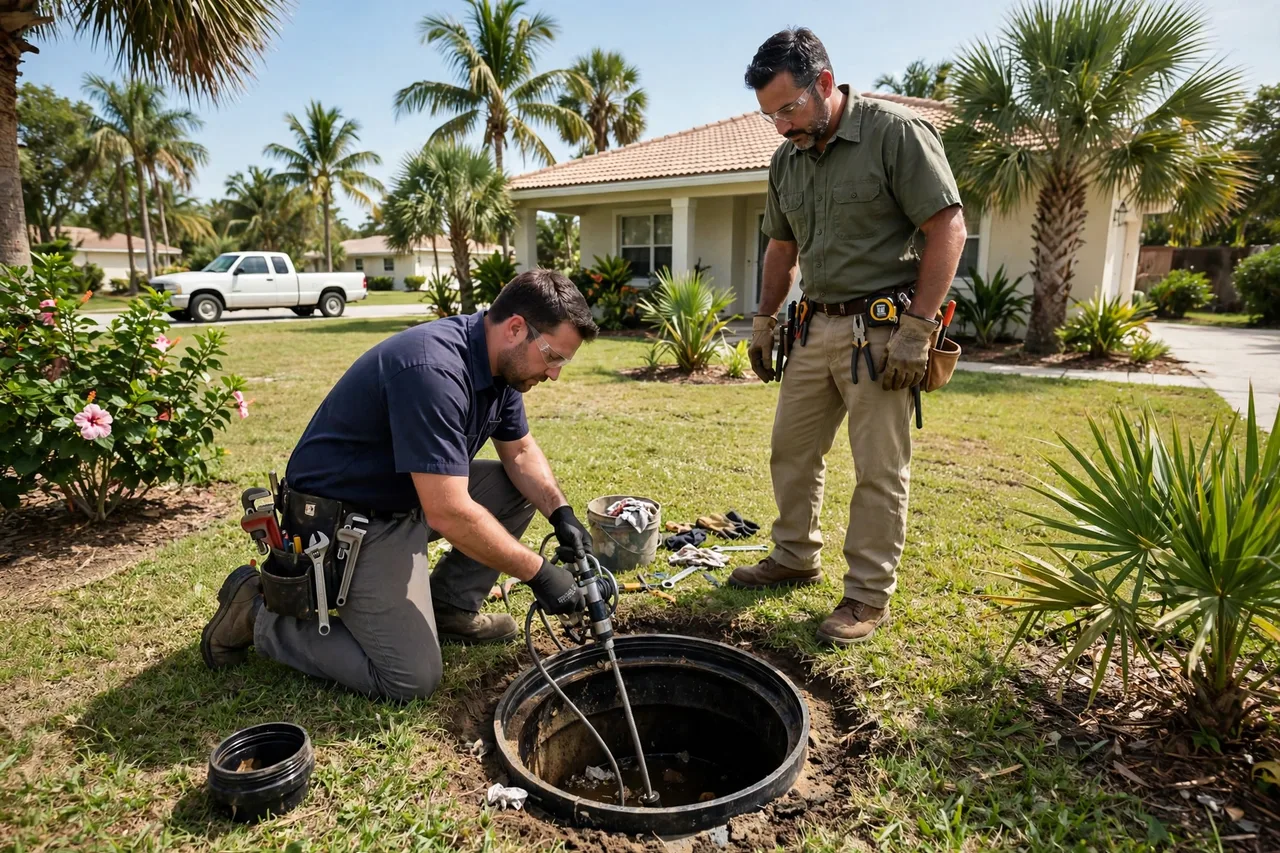
A house-wide backup earns a camera before it earns a repair pitch. We run an HD camera from the cleanout and read the line in order: where the obstruction sits, what it is made of, and what the pipe looks like on both sides of it. The footage from a sewer camera inspection separates a cleaning job from a construction job in one pass, so the repair you get is the one the pipe actually needs.
Roots, grease, and sediment come out with hydro jetting, which scours the full pipe wall rather than poking a hole through the middle of the blockage. If the camera shows the pipe itself has failed, the conversation moves to lining the run, bursting it, or replacing the bad section, each with the footage as evidence. And if the house is unusable in the meantime, the visit runs as an emergency repair from the first call. The sequence never changes: stop the water, see the line, then fix the cause the camera actually found.
Keeping the Main Line Clear Afterward
Once flow is restored, the cause decides the calendar. A line cleared of roots gets a recheck date, because roots regrow and a camera visit in a year is a smaller job than a backup at Thanksgiving. A line narrowed by grease gets a kitchen conversation: cooking oil belongs in a container in the trash, never down the drain, and no garbage disposal makes grease safe.
The deeper lesson of a house-wide backup is that your line has a condition, not just an event. Keep the camera report with your house records, note the material and the weak spots, and treat early warnings, a slow tub, a gurgle, a smell, as the line filing its next report. Lines rarely fail without filing several first.
There is one more place that history helps: the sale of the house. Sarasota's older housing stock changes hands constantly, and a main line with a known condition, documented by camera footage, is a line the next owner can plan around. Sellers who disclose a repaired or lined lateral, with the after footage to prove it, remove a negotiation ambush. Buyers of homes built before 1990 should treat a sewer camera inspection as part of due diligence, right alongside the roof and the air conditioner, because the pipe under the slab is the one system a standard walkthrough cannot see at all.
Multiple Drains Backing Up: Related Guides and Services
Keep reading on the problems that travel together, and the services that solve them.
Sewage Backing Up Into the Tub
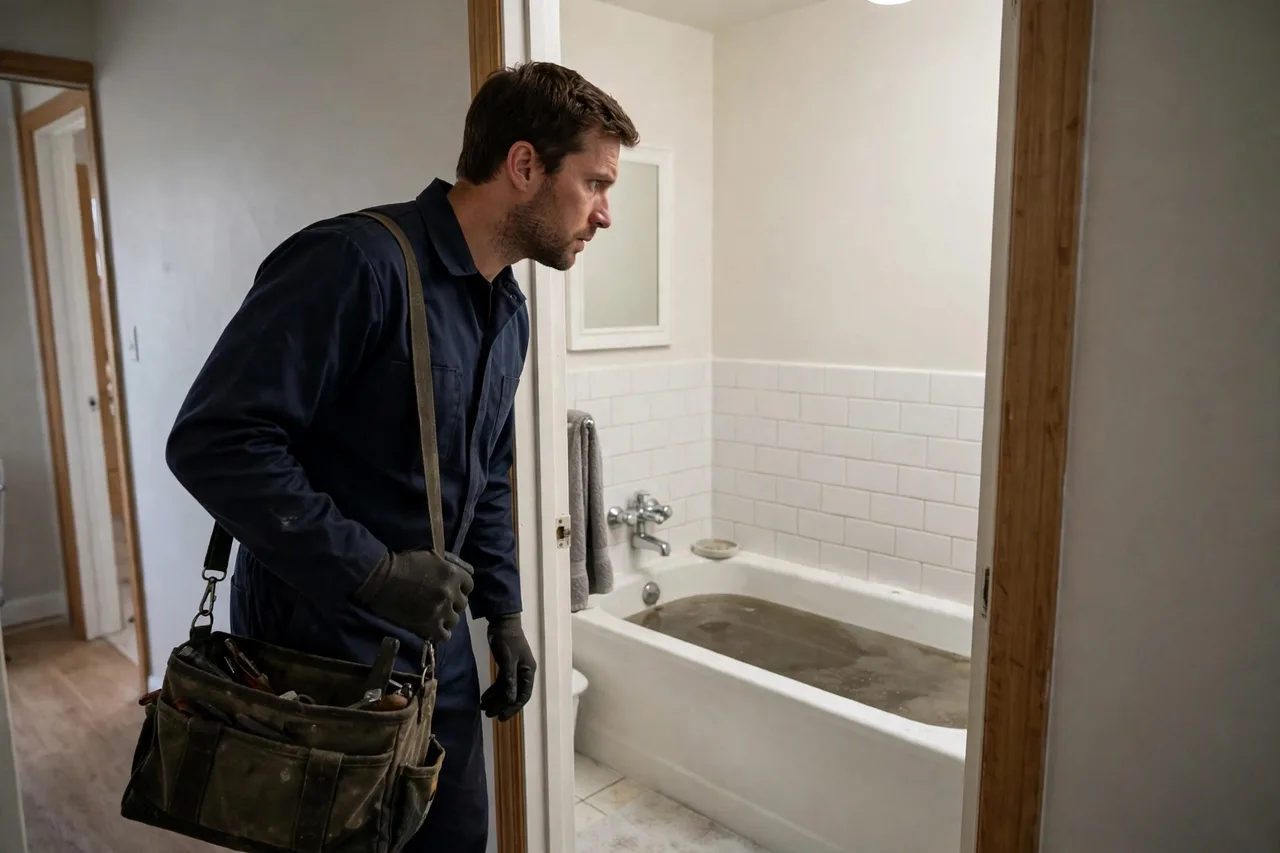
Sewage backing up into your Sarasota tub means the main line is blocked or overwhelmed. Stop water use now and…
Learn more →
Gurgling Toilets and Drains
Gurgling toilets in Sarasota mean air is trapped by a partly blocked line or vent. A camera inspection settles…
Learn more →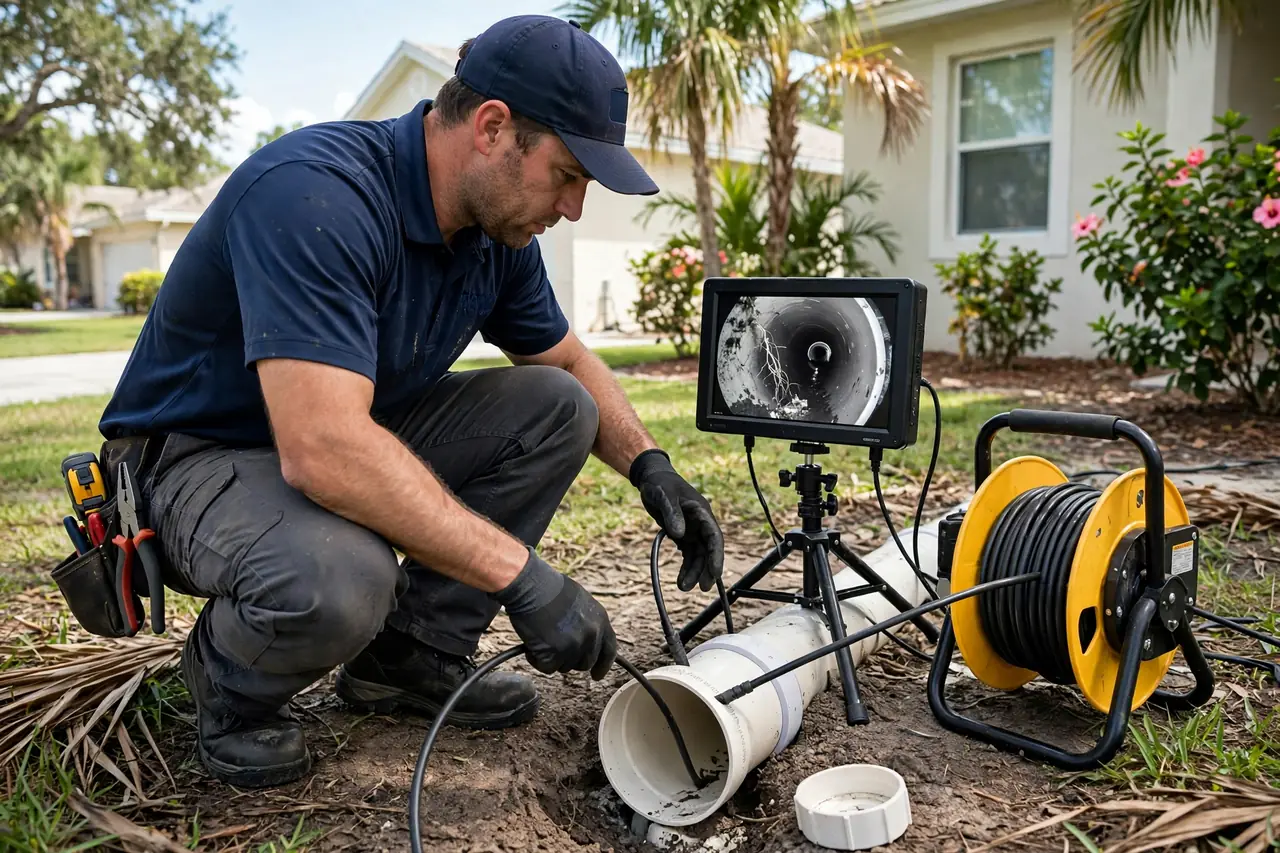
Sewer Camera Inspection
Sewer camera inspection in Sarasota, FL finds roots, scale, bellies & breaks before you dig. HD video diagnosi…
Learn more →
Emergency Sewer Repair
Emergency sewer repair in Sarasota, FL for backups and burst lines. Fast response, camera diagnosis. Call (941…
Learn more →Frequently Asked Questions
What does it mean when the tub fills up while the toilet flushes?
It means the water leaving the toilet cannot get past an obstruction downstream, so it rises through the next lowest opening, which is the tub drain. The toilet and tub are not connected to each other directly; they share the same exit, and the exit is blocked. Stop flushing and treat it as a main line problem until a camera says otherwise.
Is it safe to run the washing machine if only the bathroom drains are slow?
No. A washer discharges a large volume in a hurry, and it drains into the same main line the bathrooms use. If the main is partly blocked, one laundry cycle can be the load that pushes water up through the tub or a floor drain. Hold laundry and dishwashing until the line is cleared or a camera shows the blockage sits in a single branch that does not serve the washer.
My drains backed up a day after the storm, not during it. Why the delay?
Because the water table peaks after the rain, not during it. Sarasota's sandy soil drains downward for hours after a storm ends, groundwater rises the whole time, and an aging line with open joints fills from the outside. The backup arrives when the groundwater does. Rain-delayed backups are a classic infiltration signature, and the fix targets the joints the water is using.
Can a house-wide backup fix itself if I wait?
The water level can drop as liquid seeps past the obstruction, which feels like healing and is not. The solids, roots, or collapsed section that caused it are still there, and the next heavy use rebuilds the backup, usually worse. Waiting also leaves sewage sitting against your pipes and, too often, your floors. A camera visit now is the easier version of this story.
Why does it matter which floor the affected drains are on?
Because the pattern locates the blockage. Lowest fixtures only means the obstruction is downstream of everything, in the main run or the yard. All floors at once points closer to the house or at a line so compromised that nothing passes. A single bathroom group with the rest of the house fine suggests a branch problem instead. Plumbers read backups the way you read that pattern, and it decides where the camera goes first.