Sarasota Sewer Line Offsets: When Pipe Joints Shift and Separate
A sewer line offset is a joint that no longer lines up, and in Sarasota the sandy soil moves joints apart a little every year. Here is what an offset looks like on camera, why it starts a chain reaction with roots and soil, and which fix closes the gap for good.
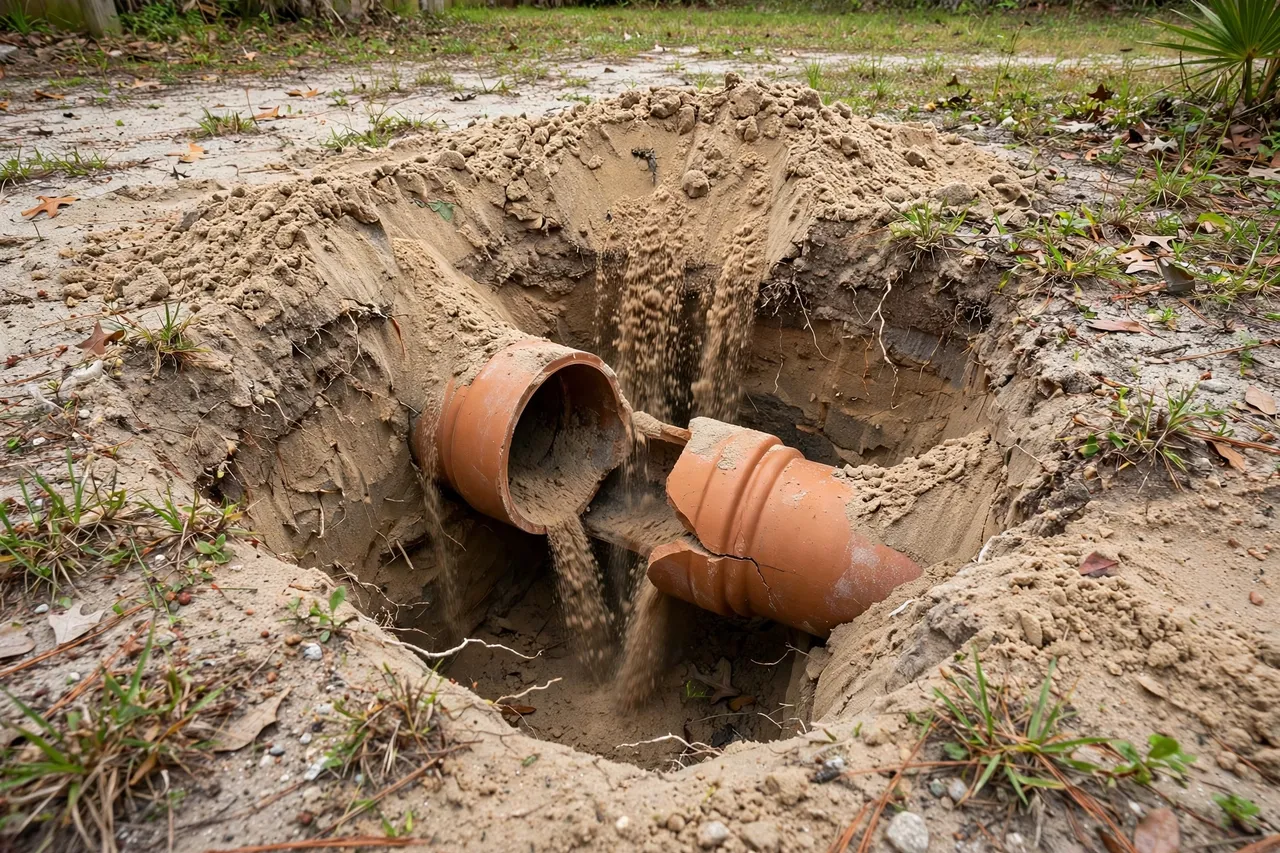
A sewer line offset is a joint where one pipe section has shifted out of line with the next, opening a gap that catches waste, lets roots in, and washes soil into the line. Sarasota sand and a high water table move joints apart a little every year, and the camera shows the step where one section sits higher than the next. A small offset in sound pipe is usually bridged with a liner, a single bad joint can be spot repaired, and a line with several offsets usually needs replacement.
What a Sewer Line Offset Actually Is
An offset is a joint that no longer lines up. One section of pipe has moved, up, down, or sideways, so its end no longer meets the next section squarely. The gap is often small, a finger width or less, but it is enough. Waste catches on the lip, roots find the opening, and sand washes in with every flush. Left alone, the offset grows, because the same forces that moved the joint once keep working on it.
Offsets are different from the other ways a line fails. A belly is a low spot where waste pools, and a crack is a break in the pipe wall. An offset is a failure of alignment at the joint, the weakest point of any pipe made in sections. Clay pipe has a joint every few feet, cast iron has hubs and spigots, and every one of them can shift. PVC has fewer joints and glued connections, so newer lines offset less.
The word matters because the fix follows the diagnosis. A crack can be lined, a belly often needs regrading, and an offset needs the joint closed, by lining across it, by a spot repair that reseats the section, or by replacing the run. Our guide to sandy soil and shifting ground covers the ground movement behind most offsets, and this guide covers the offset itself: what it looks like, how a camera finds it, and which fix fits.
Why Sarasota Soil Pulls Joints Apart
Sarasota soil is mostly sand, and sand does not hold a pipe the way clay does. When it rains, water washes the fine grains out from under the pipe, and the pipe settles into the gap. The rainy season does this every year, a little at a time, and a joint that was square ten years ago can be offset by an inch today. The water table makes it worse: when groundwater rises near the surface, it lifts and drops the soil with the seasons, and the pipe rides along.
Traffic and trees add their own push. A lateral under a driveway feels every car that crosses it, and the vibration works joints loose over years. A live oak root pushing against a pipe section can lever it out of line, and our guide to which Sarasota trees cause the worst root damage ranks the species that do it. The oldest lines suffer most: clay and cast iron laid in the 1960s and 1970s under Gulf Gate and Southgate have had fifty years of seasons.
The line was built in moving ground, and the joints are where the movement shows. A camera inspection every few years catches an offset while it is still small, when the fix is a liner rather than a replacement. The high water table guide explains why the wet months are the worst time for joints, and why the dry months are the best time to fix them.
The Camera Signs of an Offset Joint
A camera shows an offset plainly, once you know what to look for. The clearest sign is a step: the camera travels down a smooth pipe, then hits a lip where the next section sits higher or lower. The step catches waste, so you will often see paper and debris snagged on the lip, and the pipe below the step may look cleaner than the pipe above it, because flow slows at the lip and drops its load there.
The second sign is roots at one joint only. Roots enter through the gap at the offset, so the camera shows a root mass at a single joint while the joints on either side look clean. A line with roots everywhere has failing joints all along it, but roots at one joint mean an offset at that joint. The third sign is sand inside the pipe, washed in through the gap, showing as a pale drift along the bottom near the offset.
The camera also measures the offset in the only way that matters for the fix: how far the sections have separated, and whether the pipe still holds its shape. A small step with sound pipe on both sides is a lining job. A large separation, or a dropped and cracked section, is a different conversation. Our page on what to expect from a camera inspection walks through what the footage shows, joint by joint, and sewer camera inspection is the service that produces it.
Offsets, Roots, and Soil: The Chain Reaction
An offset rarely stays a small problem, because it starts a chain reaction. The gap lets roots in, and the roots widen the gap as they grow, which lets more soil in, which washes out the bedding under the pipe, which lets the pipe settle further. Each step feeds the next, and the pace picks up once roots are involved.
Soil infiltration is the quiet part of the chain. Sand washing into the pipe does not just block flow: it leaves a void outside the pipe, and the ground above the void can settle, which shows up as a dip in the lawn or a crack in the driveway. Homeowners often notice the surface dip first, and the two are the same problem. The signs of sewer line failure guide lists the surface clues, slow drains, gurgling, wet spots, and smells, and an offset can cause every one of them.
The chain is also why an offset found early is cheap and an offset found late is not. Close the gap before roots arrive, and the fix is a liner. Wait until the pipe has settled and cracked, and the fix is a replacement. Clay pipe joints and roots explains the same chain from the root side, and the lesson is the same in both directions.
Lining, Spot Repair, or Replacement: Which Fix Fits
CIPP pipe lining is the most common fix for an offset, because it bridges the gap without digging. A resin liner is pulled into the old pipe and cured in place, forming a smooth new pipe inside the old one that spans the offset joint. It works best when the offset is small and the pipe still holds its shape, and the camera decides both. Lining also seals every other joint in the lined section, which stops the next offset from letting roots in.
A spot repair fits a different case: one bad joint, with sound pipe on both sides, in a spot that is easy to reach. The crew digs a small pit at the joint, reseats or replaces the short section, and backfills. It is the right call when the offset is large, or the pipe at the joint is cracked, or the line has only one bad joint. It costs more digging than lining, but it fixes the joint itself rather than bridging it.
Replacement is the answer when the line has offsets at several joints, or the pipe has dropped and cracked, or the sections have separated so far that no liner can span the gap. Trenchless sewer repair by pipe bursting pulls a new pipe through the old line, which removes the joints entirely, and sewer line replacement covers the open-trench cases where bursting cannot work. The camera footage decides which of the three fits. Read pipe bursting vs pipe lining to see how the two trenchless methods compare.
Keeping Joints Together After the Repair
A repaired offset stays repaired when the ground stops moving the pipe, and the ground stops moving the pipe when water stops washing the bedding out from under it. That means drainage: gutters that carry roof water away from the lateral, a yard that slopes away from the house, and no low spot over the line where water ponds after rain.
Roots deserve the same attention after the repair as before it. A liner seals the joints, but a live oak over the line will keep testing them. A root barrier between the tree and the line, or a liner that covers the full run past the tree, closes that door. Our trees guide covers which species to watch, and the fix here is the same: seal the line, then keep the roots from reaching it.
Finally, check the line again. A camera run a year after the repair confirms the liner is holding and no new joint has moved, and after that, a check every few years is enough. If your drains have started slowing together, or you have seen a dip in the lawn over the lateral, read the guide to telling if a sewer line has collapsed, then get a camera in the line.
Published 2026-11-21 · Sarasota Sewer Specialists
Related Sewer Services
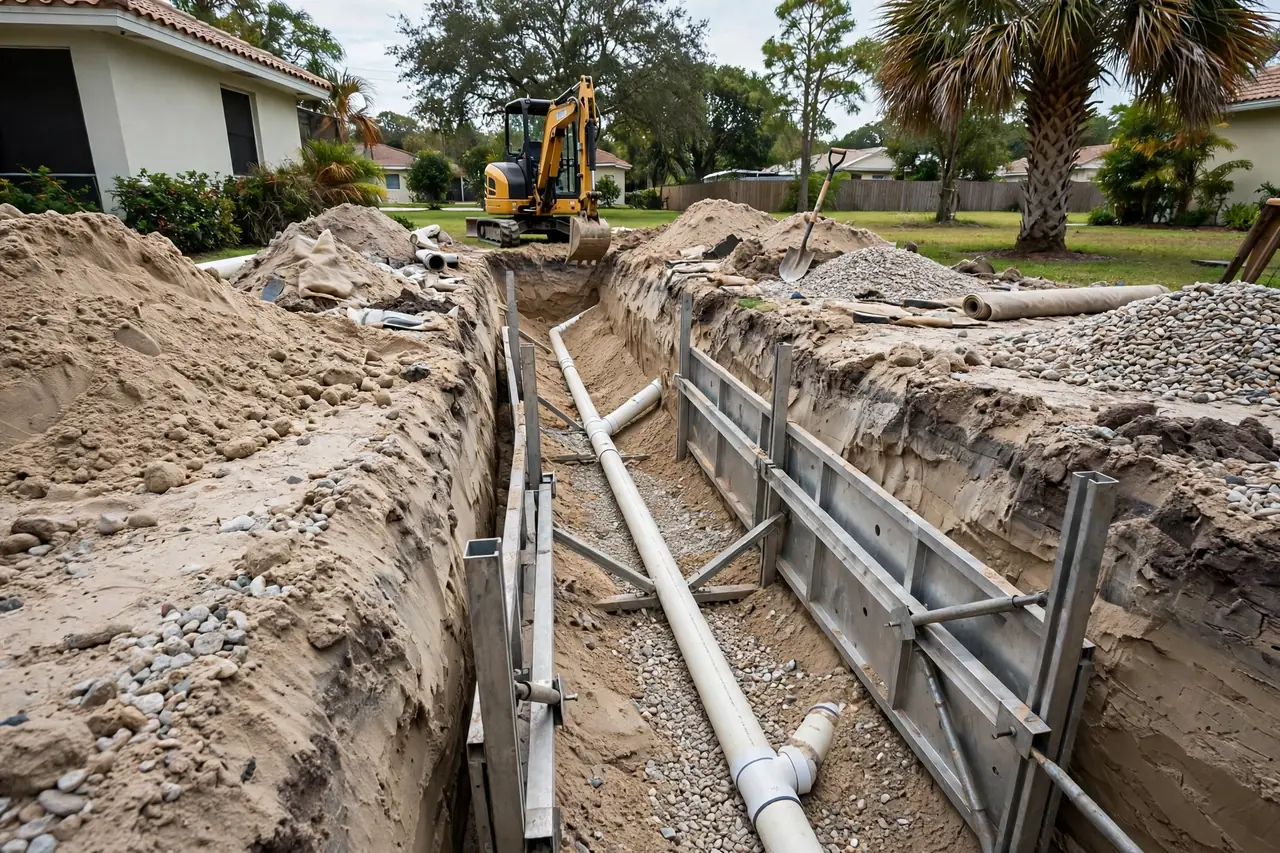
Sewer Line Replacement
Sewer line replacement in Sarasota, FL by excavation when trenchless won't work: proper grade, modern PVC pipe…
Learn more →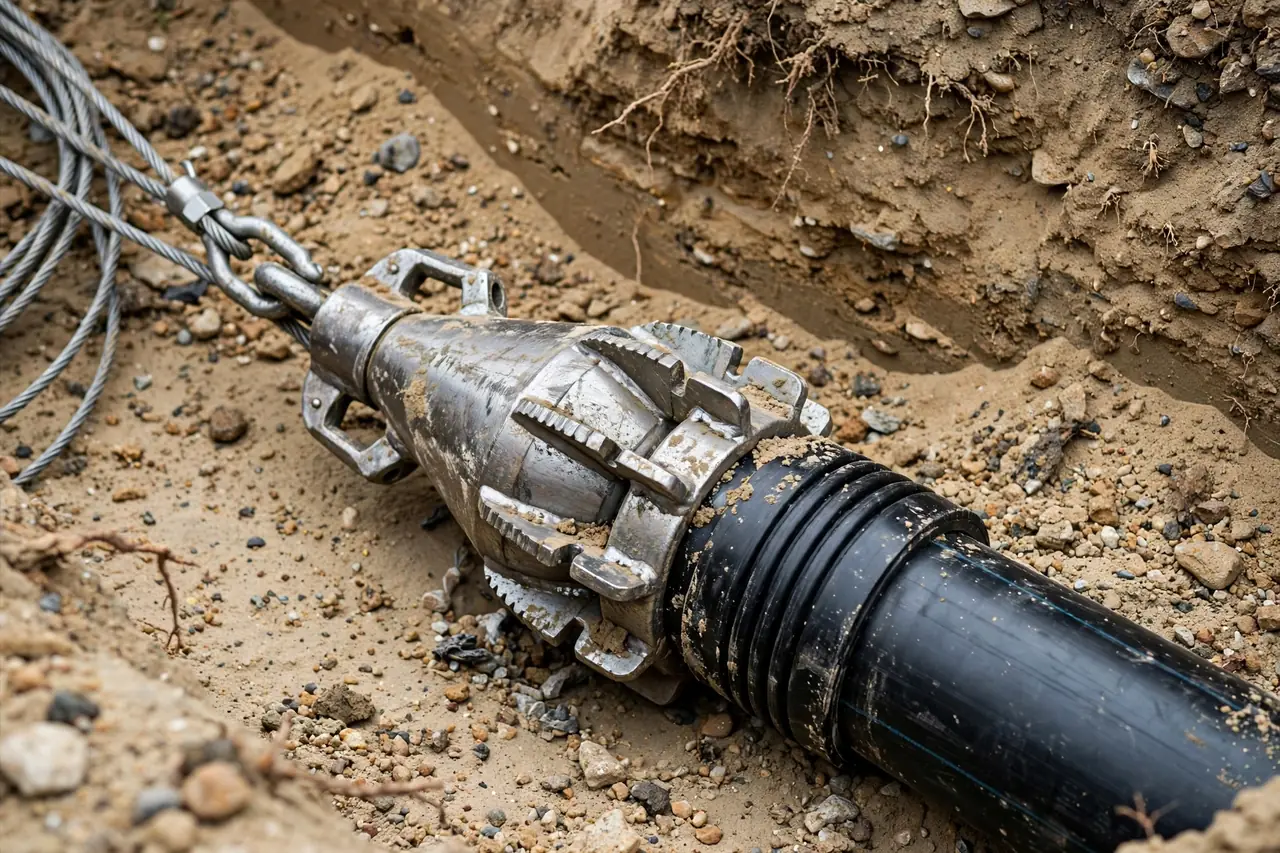
Pipe Bursting
Pipe bursting in Sarasota, FL replaces collapsed sewer lines with minimal digging: new pipe pulled through the…
Learn more →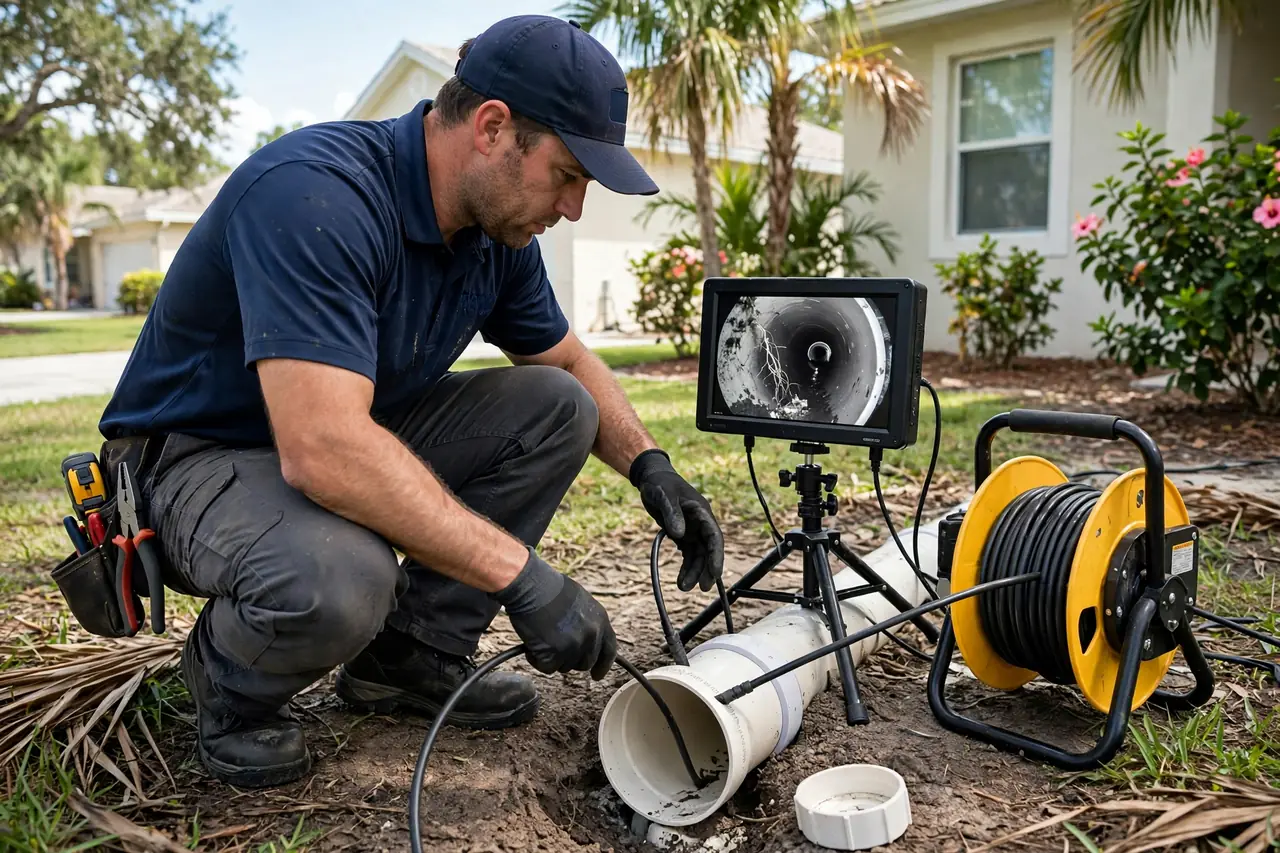
Sewer Camera Inspection
Sewer camera inspection in Sarasota, FL finds roots, scale, bellies & breaks before you dig. HD video diagnosi…
Learn more →Frequently Asked Questions
What is a sewer line offset?
An offset is a pipe joint that no longer lines up. One section of pipe has moved up, down, or sideways, so its end no longer meets the next section squarely, and the gap that opens lets waste catch, roots enter, and soil wash in.
How do I know if my sewer line has an offset joint?
The signs are slow drains across the house, gurgling after a flush, a dip in the lawn over the line, or a backup that keeps returning to the same fixture. Only a camera inspection confirms it, and the footage shows the step where one section sits higher than the next.
Can an offset sewer line be fixed without digging?
Often, yes. A small offset in a sound pipe can be bridged with a cured-in-place liner, which forms a new pipe inside the old one with no digging. A large offset, or a cracked section, usually needs a spot repair or a replacement instead.
Do tree roots cause pipe offsets, or do offsets let roots in?
Both, in that order. Ground movement usually opens the joint first, then roots enter through the gap and widen it as they grow. Fixing the offset without sealing the joint leaves the door open, which is why lining is often paired with a root barrier.
Is pipe lining strong enough for an offset joint?
Yes, when the offset is small and the pipe still holds its shape. The liner spans the gap and seals the joint, and it also seals every other joint in the lined section. A large separation, or a dropped and cracked section, is beyond what a liner can bridge.
Will a sewer offset get worse if I leave it alone?
Yes. The gap lets roots and soil in, the roots widen the gap, the soil washes out the bedding, and the pipe settles further. A joint that moved a little in ten years can move a lot in one wet season once roots are involved, so an early camera check saves the bigger repair.