How Sarasota's High Water Table Affects Sewer Line Repairs
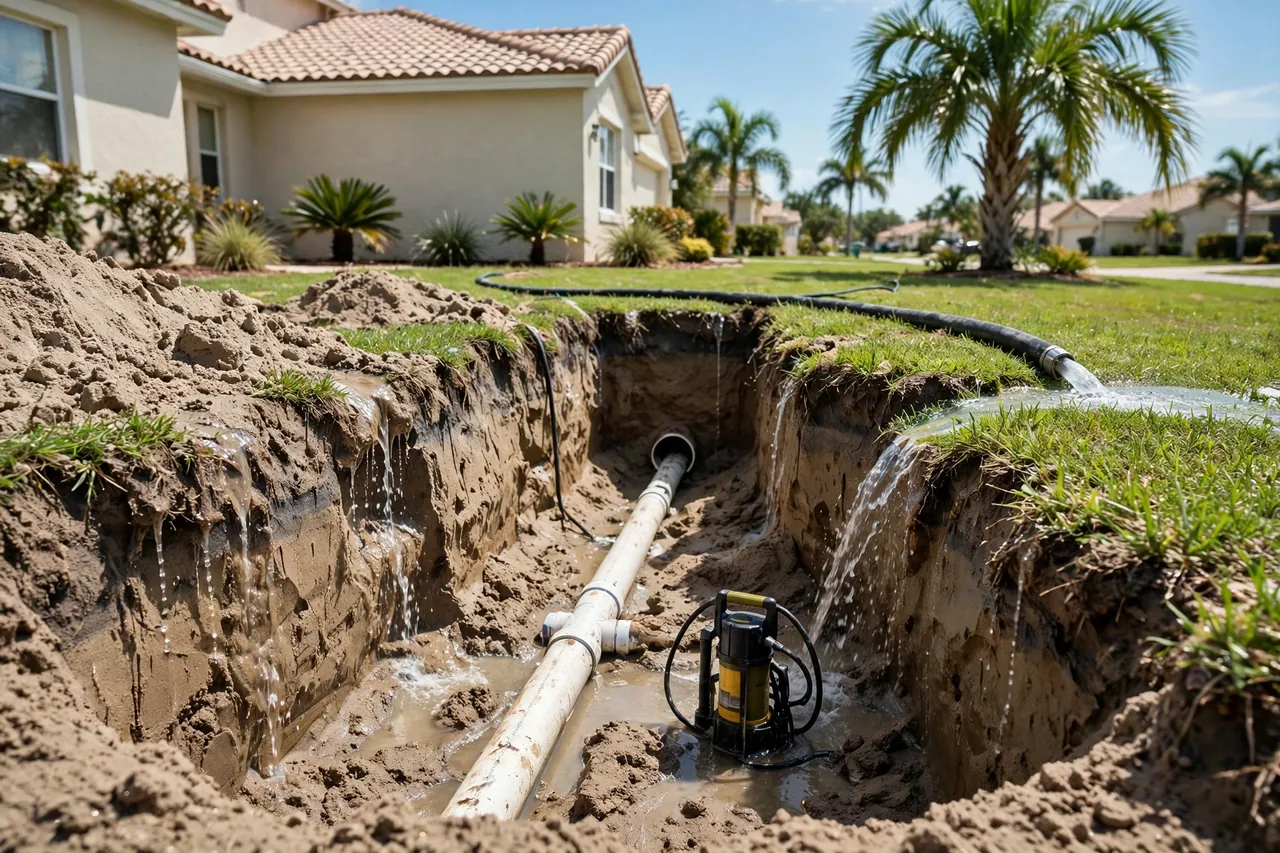
Dig a hole in Sarasota and you will hit water sooner than you expect. In much of the county the water table sits just a few feet below the lawn, and after a summer storm it can rise to within a foot or two of the surface. That shallow groundwater shapes every sewer repair here, from a simple camera check to a full line replacement. It floods trenches, pushes back against liners, and turns dry season work into a wet season wrestling match.
Sarasota's water table sits just a few feet below grade in much of the county, and it rises sharply in the rainy season. That groundwater floods open trenches, washes sand out from under pipes, seeps into cracked lines, and pushes back against curing liners. Digging needs dewatering pumps and shoring, and lining needs extra care to cure properly. Planned work goes best in the dry season, from November through May, when the water table is at its lowest.
How High Sarasota's Water Table Really Is
Sarasota is flat, low, and close to the Gulf, and the ground shows it. The water table, the level where soil turns fully saturated, sits only a few feet below grade across much of the county. In low spots and near the bay it can sit within a foot or two of the surface after a heavy rain.
The depth swings with the seasons. From November through May, the dry months, the table drops and the sand above it dries out. From June through September it climbs until the ground around a buried lateral is soaked through. A lateral that sits in dry sand in February can sit in standing groundwater by August. Inland, in Bee Ridge and Palmer Ranch, the swing is widest, while on the islands it barely drops at all.
Location decides how bad it gets. Laterals on Siesta Key and Longboat Key spend most of the year in wet sand, as do lines near St. Armands and the bayfront. A few miles inland, in Gulf Gate or Southgate, the table sits lower but still rises fast after a storm, because sandy soil drains straight down instead of shedding water sideways. Our guide to barrier island sewer challenges walks through what island laterals face. Nowhere in Sarasota is the water table deep enough to ignore.
What Groundwater Does to an Open Trench
Open a trench in Sarasota and the first thing you learn is that the hole wants to fill itself. Groundwater seeps through the sandy trench walls, and after a storm it can pour in. The crew cannot see the pipe, set the grade, or glue a joint in a trench full of muddy water. So the job starts with a dewatering pump pulling water out as fast as it comes in.
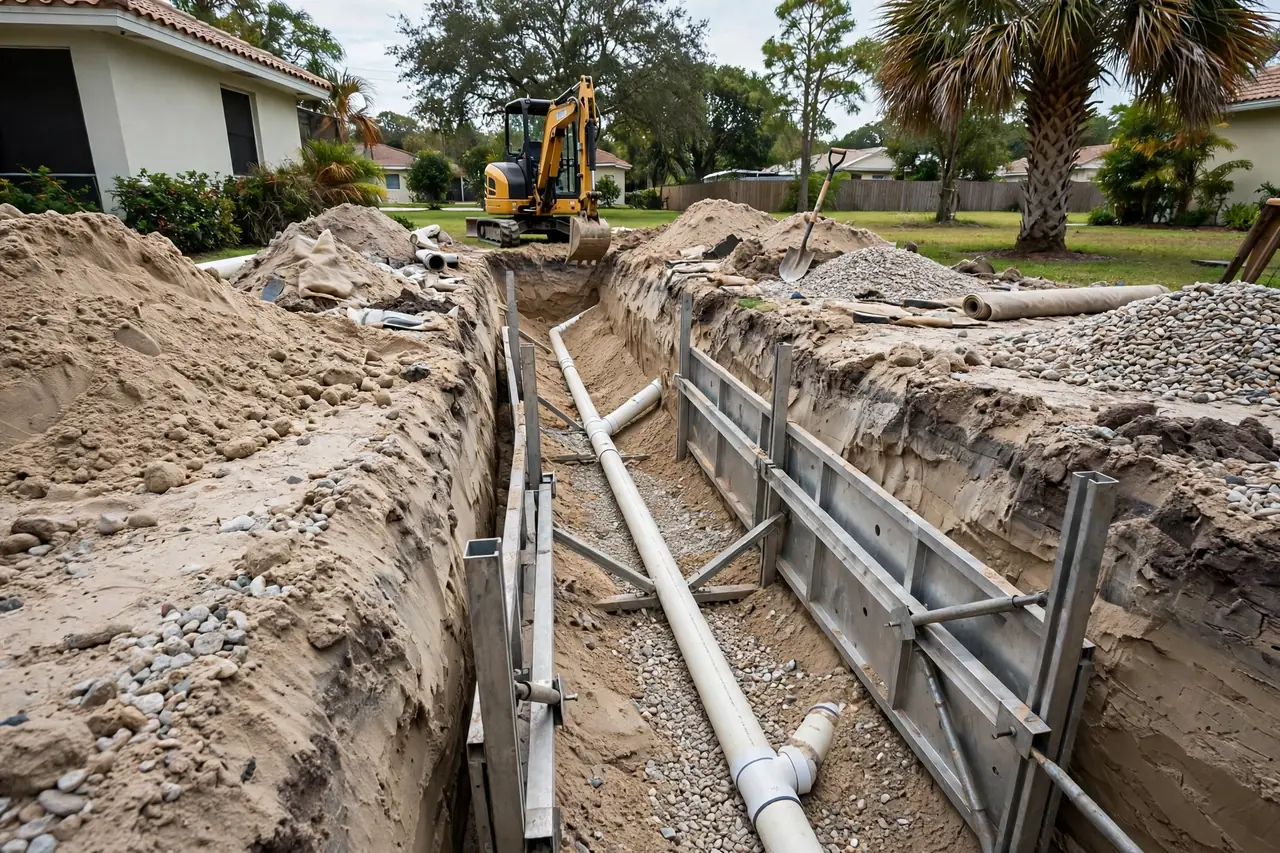
A trench that would take a day in dry ground can take two in wet ground, because every step waits on the pump. The walls are the bigger worry. Wet sand has no grip, and a trench wall can slough off in sheets, burying the pipe the crew just laid. That is why deep trenches in wet ground get shored with trench boxes, which adds time and equipment to the job.
The bedding suffers too: a sewer line needs a firm bed of compacted gravel to hold its slope, and gravel does not compact well under water. If the crew beds the pipe in a soupy trench, the pipe settles once the pump stops, and the new line develops the same belly the old one had. When the camera shows a line that needs digging, sewer line replacement must be planned around the water. Our trenchless vs traditional repair guide explains when digging is still the right call despite the water.
Why Lining and Bursting Get Harder in Wet Ground
Trenchless methods dodge the open trench, not the water. A cured in place liner is a resin soaked sleeve that hardens inside the old pipe, and it has to cure against groundwater pushing in through every crack and joint. If water flows in while the resin sets, it can wash the resin out or leave soft spots. The crew has to stop the inflow first, by plugging the line upstream and pumping the pits dry, and keep it dry until the cure is done.
Pipe bursting faces a different problem. The bursting head pulls a new pipe through the old path, and saturated sand grips the new pipe hard. The access pits still fill with water, so the crew pumps them through the job, and the new pipe can float in a flooded pit if it is not held down.
Trenchless is still the gentler option for most Sarasota yards, because two small pits beat a forty foot trench. It just means the crew has to plan for water. Cured in place pipe lining and pipe bursting both work in a high water table when the inflow is controlled. Our comparison of pipe bursting vs pipe lining breaks down which method fits which line. The camera decides it, but the footage has to be shot when the line is not full of groundwater, or the cracks hide behind the flow.
Infiltration: The Leak That Runs the Wrong Way
Most homeowners picture a sewer leak as water getting out, but in a high water table the leak runs the other way. Groundwater pushes into the pipe through every crack, open joint, and root hole, a process called infiltration. A line that carries only your household water in February can carry twice that volume in August, because the ground is feeding it all day and night. The extra water carries fine sand in with it, and that sand settles in the low spots.
Infiltration is why backups cluster in the rainy season. The line is already half full of groundwater when a storm hits, so the surge from your own fixtures has nowhere to go. The lowest drain in the house takes the backup first. If your drains behave all winter and back up every summer, infiltration is the first suspect. Our rainy season backup guide explains the pattern.
The camera shows infiltration plainly. Water trickling through a joint, sand piling below a crack, or a steady stream from a broken section all point to groundwater getting in. A sewer camera inspection also measures the grade, showing where sand has washed out and left the pipe sagging. The fix is to seal the entry points, by lining the line or replacing the broken section, and to re-bed the pipe on gravel. Snaking clears the sand that already got in, but not the water still coming through the cracks.
Why Dry Season Timing Matters
Ask any Sarasota plumber when they would rather replace a sewer line and the answer is the same: the dry season. From November through May the water table sits at its lowest, the trenches stay workable, and liners cure without fighting inflow. A job that needs two days of pumping in August can be a one day job in February. It is the ground telling you when it wants to be dug.
Timing matters most for planned work. If the camera shows a line that is cracked and sagging but still flowing, you can choose your season. Book the replacement or the lining for the dry months, when the crew can see the pipe and set the grade without a pump running beside them. The work lasts longer when the ground cooperates, because the bedding compacts properly.
Emergencies do not wait for the calendar: a backup in July still has to be fixed in July. That is what emergency sewer repair is for, and a good crew carries the pumps and shoring for wet ground. But if you have a choice, take the dry season. Homeowners in Gulf Gate and Bee Ridge, where 1960s slab homes are reaching the end of their original lines, get the best results by planning the work for winter. The seven signs of sewer line failure tell you when the window is closing.
What to Ask Before Work Starts in Wet Ground
Before anyone digs in your yard, ask how they plan to handle the water. A straight answer covers where the pump goes, where the discharge runs, how the trench gets shored, and what happens if the water rises faster than the pump. If the plan is to dig and hope the ground stays dry, the ground will win. Dewatering is part of the job in Sarasota, not an extra.
Ask about the camera first. No repair plan means anything until a camera has shown the cracks, the joints, and the grade. A shallow line in wet sand may be a lining job, while a deep line with a collapsed section may need digging no matter the season. Our guide to what a camera inspection shows explains the footage and the locate in plain terms.
Finally, ask how the pipe gets bedded and the grade gets checked. The lasting fix in wet ground is a pipe laid on compacted gravel at the right slope, with the joints sealed and the trench backfilled in layers. That is true whether the method is trenchless sewer repair or open trench work. When the camera shows a line that groundwater has beaten, call (941) 344-0088 and we will show you the water coming in and the grade it is pooling on, on video, before you spend anything on a repair.
Published 2026-11-09 · Sarasota Sewer Specialists
Related Sewer Services
Sewer Line Replacement
Sewer line replacement in Sarasota, FL by excavation when trenchless won't work: proper grade, modern PVC pipe…
Learn more →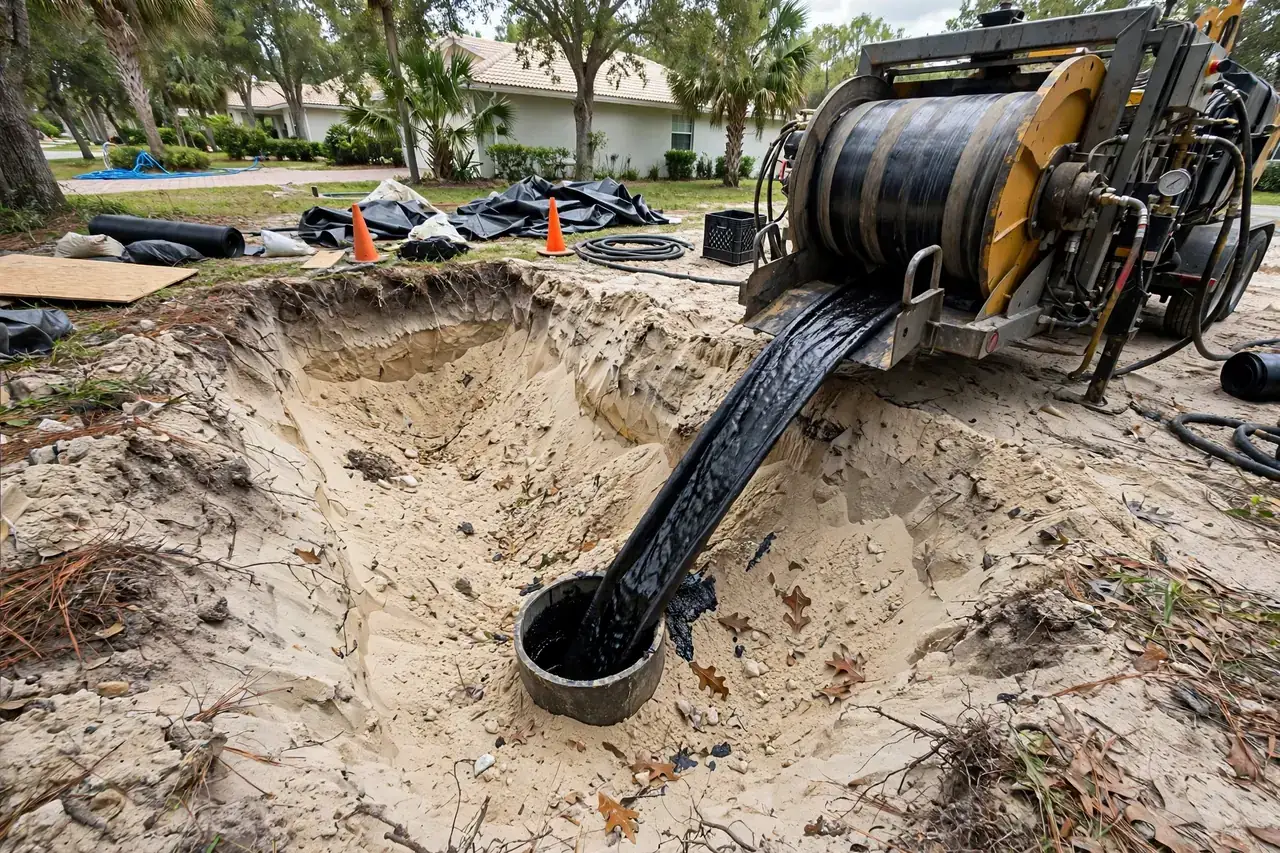
CIPP Pipe Lining
CIPP pipe lining in Sarasota, FL creates a new pipe inside the old one: no trench. Camera inspection, cleaning…
Learn more →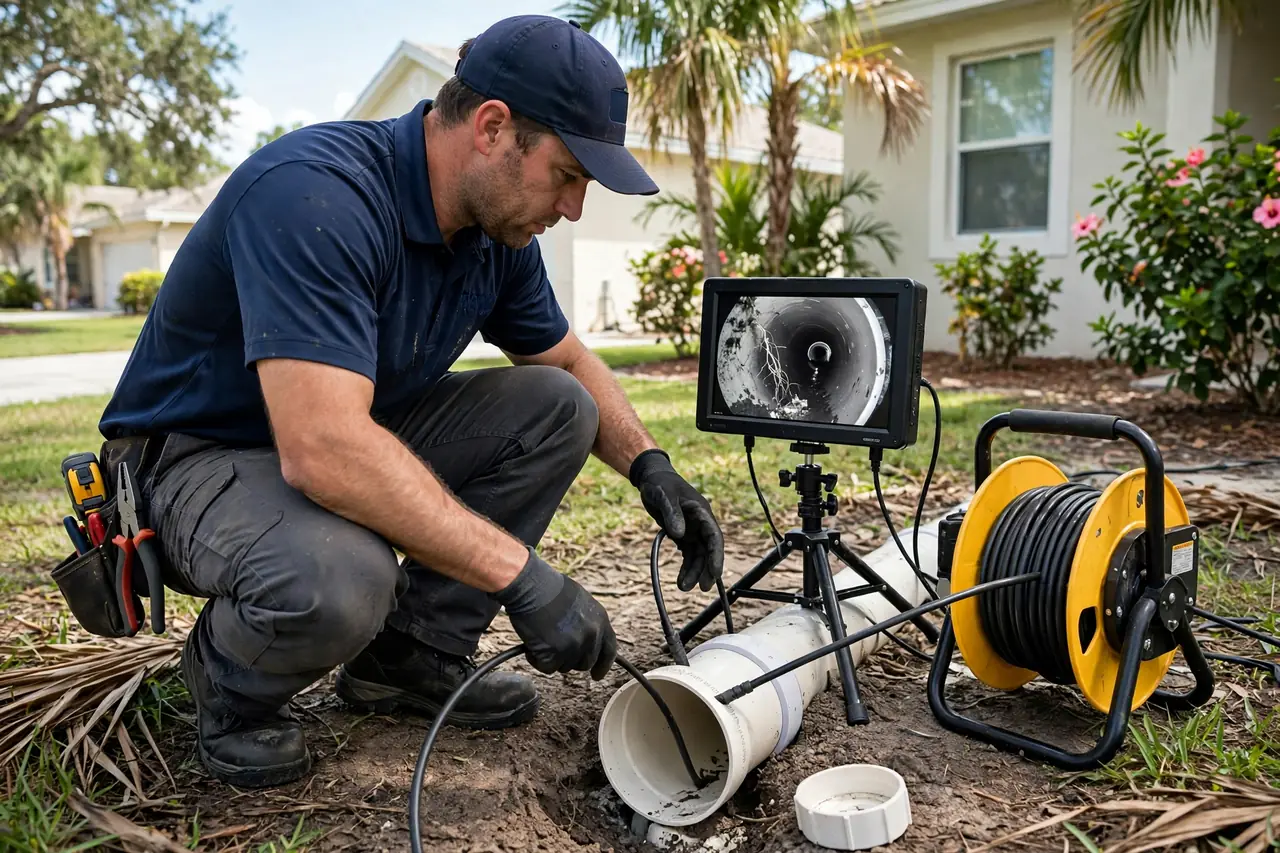
Sewer Camera Inspection
Sewer camera inspection in Sarasota, FL finds roots, scale, bellies & breaks before you dig. HD video diagnosi…
Learn more →Nearby Service Areas
Frequently Asked Questions
How deep is the water table in Sarasota?
It varies by neighborhood, but in much of Sarasota County the seasonal high water table sits only a few feet below grade, and on the barrier islands it can sit within a foot or two of the surface. Inland areas like Bee Ridge and Palmer Ranch usually sit a little deeper. A test pit or a camera locate tells you the depth at your own lot.
Can sewer lines be repaired during the rainy season?
Yes, but expect a harder job. The trench needs dewatering, the walls need shoring, and liners need extra care to cure properly in wet conditions. Emergency work cannot wait for the dry season, but planned replacements and lining jobs go smoother from November through May, when the water table is at its lowest.
Does a high water table cause sewer backups?
Yes, and it is one of the most common rainy season problems in Sarasota. Groundwater seeps into cracked pipes and open joints, adding water the line was never sized to carry. When a heavy storm pushes the table up, that extra water can back the line up into the lowest fixture in the house.
Is trenchless repair better than digging when groundwater is high?
Often, yes, because trenchless methods need only small access pits instead of a long open trench. Less open ground means less water to fight. Lining and bursting still need care in wet ground, though. The liner has to cure against groundwater pressure, and the access pits still need pumping. A camera inspection decides which method fits your line.
Will dewatering damage my yard or my neighbor's yard?
Not when it is done right. A dewatering pump runs for the length of the job and discharges to the street or a storm drain, not onto a neighbor's lot. The pumping is temporary, and the water table rebounds once the pump stops. What matters is that the crew plans the discharge point before they start digging, not after the trench fills.