Which Sarasota Trees Cause the Worst Sewer Line Root Damage
A live oak can shade a whole Sarasota yard, and its roots can reach a sewer line fifty feet away. Ficus roots move faster, palms surprise people, and the tree that causes the worst damage is usually the one nobody worried about. Here is how each one behaves underground, and what stops them coming back.
Live oaks cause the worst sewer line root damage in Sarasota, because their roots spread wide, grow thick, and keep pushing through clay and cast-iron joints for decades. Ficus trees run second, with fast, dense roots that find even hairline cracks. Palms are the least aggressive of the three, but a palm planted over a shallow lateral can still force its way into a cracked joint. A camera inspection shows which tree is in the line and where, and a liner or a root barrier is what stops the same roots from returning after the line is cleared.
Why Sarasota Roots Hunt Sewer Lines
Tree roots do not attack pipes out of spite. They follow water, and a Sarasota sewer line is a steady supply of it. Every flush sends warm water and nutrients down the lateral, and a tiny leak at a joint lets a trace of that moisture into the sand. A root tip that finds it grows toward the source and slips through the crack.
Sarasota soil makes the hunt easier. The ground here is mostly sand, loose and easy for roots to push through, and the high water table keeps roots shallow and wide. A lateral buried three or four feet down is right in the root zone of a mature tree, and in the older slab subdivisions of Gulf Gate and Southgate, the pipe is often original clay or cast iron with joints every few feet. Each joint is a possible entry.
That is why the question is not whether roots will find a Sarasota sewer line, but which tree finds it first, and how much damage it does once it is in. Our guide to tree roots in Sarasota sewer lines covers the general mechanism, cutting, lining, and replacement. This guide ranks the trees themselves, because each one behaves differently underground.
Live Oaks: The Worst Root Damage in Sarasota
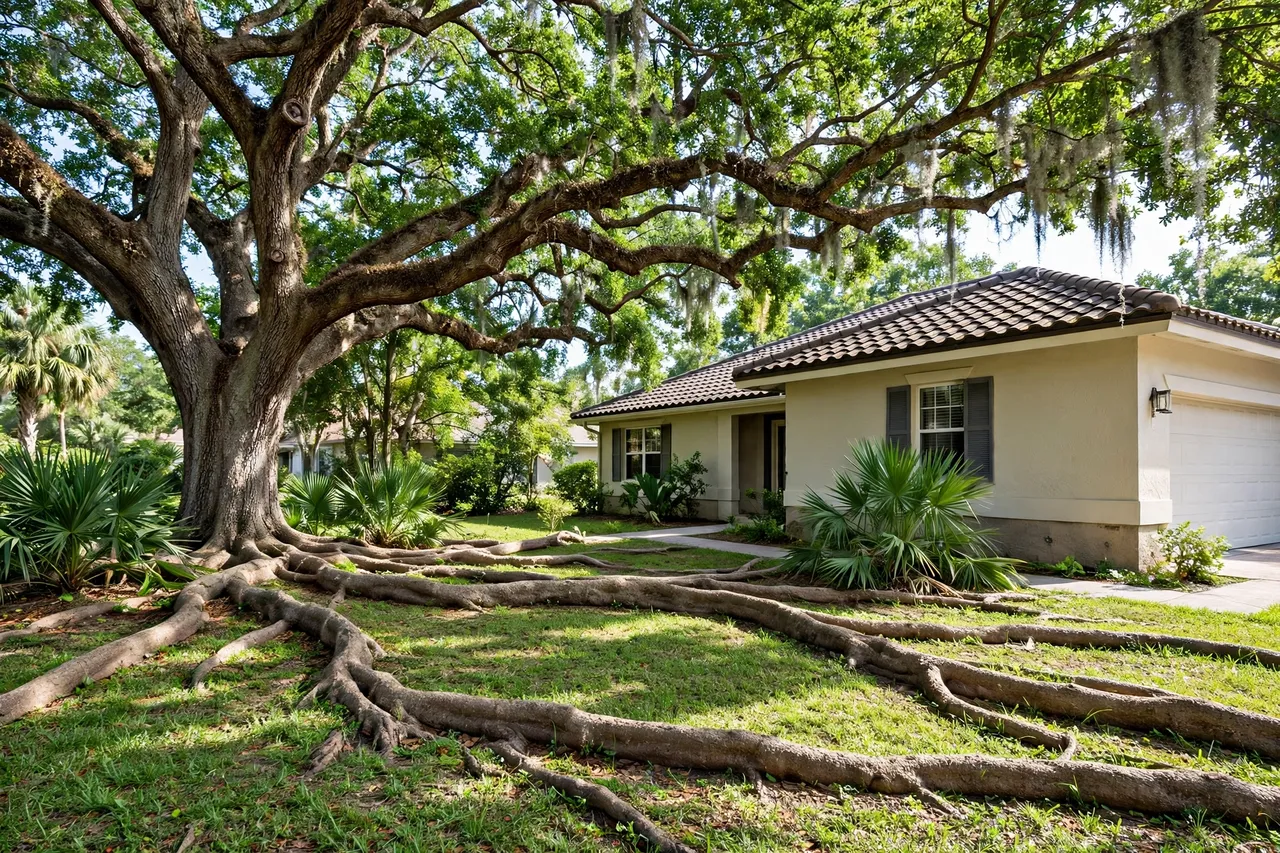
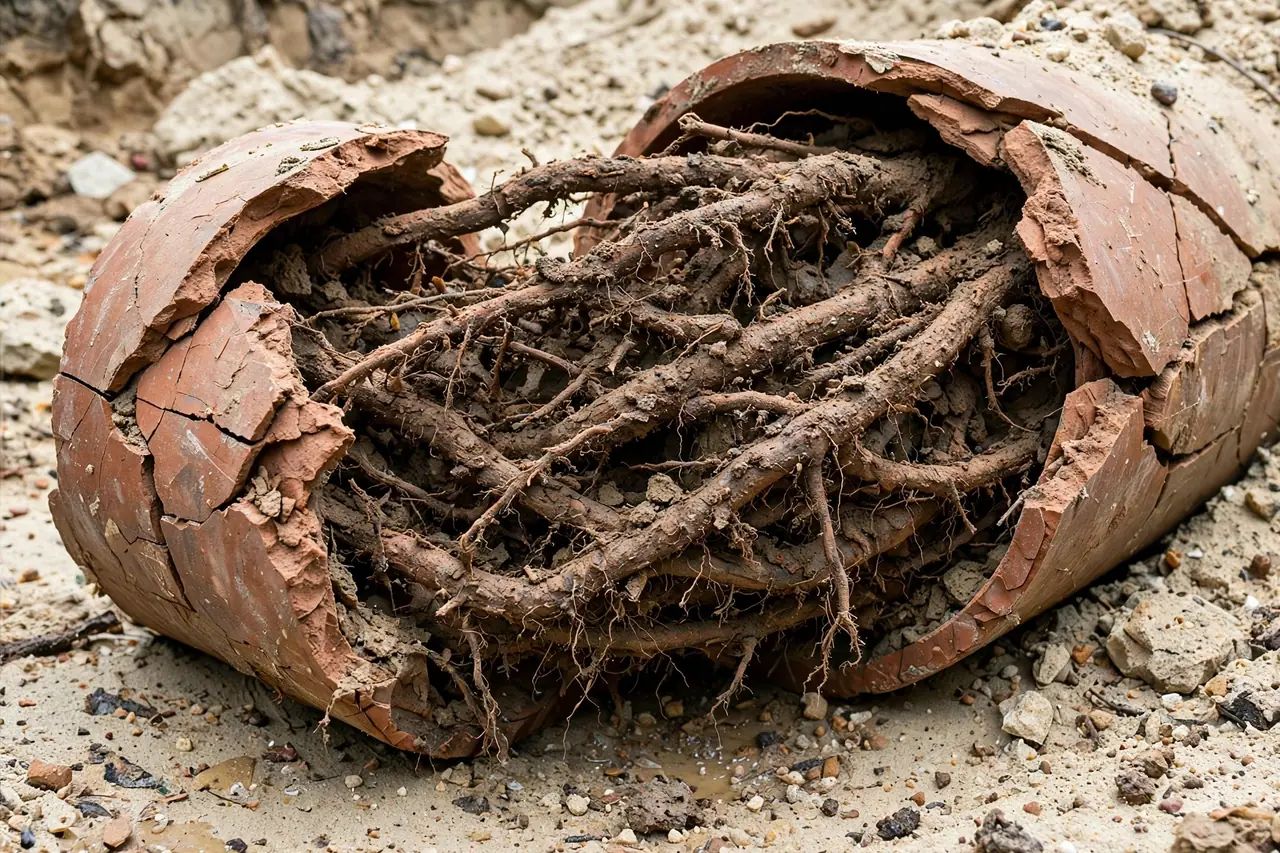
Live oaks cause the worst sewer line root damage in Sarasota, and it is not close. A mature live oak spreads its roots as wide as its canopy, sometimes wider, and those roots grow thick. A root that starts as a hairline thread can swell to the width of an arm inside a pipe, and as it grows it pries joints apart and cracks clay. The damage builds slowly.
Live oaks are also everywhere a sewer line is. They shade front yards across Southgate, Pinecraft, and North Sarasota. A live oak planted thirty years ago has had three decades to find the line, while looking healthy the whole time. The roots do their work out of sight, in the dark, and the homeowner only learns about it when a backup arrives.
If you have a live oak within fifty feet of your lateral, assume the roots know where the pipe is. A sewer camera inspection shows how far in they have got, and our page on clay pipe joints and roots explains why the joints are the weak point. Cutting the roots buys time, but a live oak regrows them, so the lasting fix is usually a liner that seals the joints shut. Tree root removal clears the blockage first, then the camera decides the permanent fix.
Ficus Trees: Fast Roots That Find Every Crack
Ficus trees run second to live oaks, and on speed they win. A ficus grows fast above ground and faster below it, sending out dense mats of fine roots that hunt moisture aggressively. Where an oak root is a battering ram, a ficus root is a pickpocket: it finds the smallest gap and slips in. Once inside, the mat thickens, catches paper and grease, and the line starts backing up.
Ficus cause trouble in a different part of the yard, too. They are planted as hedges and screens along property lines and pool cages, often in a row, and a row of ficus shares one long root zone. The lateral that crosses under a ficus hedge meets not one root system but a wall of them. A single ficus planted close to the house for shade reaches the foundation and the lateral in the same season.
The warning signs look like any other root intrusion, slow drains across the house, gurgling after a flush, a wet patch in the yard that never dries. Ficus mats grow dense fast, so a first slow drain can become a full blockage sooner than with an oak. Hydro jetting clears a ficus mat well, and a camera run after the cleaning shows whether the joints need sealing. Read the signs of sewer line failure to match what you are seeing at home to what the camera is likely to find.
Palms: Gentler Roots, But Not Harmless
Palms surprise people, because they look like they should be the safest tree near a sewer line. Their roots are fibrous, not woody, and they do not thicken the way oak roots do. A palm root will not pry a clay joint apart or lift a pipe section out of line. In most yards, a palm planted a reasonable distance from the lateral never causes a problem at all.
Lowest risk is not no risk. Palm roots still grow toward moisture, and a palm planted directly over a shallow lateral can push a dense bundle of fibers into a joint that is already cracked. The roots do not break the pipe, but they fill it, and a bundle of palm fibers catches everything that flows past. The other palm problem is numbers: a yard with a dozen queen palms has a dozen root systems hunting the same shallow soil.
The other thing palms do is hide the problem. A palm gives no surface clue: it does not heave a sidewalk or crack a driveway the way an oak root does. The first sign is usually a slow drain. A camera inspection settles it in minutes, and if the line is otherwise sound, clearing the fibers is usually enough. Our guide to what to expect from a camera inspection walks through what the footage shows, joint by joint.
How a Camera Shows Which Tree Is in Your Line
Homeowners often ask how anyone can tell which tree is in the line. The camera rarely names the tree directly. What it shows is the shape of the intrusion, where it is, and how the pipe is failing, and that pattern points back to the tree above ground. Thick woody roots at a spread joint usually mean an oak. A dense fine mat through a hairline crack usually means ficus. Pale fibers at a shallow joint mean palm.
Location matters as much as appearance. The camera records the distance from the cleanout, so the technician can match each intrusion to the tree standing over that exact spot. A root mass forty feet from the house, under the live oak by the street, tells its own story, and so does a mat ten feet from the foundation, under the ficus hedge. The map of intrusions becomes a map of the yard, and the fix follows the map.
The camera also shows whether the pipe itself is still worth saving. Roots in a sound PVC line with one open joint are a sealing job. Roots in a clay line where every joint is open and sections have shifted usually end in lining or replacement. That is the real value of the footage: it separates a tree problem from a pipe problem. Our page on sandy soil and shifting ground explains how the ground itself moves joints apart, which gives roots their opening in the first place.
Stopping Repeat Invasions: Lining, Barriers, and Removal
Cutting roots out of a sewer line feels like a fix, and for a week or two it is. Then the roots grow back, because the tree, the moisture, and the opening are all still there. Cutting alone is maintenance, not repair. The lasting fixes all do the same thing in different ways: they close the opening, or they keep the roots from reaching it.
CIPP pipe lining is the most common lasting fix in Sarasota, because it seals every joint in the lined section at once. A resin liner is pulled into the old pipe and cured in place, forming a smooth new pipe inside the old one. It works best when the old pipe still holds its shape. When the pipe has collapsed or shifted too far, trenchless sewer repair by pipe bursting pulls a new pipe through the old line.
Root barriers are the other half of the answer, and they work best as prevention. A barrier is a tough sheet buried between the tree and the line, forcing roots down and around instead of straight into the pipe zone. It helps most right after a lining, when the line is sealed and the goal is to keep it that way. Removing the tree is the last resort, and most homeowners do not want to lose a live oak that shades their whole house. They do not have to: seal the line, add a barrier, and the tree and the pipe can share the yard. Check the cast-iron pipe guide for slab homes if your line is original cast iron, since its joints and corrosion change the repair choice.
Published 2026-11-21 · Sarasota Sewer Specialists
Related Sewer Services
Tree Root Removal
Tree root removal for Sarasota sewer lines: cutting, jetting, and camera verification for live oak and ficus r…
Learn more →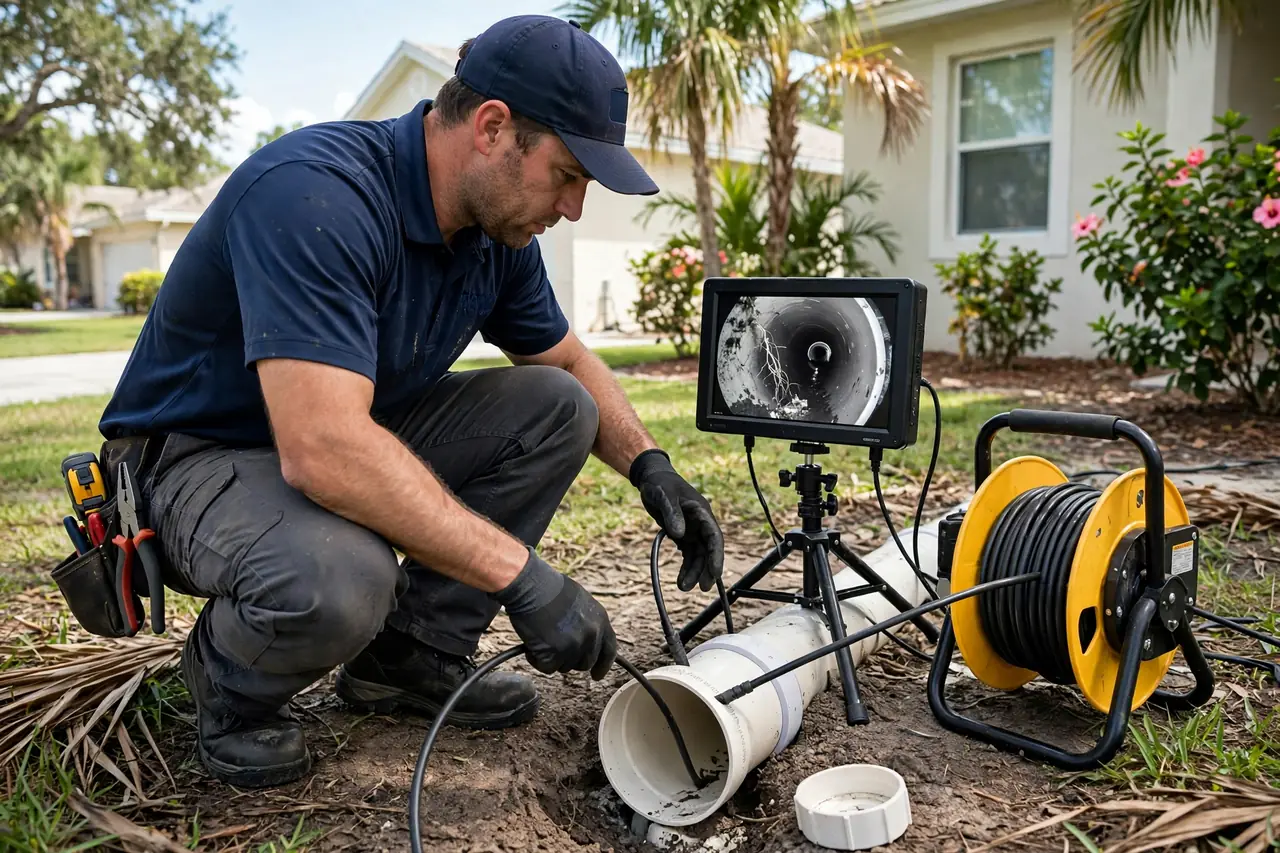
Sewer Camera Inspection
Sewer camera inspection in Sarasota, FL finds roots, scale, bellies & breaks before you dig. HD video diagnosi…
Learn more →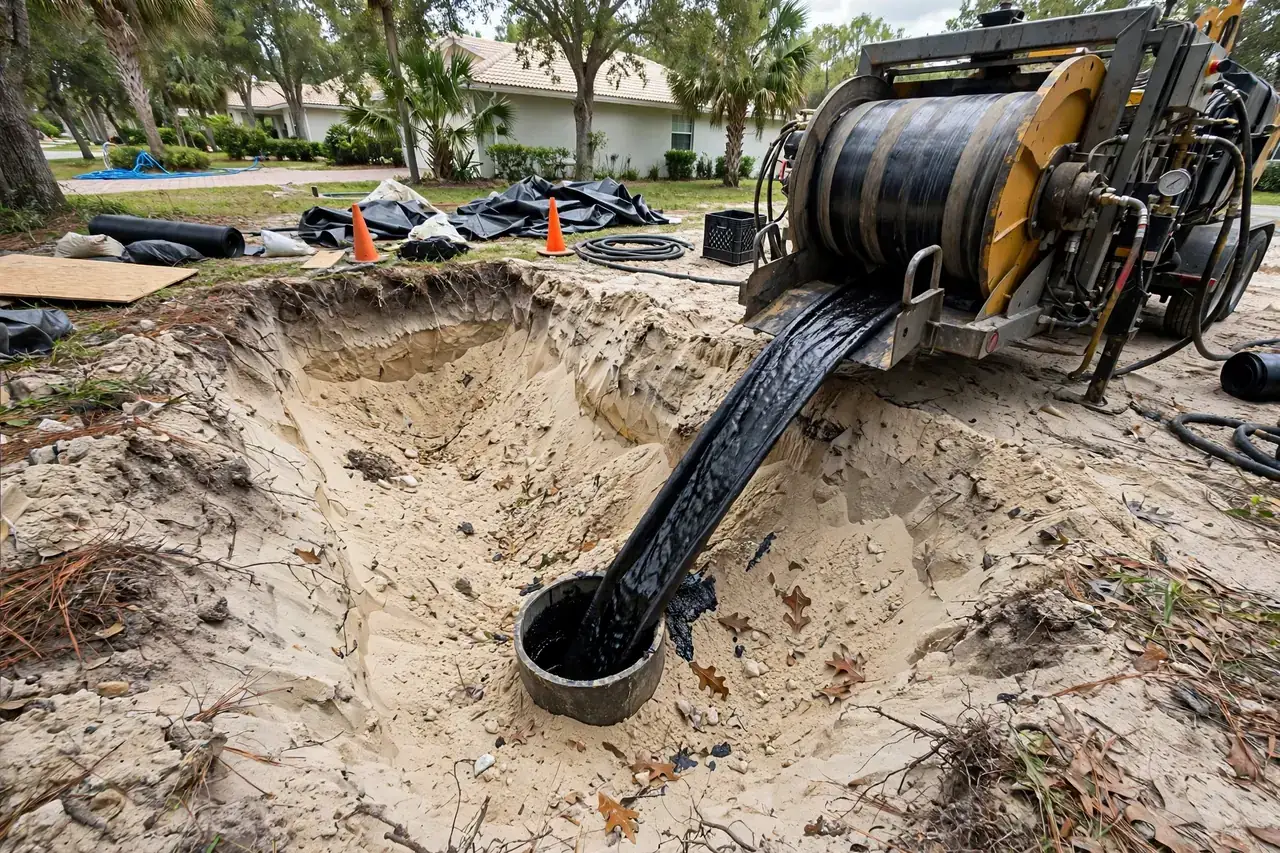
CIPP Pipe Lining
CIPP pipe lining in Sarasota, FL creates a new pipe inside the old one: no trench. Camera inspection, cleaning…
Learn more →Nearby Service Areas
Frequently Asked Questions
Which Sarasota tree causes the worst sewer line root damage?
Live oaks cause the worst damage. Their roots spread as wide as the canopy, grow thick enough to pry clay joints apart, and keep pushing for decades. Ficus trees run second on speed, and palms are the least aggressive of the three.
Are ficus trees worse than live oaks for sewer lines?
On speed, yes, and on overall damage, no. Ficus roots find smaller cracks and grow into dense mats faster, so a ficus can block a line sooner. Live oaks do more structural damage over time, because their thick roots spread joints and shift pipe sections.
Can palm tree roots damage a sewer line?
Yes, but rarely by breaking the pipe. Palm roots are fibrous and do not thicken like oak roots, so they do not pry joints apart. They can still fill a cracked joint with fibers that catch waste and block the line, especially when a palm is planted directly over a shallow lateral.
How far should a tree be planted from a sewer line?
As a rule of thumb, plant a live oak or ficus at least fifty feet from the lateral, and a palm at least ten feet away. The exact distance depends on the species, the soil, and the depth of the line, and a camera inspection can confirm where your lateral actually runs before you plant.
Does cutting roots out of a sewer line stop them coming back?
No. Cutting clears the blockage, but the tree, the moisture, and the opening in the joint are all still there, so the roots regrow. A liner that seals the joints, or a new pipe with no joints, is what stops the same roots from returning.
Will a pipe liner stop tree roots for good?
A liner stops roots from entering through the lined section, because it seals every joint inside it. Roots can still enter an unlined section of the same line, so the camera should check the whole lateral, and a root barrier between the tree and the line adds a second layer of protection.