Do Sarasota Homes Need a Sewer Backflow Valve for Flood Protection?
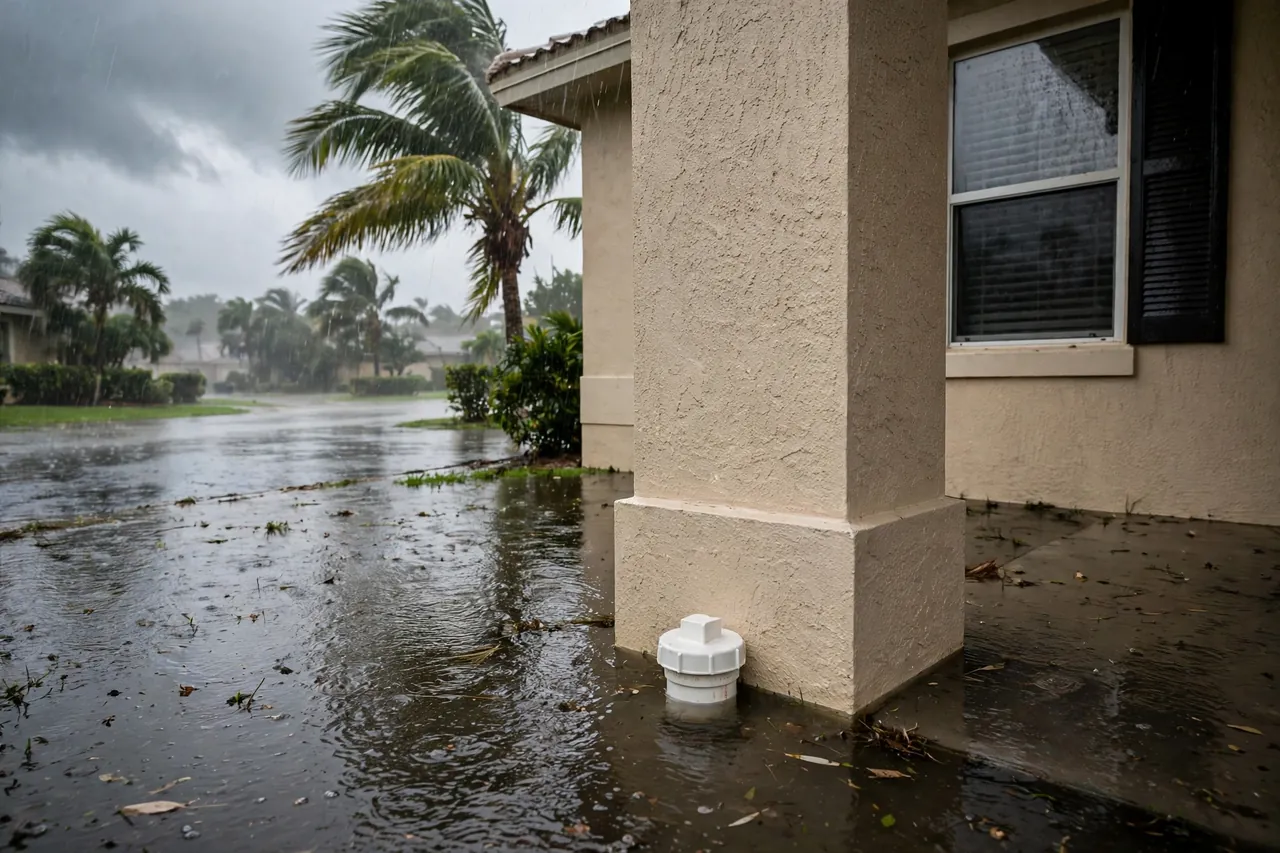
The storm passes, the street drains, and then the shower fills with water nobody ran. That is a sewer surcharge pushing back toward your house, and it is the one backup a backwater valve is built to stop. Here is how the valve works, which Sarasota homes it protects best, and what it takes to keep it working.
A sewer backflow valve, usually called a backwater valve, is a one-way gate on the pipe that carries wastewater from your home to the city main. Water flows out freely, and the hinged flap swings shut when flow tries to come back in during a storm surge. It protects the lowest fixtures in the house, the shower, the tub, and the floor drain, from surcharges in the public main. It does not repair a cracked lateral, clear roots, or stop a clog that starts inside your own pipes, and it only works when the flap stays clean and free to close.
How a Backwater Valve Stops a Storm Backup
Think of the valve as a one-way door set into your sewer lateral, the pipe that runs from your house to the city main under the street. Every flush, shower, and load of laundry flows out through it. The flap inside hangs open while water moves in the right direction, and it barely resists normal flow. You will not notice it on an ordinary day, and that is the point.
When a heavy storm overloads the public main, pressure in the main can rise above the level of your lateral. Water then tries to flow backward, from the street toward your house. That reverse flow pushes the flap shut and seals the pipe. The surcharge stays in the main instead of rising through your lowest fixtures. Once the main drains down and pressure drops, the flap swings open again and normal flow resumes.
The lowest fixtures are the ones at stake. In a Sarasota slab home, that is usually a shower pan, a guest bathroom tub, or a laundry standpipe. They sit closest to the level of the lateral, so they are the first places rising sewage appears. A valve placed between those fixtures and the street gives them a guard they do not have today. A sewer camera inspection shows where your lateral runs and where a valve would sit before any digging starts.
Why Sarasota Storms Push Sewage Back Into Homes
Sarasota's rainy season runs June through September, and about 60 percent of the area's yearly rain falls in those four months. The ground here is Myakka fine sand, and the seasonally high water table sits just a few feet below grade in much of the county. When the soil saturates, groundwater pushes into every cracked lateral and separated joint in the neighborhood at once. That extra water has to go somewhere, and the public main is where it ends up.
A main that is carrying its normal load plus storm infiltration can surcharge, which means the water level inside it rises above the pipe and presses back into the laterals that feed it. Homes on low ground feel it first, and so do homes whose lowest fixtures sit near or below the level of the street. Our guide to rainy season sewer backups walks through the full chain, from saturated sand to silt building up inside the line.
Tropical storms make the same problem bigger and faster. Debby in August 2024 flooded inland streets in Bee Ridge few owners thought flood prone, and the saturated ground lingered for weeks. On the barrier islands, surge adds salt water and sand on top of the rain. A Siesta Key lateral lives in a water table that barely sits below grade even in dry weather, so island homes start closer to the edge every storm season.
Which Sarasota Homes Gain the Most From a Valve
The clearest candidates are homes that have already backed up during a storm. If sewage appeared in a low fixture while it was raining hard, and a camera later showed the lateral itself was sound, the backup almost certainly came from the main. That is exactly the failure a valve is built to block, the strongest reason to add one before the next wet season.
Low-lying homes come next. If your street ponds during summer storms, if your yard holds standing water for days after a downpour, or if your home sits lower than the road, your lateral is more exposed to surcharge pressure than a home on higher ground. Ground floor and garden level fixtures in Gulf Gate slab homes and older ranch houses are the classic case: the pipe is fine, the fixtures are just low.
Homes with a finished lower level, a bathroom added at grade, or a laundry room at the lowest point of the house also gain a lot, because the damage from one backup lands on finished floors instead of bare concrete. Condo owners should check with the association before planning anything, since the building lateral is usually shared. Our guide to shared condo sewer lines explains where a unit owner's pipes end and the association's begin.
What a Backwater Valve Cannot Fix
A valve is a guard, not a repair. It does nothing for a lateral that is cracked, bellied, or full of roots. If your own line is the problem, wastewater will still back up behind the blockage on your side of the valve while the house still floods. That is why the camera comes first: it separates a main surcharge problem, which a valve solves, from a lateral problem, which needs repair.
It also does nothing for clogs that start inside the house. Grease from the kitchen, wipes, and paper towels block the branch lines before they ever reach the valve. Hydro jetting scours those lines clean, and a valve will not help until the habit that clogged them changes. The same goes for a line that has lost its slope: a belly holds standing water no matter what sits downstream.
Know the trade-off while the valve is closed, too. With the flap shut against a surcharge, wastewater from your own fixtures has nowhere to go either. Flushing and running water during the peak of a storm can push water up inside the house from your own side. The right move during a surcharge is to ease off water use until the storm passes and the main drains down. If sewage is already rising, stop using water and call for emergency sewer repair rather than testing the line with another flush.
How Installation Works on a Sarasota Lateral
Installation starts with locating the lateral and finding the right spot, usually on the building sewer between the house and the street, where the valve can guard every fixture in the home. The crew exposes the pipe at that point, cuts in the valve body, and sets it level so the flap hangs and swings freely. A valve that sits tilted is a valve that may not seal, so the grade gets checked before anything is buried.
Access is part of the job, not an extra. The valve needs a cover at the surface so it can be opened, inspected, and cleaned without digging. In Sarasota's sandy soil, that cover also needs to stay visible and clear of mulch, pavers, and landscaping, because a buried access point is almost as bad as none. Ask where the cover will sit and how to reach it before the crew leaves.
The work usually pairs with a camera run. The camera confirms the lateral is sound enough for the valve to make sense, finds the cleanout, and gives you footage of the finished job. If the camera finds a broken section, a heavy root mass, or a belly, that repair comes first, sometimes through trenchless sewer repair that avoids a trench through the yard. A valve on a failing line is money spent in the wrong order.
Keeping the Valve Working Year After Year
A backwater valve earns its keep only when the flap can close fully, and the enemy is debris. Grease, paper, and silt can lodge in the hinge or hold the flap a fraction open, which is enough to let a surcharge through. The fix is simple: open the access cover, lift the flap, rinse away buildup, and check that it swings freely and seats flat. Do it before June, when the rainy season starts, and again after any backup scare.
Watch for the signs that the valve needs attention. A flap that sticks, a seal that looks worn or nicked, or grit packed around the hinge all mean the valve may not close when it counts. Tree roots can also reach a valve chamber through a cracked joint nearby, so a valve check pairs well with a look at the rest of the line. The signs of sewer line failure still apply with a valve in place, and they still deserve a camera, not a guess.
Keep a simple routine. Photograph the valve location, keep the access cover clear, and check the flap each spring. If you are unsure whether your home already has a valve, a camera run will find it: many Sarasota homes built or replumbed in recent decades already have one, and owners only learn about it when a plumber points it out. A valve you know about and maintain is flood protection. A valve nobody checks is just a fitting in the ground.
Published 2026-11-13 · Sarasota Sewer Specialists
Related Sewer Services
Emergency Sewer Repair
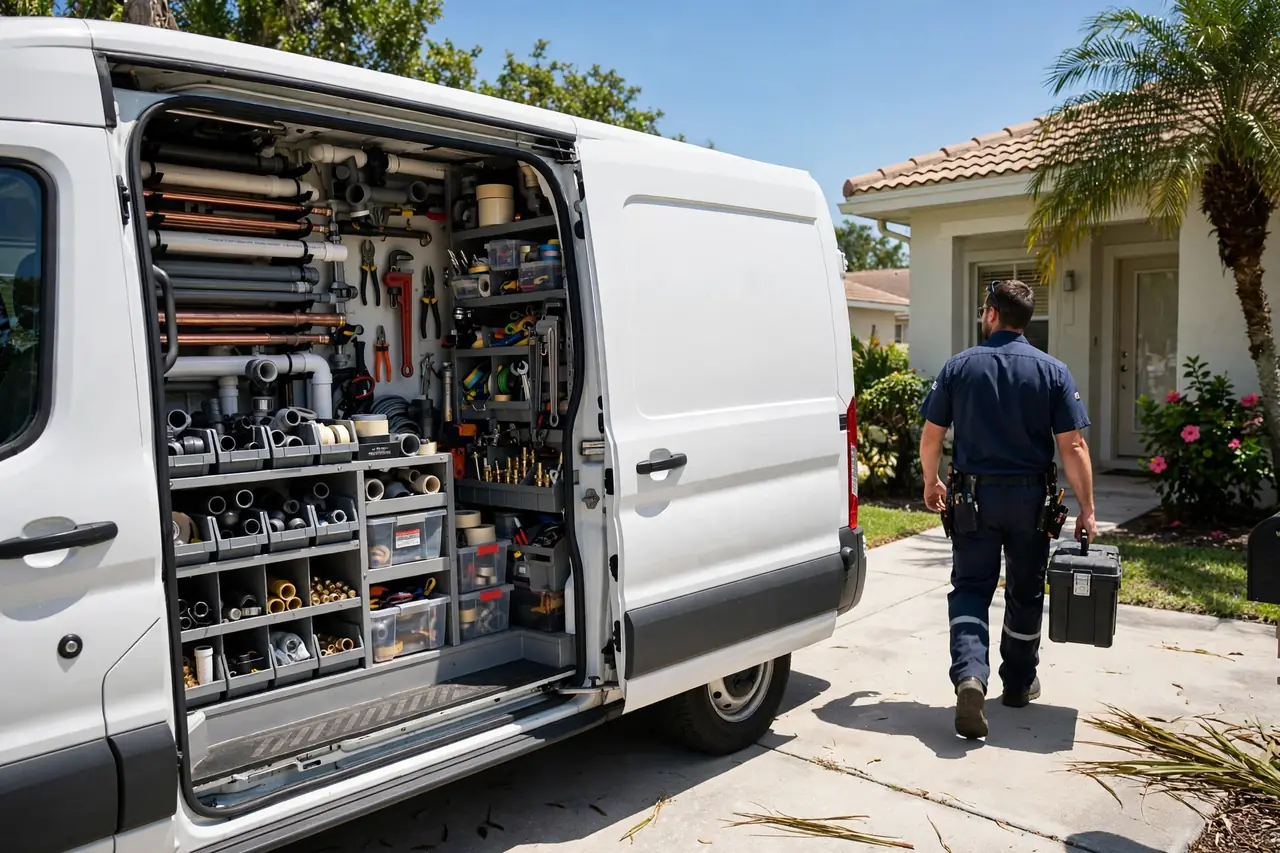
Emergency sewer repair in Sarasota, FL for backups and burst lines. Fast response, camera diagnosis. Call (941…
Learn more →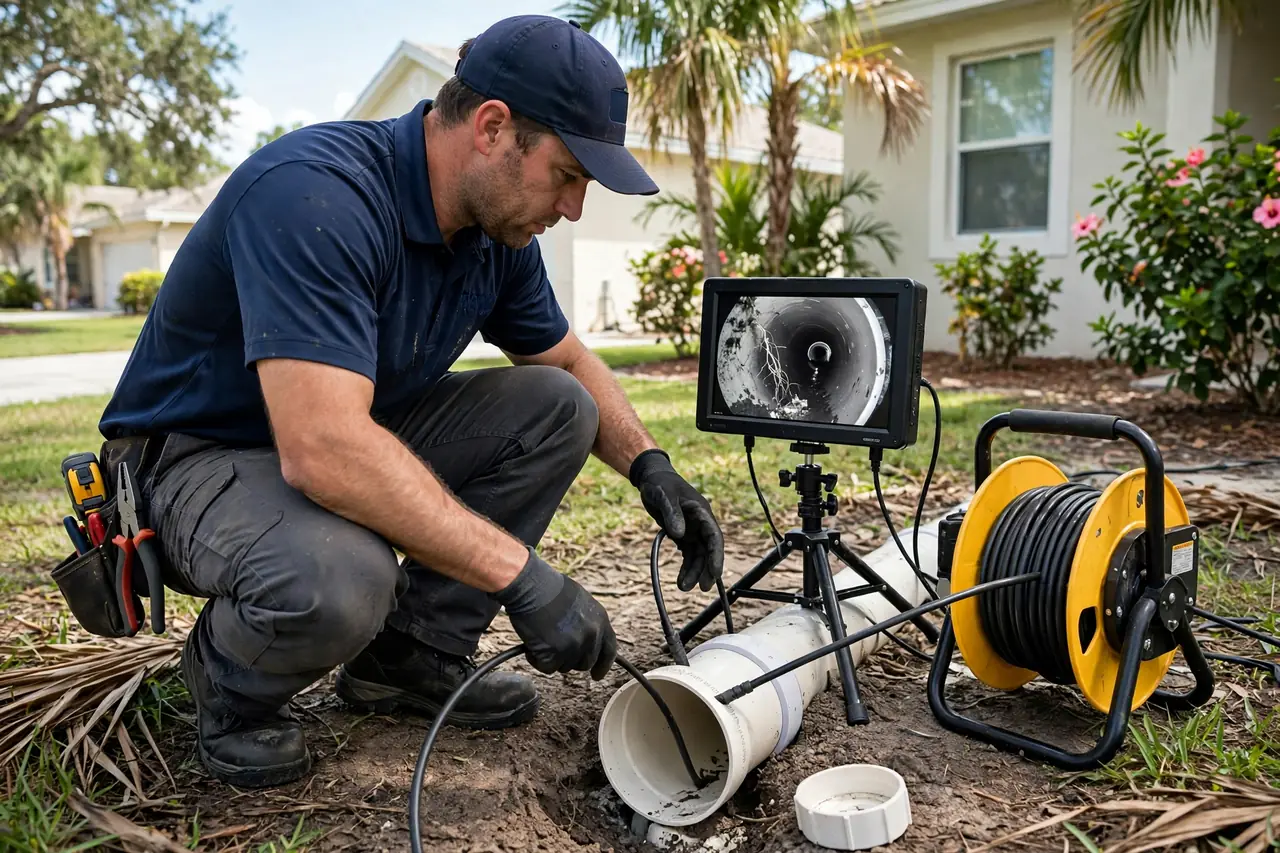
Sewer Camera Inspection
Sewer camera inspection in Sarasota, FL finds roots, scale, bellies & breaks before you dig. HD video diagnosi…
Learn more →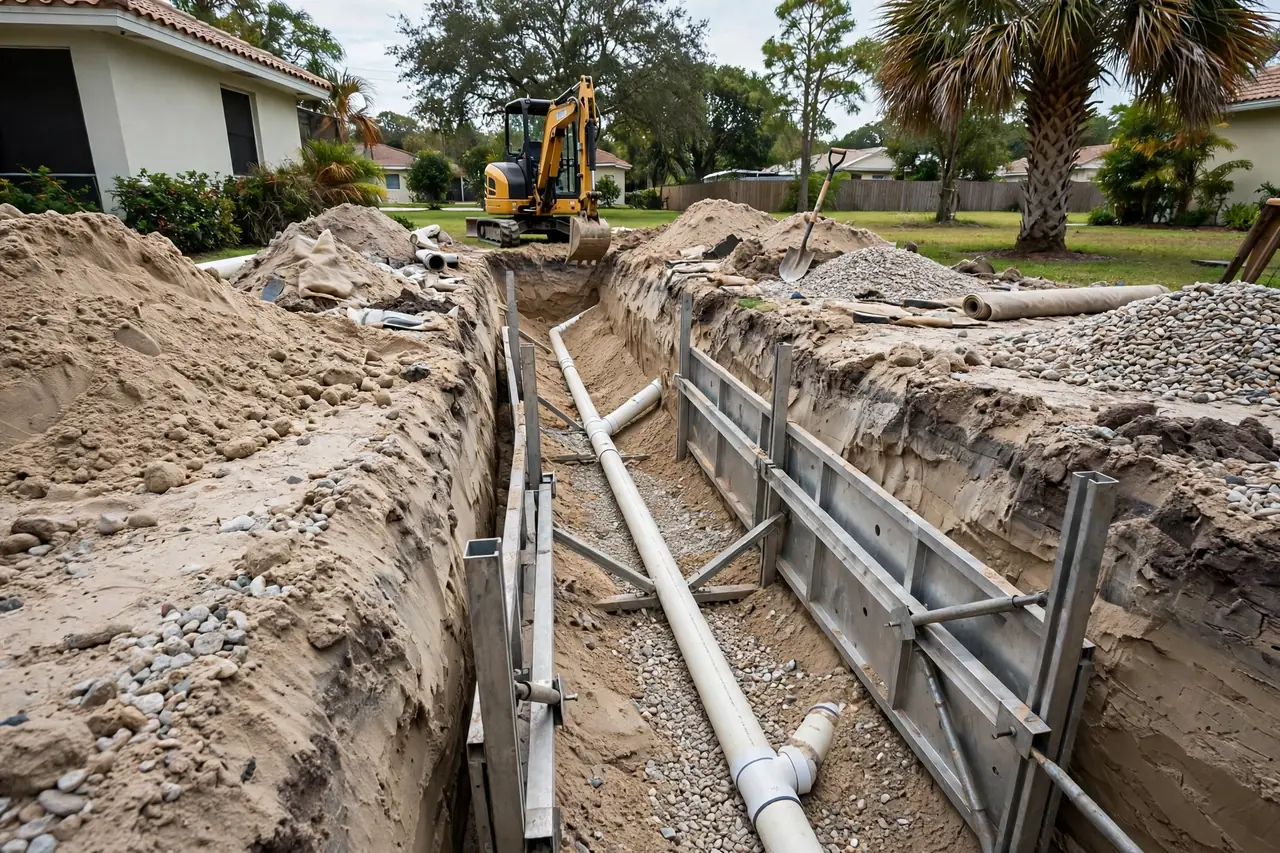
Sewer Line Replacement
Sewer line replacement in Sarasota, FL by excavation when trenchless won't work: proper grade, modern PVC pipe…
Learn more →Nearby Service Areas
Frequently Asked Questions
Will a backwater valve stop every sewer backup?
No. It stops backups that come from the public main pushing water back toward your home during a storm. It does not stop a clog that starts in your own pipes, a broken lateral, or root intrusion. A camera inspection tells you which kind of backup you are dealing with, and whether a valve will help.
Where does a backwater valve go on a Sarasota home?
On the building sewer lateral, between the house and the city main, placed so it guards the lowest fixtures. It needs an access cover at the surface for inspection and cleaning, and it must sit level so the flap swings and seals properly. Placement depends on the lateral route, which a camera and a locate confirm.
How often should a backwater valve be checked?
At least once a year, before the June to September rainy season. Open the access cover, clear debris from the flap and hinge, and check that the flap swings freely and seats flat. Check it again after any storm backup, since silt and debris from a surcharge can hold the flap open.
Can I use water while the valve is closed?
It is best to ease off. While the flap is shut against a surcharge, wastewater from your own fixtures cannot leave the house either, so flushing and running water can push water up through low fixtures from your own side. Wait until the storm passes and the main drains down, then use water normally.
Does a backwater valve help a home on a septic system?
Usually not in the same way. A septic system drains to a tank on your property, not to a public main that can surcharge back toward the house. If a septic home backs up during storms, the cause is more often a saturated drain field or a full tank. Talk through the symptoms with a plumber before adding any device to the line.