
Do Sarasota Condos Share Sewer Lines? What Owners Should Know
Your toilet backs up on a Tuesday night, and the unit upstairs just ran a load of laundry. In a house, that is your pipe and your problem. In a Sarasota condo, the answer is rarely that simple. Most condo buildings share vertical drain stacks and one building lateral to the street, so a clog three floors up can show up in your bathroom. Who calls the plumber, and who handles it, depends on the clog's location and your condo documents.
Yes, most Sarasota condos share sewer lines. Units on the same vertical run drain into a shared stack, and the stacks join a building lateral that carries everything to the city main. Pipes inside your unit are usually yours. Shared stacks, risers, and the building lateral are usually common elements the association maintains. When a backup hits more than one unit, call the association or property manager first, then get a camera inspection to prove exactly where the blockage sits.
How Shared Stacks Carry Waste in a Condo Building
Picture a condo building as a tree turned upside down. Every kitchen sink, shower, and toilet in your unit drains into a short branch pipe. Those branches join a vertical stack running through every floor above and below you. At the ground, the stacks meet a horizontal building drain, which runs to the building lateral and the city main under the street.
That shared path is why one unit's problem becomes the whole stack's problem. A clog below your floor can push wastewater back into the lowest open fixture, often a ground floor tub. The water takes the easiest way out, and in a stacked building that way is usually downstairs.
Vents share the same logic. Each stack has a vent that runs up through the roof, letting air in and sewer gas out above the roofline. When a vent clogs with leaves or nesting material, fixtures on that stack gurgle and drain slowly. A sewer camera inspection tells the difference fast, because the camera shows whether the trouble is a blockage, a broken pipe, or a vent that needs clearing.
Sarasota's condo stock makes this concrete. Downtown towers run tall stacks through a dozen or more floors, while low rise buildings on Siesta Key and Longboat Key run shorter stacks that still join one lateral per building. Our guide to barrier island sewer challenges explains the extra abuse island laterals take from salt water and storm surge.
Where Your Pipes End and the HOA Pipes Begin
The short answer is that it depends on your building's declaration of condominium, and no two buildings draw the line the same way. In most Sarasota condos, the pipes that serve only your unit, from your fixtures to the shared stack, belong to you. The stack, risers, building drain, and lateral are common elements, which the association owns and maintains.
That split sounds clean until a real backup tests it. A clog inside your branch line is your repair. A clog in the shared stack is the association's repair, even if the sewage came up through your tub. The argument starts when nobody knows where the clog sits. That is why the camera matters more than the argument: footage settles who owns the pipe before anyone starts work.
Read your documents before trouble arrives, not during it. Look for the sections on common elements and maintenance responsibility, and ask your property manager where the building's cleanouts sit. Some buildings have one cleanout per stack, others one for the whole building. Our commercial sewer services cover multi-unit buildings, including scheduled stack work.
One more boundary worth knowing: the city main. The building lateral ends where it meets the public main, usually under the street. Problems past that point belong to the utility, but the lateral itself is almost always the association's responsibility. Roots love that stretch, so ask when it was last inspected.
Who Handles a Backup in a Sarasota Condo
Stop using water first. Every flush and every load of laundry adds to the backup while the line is blocked, and your neighbors' water heads for your fixtures too. Tell the property manager or association emergency contact right away, and ask neighbors on the stack to hold off on water.
Then get eyes in the pipe. A camera run from the nearest cleanout shows whether the blockage is in your branch, the shared stack, or the lateral, and that decides who handles it. If sewage is actively rising, treat it as urgent: it soaks into floors and drywall fast. Emergency sewer repair starts with stopping the flow and finding the blockage, not with guessing.
Ground floor and garden level units take the worst of it, because they sit at the bottom of the stack. If you own one, keep the association's emergency number on your fridge and know where your unit's shutoffs are. A backwater valve can help, but clear it with the association first.
Once the line is open, ask what caused the clog. Grease, wipes, and paper towels are the usual suspects, and one unit's habits can clog a whole run. Hydro jetting scours the pipe walls clean instead of just poking a hole through the clog, which gives you real time before the next blockage. If the camera shows a cracked or bellied section, that is a repair conversation, and the association should get it in writing with the footage.
Why Older Sarasota Condo Buildings Struggle First
Sarasota built a lot of condos from the 1960s to the 1980s, and many still run their original cast iron stacks. Cast iron is tough, but decades of wastewater wear it from the inside. Scale narrows it, the bottom channels out, and joints open up. A stack that worked fine in 1975 can gurgle, leak, and clog in 2026. It just wears out, a little at a time.
The ground makes it worse. Sarasota's water table sits a few feet below grade in much of the county, and sandy soil shifts every wet season. A lateral buried in that sand can belly, separate at joints, and let groundwater seep in. Roots follow the water. On the barrier islands, storm surge adds salt water and sand infiltration, which is why Longboat Key and Siesta Key buildings see lateral trouble earlier than inland ones.
Age also means layers of repairs: a patched stack, a replaced lateral section, a cleanout buried under a repaved lot. Buildings that keep camera footage and repair records on file solve backups in hours. Buildings that start from zero every time solve them in days.
For an older building, the smart move is a baseline inspection of the stacks and lateral before anything fails. A camera run now gives the board footage to plan around, instead of a midnight emergency call. Cast iron under Sarasota slabs fails the same way, and the same camera first logic applies to stacks: see the pipe, then decide.
What to Check Before You Buy a Sarasota Condo
A condo inspection usually covers the unit: the appliances, the air handler, the water heater. The shared sewer system rarely gets the same attention, and that is where surprises hide. Before you close, ask questions that go past your front door and into the building's pipes.
- Ask for the building's sewer history: past backups, stack repairs, camera footage on file.
- Ask whether the stacks are original cast iron, and whether lining or replacement is planned or assessed.
- Ask about reserves and planned plumbing work. Healthy reserves mean a stack project is handled as planned work, not a surprise for owners.
- Ask which floor the unit sits on and whether ground floor units have flooded. Low units carry the most risk.
- Ask when the lateral was last inspected, and whether roots or infiltration have been found.
- Get your own sewer scope of the unit's branch lines if access is allowed, and read the maintenance split before you sign.
Location shapes the questions too. A bayfront tower in downtown Sarasota and a garden condo near St. Armands and Lido Key face different water tables, different storm exposure, and different pipe ages. Ask what the building has done about its own conditions: the answers show whether it plans ahead or waits for the next backup.
How Repairs Work Without Shutting Down a Building
Nobody wants a building wide water shutoff, and most stack repairs do not need one. Crews usually work one stack at a time, scheduling short shutoffs floor by floor and warning residents in advance. Jetting and camera work usually need no shutoff, just cleanout access.
When a stack is too worn to clean, CIPP pipe lining can rebuild it from the inside through access points, not open walls in every unit. Lining is not right for every stack: a collapsed or badly offset section still needs a direct repair. Where the pipe holds its shape, lining saves weeks of disruption without opening bathrooms on every floor.
The lateral outside gets the same trenchless thinking. Trenchless sewer repair replaces or lines the lateral through small entry pits, not a trench through the parking lot. The pool deck stays open, the drive stays passable, and the grounds stay intact.
Whatever the method, the order stays the same: camera first, plan second, repair third. If a contractor wants to dig or open walls before anyone has looked inside the pipe, slow down and ask for the footage. A building full of owners deserves proof, not a guess.
Published 2026-11-12 · Sarasota Sewer Specialists
Related Sewer Services
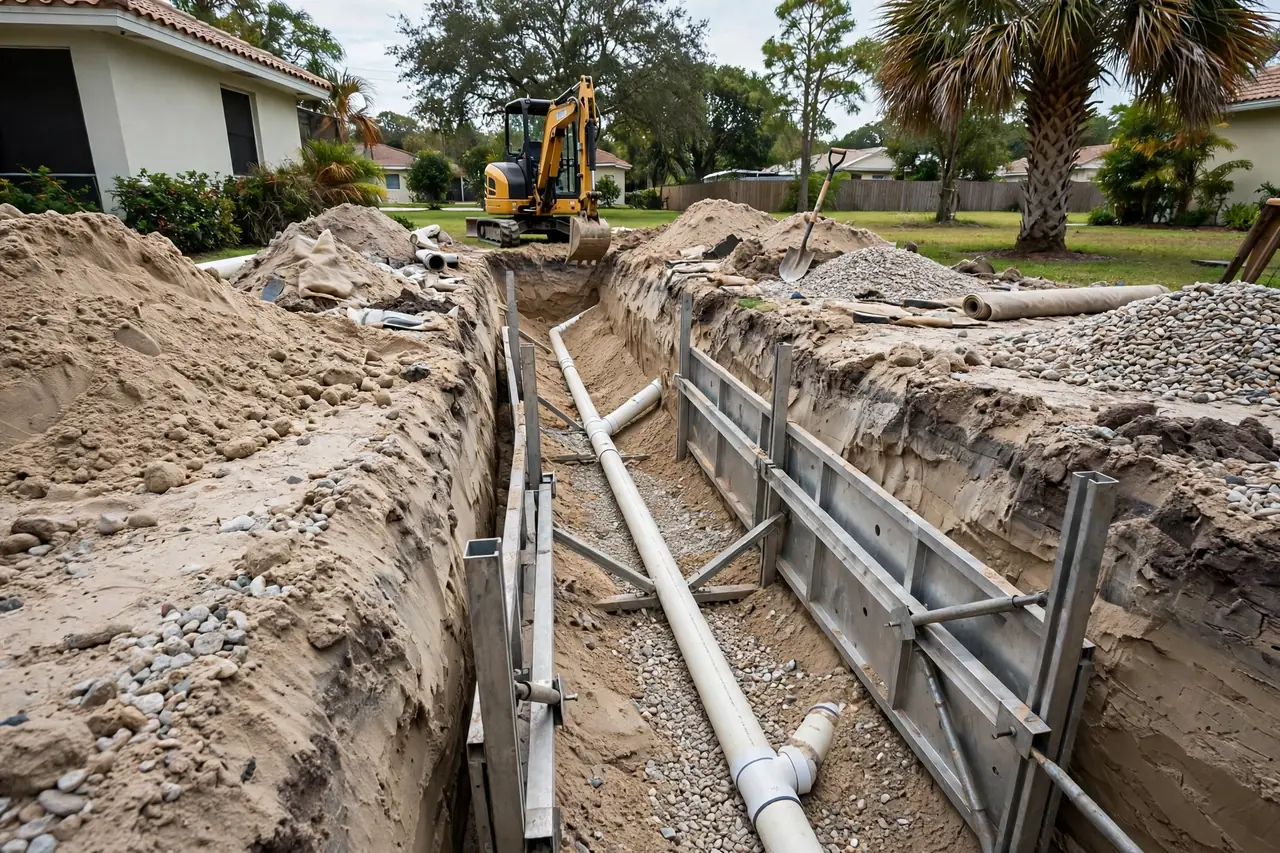
Commercial Sewer Services
Commercial sewer services in Sarasota, FL for restaurants, offices, retail, HOAs, and condos, with after-hours…
Learn more →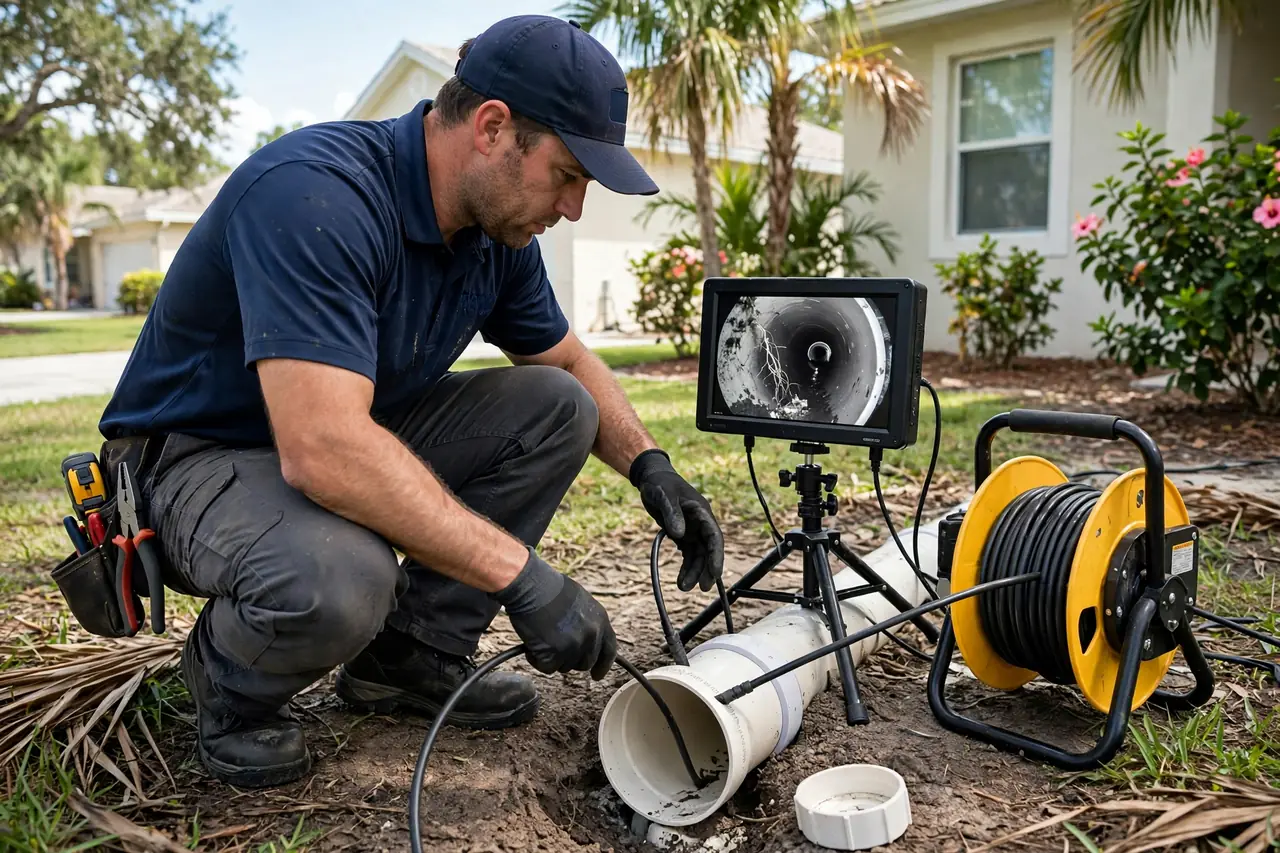
Sewer Camera Inspection
Sewer camera inspection in Sarasota, FL finds roots, scale, bellies & breaks before you dig. HD video diagnosi…
Learn more →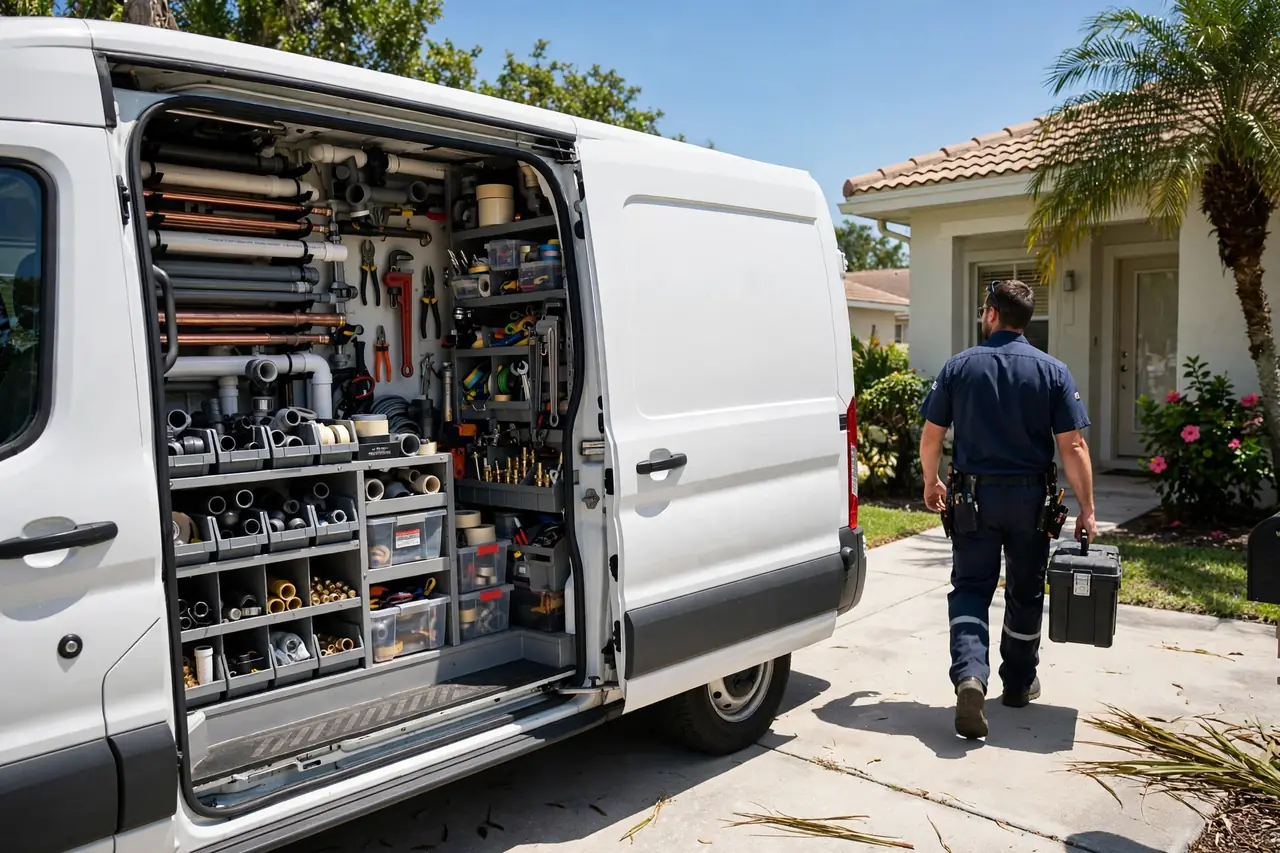
Emergency Sewer Repair
Emergency sewer repair in Sarasota, FL for backups and burst lines. Fast response, camera diagnosis. Call (941…
Learn more →Nearby Service Areas
Frequently Asked Questions
Do all condos in Sarasota share sewer lines?
Almost all of them share at least the building lateral, and most share vertical stacks too. Units stacked above one another drain into the same stack by design, and the stacks join one building drain. The exception is a condo style villa or townhouse with its own direct lateral to the street, which is common in some low rise communities. Your condo documents and a quick look at the building's plumbing layout will tell you which setup your building uses.
Who handles it if a shared stack backs up into my unit?
It depends on where the blockage sits and what your declaration says. A clog in the shared stack or the building lateral is usually the association's repair, while a clog in the branch pipes that serve only your unit is usually yours. Camera footage that locates the blockage is what settles the question. Keep the footage, keep the repair invoice, and notify the association in writing as soon as the backup is found.
Should I get a sewer inspection before buying a condo in Sarasota?
Yes, and ask for the building's records too. A camera inspection of the unit's branch lines shows the condition of the pipes you own, while the association's repair history shows the condition of the pipes you share. Older buildings with original cast iron stacks deserve extra attention, especially on the ground floor. If the building cannot produce any sewer records, treat that as a warning sign and ask why.
What should I do first when my condo toilet backs up?
Stop using water, then call the property manager or the association's emergency contact. Tell your neighbors on the same stack to hold off on water too, since their drains feed the same pipe. Do not keep flushing to test it: each flush adds water to a blocked line. A camera inspection from the nearest cleanout will show whether the blockage is yours, the building's, or out in the lateral.
Can a shared sewer stack be repaired without tearing open every unit?
Often, yes. CIPP lining rebuilds a worn stack from the inside through access points, and hydro jetting clears buildup without opening walls at all. Both need the pipe to hold its shape, which the camera confirms first. A collapsed or badly offset section still needs direct access, but even then crews usually open one area at a time instead of the whole stack at once.